Dinner · Part 2 of 3: Instructions
Easy Slow Cooker Carne Guisada Step-by-step instructions
- Prep
- Cook
- Total
- Serves
- 6
Before you start
Before beginning, ensure that your beef chuck is trimmed of excessive surface fat and cut into uniform bite-size cubes, roughly one inch in size. This uniformity is crucial for even cooking.
Prepare your vegetables by dicing the onions and green peppers into similar sizes to ensure they soften at the same rate as the beef. Have your spices measured out and ready to go, and ensure your slow cooker basin is clean and dry before you start assembling the ingredients for the long braise.
Ingredients at a glance (6)
- 2 lb beef chuck, cut into bite-size cubes
- 1 cup green bell pepper, diced
- 1 cup yellow onion, diced
- 1 tbsp ground cumin
- 1 tbsp chili powder
- 15 oz tomato sauce
Instructions
Initial Assembly
- Prepare the slow cookerPlace the cubed beef chuck into the basin of the slow cooker. Ensure the pieces are spread out in an even layer to promote consistent cooking throughout the process.Look for The beef should form a relatively even layer at the bottom of the slow cooker insert.Tip Removing excess fat from the beef cubes before adding them to the slow cooker results in a cleaner final sauce.
At this stage, the slow cooker contains the raw beef and aromatics. The ingredients should be neatly arranged, with the spices distributed evenly over the top. The tomato sauce provides the necessary moisture base. Ensure the lid is seated correctly to begin the slow braising process. There should be no signs of burning or overcrowding, as this would prevent the uniform heat distribution required for the beef to break down properly during the long cooking period.
Braising Process
- Add aromatics and spicesScatter the diced green pepper and onion evenly over the raw beef. Sprinkle the ground cumin and chili powder over the vegetables and meat. Pour the tomato sauce over everything to coat the ingredients.Look for The tomato sauce should cover the majority of the beef and vegetables, providing enough liquid for braising.Tip If the sauce seems too thick, add a small splash of water or beef broth to help facilitate the cooking process.
During the main cooking phase, the slow cooker should remain covered to maintain the internal environment. You should detect a fragrant, savory aroma of cumin and chili as the beef simmers. The ingredients are undergoing a transformation where the collagen in the meat is melting into the sauce.
Avoid the temptation to lift the lid frequently, as each time you do, heat escapes and the cooking time is extended, potentially affecting the final texture of the beef and the thickness of the gravy.
Final Resting and Serving
- Slow cook and serveCover the slow cooker and set it to low heat. Cook for 8 hours until the beef is tender and pulls apart easily. Ensure the internal temperature of the beef reaches at least 145°F (63°C). Let the meat rest for 5 minutes before serving in warm bowls.Look for The beef should be fork-tender and the sauce should have thickened into a rich, aromatic gravy.Safe temperature 145°F (63°C) internal temperature (steaks, chops and roasts)Tip Checking the temperature with a meat thermometer ensures food safety and guarantees the beef is perfectly cooked.
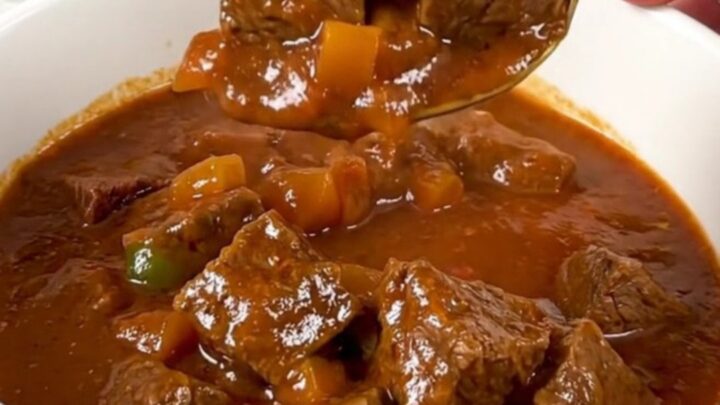
Once the cooking time is complete, the beef should be exceptionally tender, and the gravy should have a deep, rich color. The dish should smell savory and slightly smoky. After the required 5-minute rest, the meat will have absorbed more of the sauce's flavor. The beef should hold its shape but yield easily to a fork. Check that the sauce has achieved a coating consistency, and ensure the dish is served at an appropriate, hot temperature for the best experience.
Common mistakes
A common mistake is using beef cuts that are too lean, which results in dry meat rather than the desired tender texture. Another error is cutting the meat into uneven pieces, as smaller chunks will overcook and disintegrate while larger ones remain tough.
Avoid adding too much liquid, as the beef and vegetables will release their own moisture during cooking; too much liquid will result in a thin, watery sauce rather than the thick, hearty gravy that characterizes a well-made carne guisada.
How to tell it’s done
The carne guisada is done when the beef cubes are fork-tender and easily pull apart with gentle pressure. The internal temperature of the beef must reach at least 145°F (63°C) for safety. The sauce should be thick, glossy, and cling to the meat.
If the beef still feels firm or tough, continue cooking for an additional 30 to 60 minutes. The vegetables should be completely soft and integrated into the spiced tomato gravy, providing a balanced and cohesive flavor profile throughout the dish.
- Steaks, chops and roasts: 145°F (63°C) in the thickest part, then a 3-minute rest
Up next · Part 3 of 3
2 variations · storage & make-ahead · 3 answers · printable card
Tips, FAQ & printable recipe (Part 3)← Back to the ingredients (Part 1)