Dinner · Part 1 of 3: Ingredients
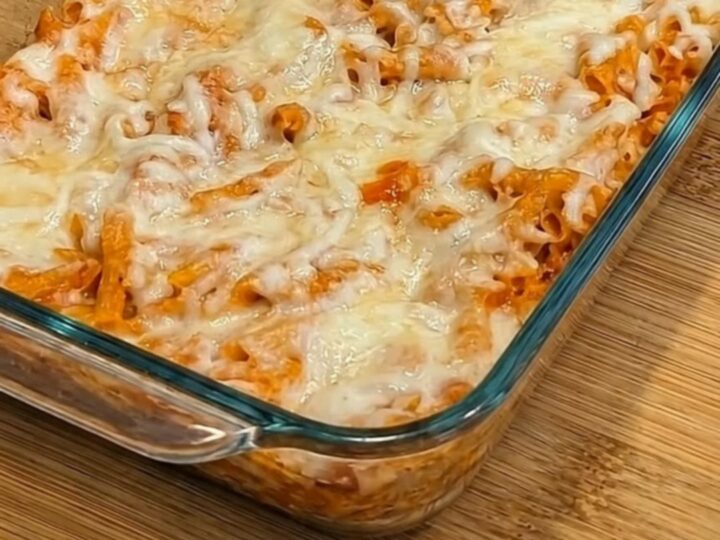
Dump and Bake Chicken Parmesan Casserole (One Dish, No Boiling)
- Prep
- Cook
- Total
- Serves
- 6
Everything about chicken parmesan usually means three pans, a breading station and a splatter of oil. This version skips all of it. Raw chicken pieces, a box of dry penne and a jar of marinara go straight into one baking dish, the oven does the rest, and a blanket of melted mozzarella finishes the job. One dish, one stir, one genuinely great weeknight dinner.
Dump-and-bake casseroles earn their name honestly: the assembly is measured, poured and stirred, with no stove time at all. Here the trick is that uncooked pasta absorbs liquid as it bakes, so the sauce and water do double duty — they season the dish and cook the penne at the same time.
The chicken, cut into small even pieces, cooks through in the same window, and a final uncovered stretch under mozzarella and Parmesan gives the top the bubbled, golden character that makes chicken parmesan so appealing. From preheating the oven to pulling the dish out, the whole thing takes about an hour, and most of that is hands-off. It is the kind of dinner that fits a busy Tuesday and still looks generous enough for a Sunday table, with a cheese pull on every serving.
Ingredients
- 1 1/2 lb boneless skinless chicken breasts, cut into 1-inch pieces
- 12 oz penne pasta, uncooked
- 3 cups marinara sauce (one 24-oz jar)
- 2 cups water
- 1 tsp garlic powder
- 2 tsp Italian seasoning
- 3/4 tsp kosher salt
- 1/2 tsp black pepper
Topping
- 2 cups shredded mozzarella cheese
- 1/2 cup grated Parmesan cheese
Why this recipe works
The no-boil method works because penne needs roughly 35 to 40 minutes in a hot, moist environment to go from chalky to tender, and a covered bake at 400°F (200°C) provides exactly that.
The sauce is diluted with water so there is enough liquid for the pasta to absorb — about one and a half times the volume of the dry pasta — and the starch that releases as the penne cooks thickens the sauce into a clingy, glossy coating. Nothing is boiled separately, so the pasta never sits in water and leaches flavor; it seasons itself from the inside.
Cutting the chicken into 1-inch pieces is the second key. Whole breasts take longer to cook through than penne takes to soften, which is why many casseroles end up with dry meat or raw centers. Small, uniform cubes reach a safe internal temperature in the same window as the pasta, and sitting in the sauce keeps them moist.
The final uncovered bake melts the cheese, reduces the sauce to the right thickness and browns the top, delivering the contrast between creamy interior and golden surface that defines a good pasta bake.
Notes and substitutions
Choose a good, thick marinara — one you would happily serve over spaghetti — because its flavor is concentrated as the casserole bakes. Boneless skinless chicken thighs are a fine swap for breasts and stay even juicier; keep the same weight and cut size. Shred the mozzarella from a block when possible: pre-shredded cheese is coated with anti-caking starch that can make the top slightly grainy. Grated Parmesan from a wedge melts into the sauce better than the shelf-stable kind, though either works.
A 9x13-inch glass or ceramic baking dish is the right size; a smaller dish will overflow, and a larger one spreads the sauce too thin and dries out the pasta. Cover the dish tightly with foil for the first bake — steam is doing the cooking, and a loose seal lets it escape.
An instant-read thermometer takes the guesswork out of the chicken: check several of the largest pieces and look for 165°F (74°C). If the sauce seems thick before baking, a splash of extra water is always safer than a dry casserole.
- boneless skinless chicken breasts: Boneless skinless chicken thighs work just as well; cut them the same size and check for 165°F (74°C) at the center of the largest piece.
- penne pasta: Ziti, rigatoni or rotini all bake nicely. Keep the weight at 12 oz and choose a shape with ridges, which holds the sauce better than long strands.
- marinara sauce: Any plain tomato pasta sauce works, store-bought or homemade. If the sauce is very thick, add an extra 1/4 cup water so the pasta has enough liquid to absorb.
- grated Parmesan cheese: Pecorino Romano brings a sharper, saltier edge; use 1/3 cup since it is more assertive than Parmesan.
Equipment
- 9x13-inch glass or ceramic baking dish
- large mixing bowl
- aluminum foil
- instant-read thermometer
- spatula
- chef's knife and cutting board
Up next · Part 2 of 3
10 steps · 50 min of cooking · what to look for at each stage
Step-by-step instructions (Part 2)