Dinner · Part 2 of 3: Instructions
Crockpot Parmesan Kielbasa Pesto Farfalle Step-by-step instructions
- Prep
- Cook
- Total
- Serves
- 6
Before you start
Before starting, slice the kielbasa into 1/2-inch medallions. Measure the pasta, pesto, spinach, and cheeses. Have a large slow cooker (at least 5 quarts) ready.
No need to pre-cook the pasta or brown the sausage—everything goes in raw. If using jarred pesto, give it a stir to loosen it. Set out a large spoon for stirring and serving.
Ingredients at a glance (6)
- 2 lb smoked kielbasa, sliced into 1/2-inch medallions
- 12 oz farfalle (bow-tie) pasta
- 1 cup basil pesto
- 4 cups fresh baby spinach
- 2 cups shredded Italian four-cheese blend
- 1/2 cup freshly grated Parmigiano-Reggiano
Instructions
Layer and Walk Away
- Layer the IngredientsPlace the sliced kielbasa medallions in an even layer at the bottom of the slow cooker. Scatter the farfalle pasta over the kielbasa. Add the baby spinach and basil pesto, spreading the pesto as much as possible over the top. Sprinkle the shredded Italian cheese blend and grated Parmigiano-Reggiano evenly over the surface.Look for The slow cooker should be about two-thirds full with a colorful stack of ingredients.Tip Don't stir yet — layering helps the pasta cook evenly and the cheese form a golden crust.
- Cover and Cook on LowCover the slow cooker with its lid. Cook on low heat for 3 hours, or until the pasta is tender and has absorbed most of the liquid from the pesto and the spinach. The cheese should be melted and bubbling around the edges.Look for After 2 hours, the aroma of garlic and basil will fill the kitchen.Tip Resist the urge to open the lid frequently, as each opening releases heat and extends the cooking time.
At the end of this phase, the slow cooker is filled with a colorful stack: pink kielbasa, golden pasta, green spinach, and a snowy layer of cheese.
The lid is on, and the cooker is set to low. You can clean up your prep mess and leave the kitchen. The only sound is the gentle hum of the slow cooker, and the promise of dinner to come.
Simmer and Soften
- Check the PastaAfter 3 hours, check the pasta for doneness. It should be al dente — tender but still with a slight bite. If the pasta is still hard, cover and continue cooking in 15-minute increments until tender. The sauce should be thick and coating the pasta; if it looks dry, add a splash of water or broth.Look for The pasta should be tender when pierced with a fork, and the cheese should be fully melted.Tip If the pasta is too dry, add a few tablespoons of water to loosen the sauce.
- Stir GentlyUse a large spoon to gently fold the mixture, ensuring the pesto and cheese are evenly distributed. The spinach will have wilted into the sauce. Taste and adjust seasoning if needed, though the kielbasa and cheeses are usually salty enough.Look for Everything should be well combined with a creamy, green-tinted sauce.Tip Stir from the bottom to avoid breaking the pasta.
After a few hours, the kitchen fills with the warm, garlicky aroma of pesto and melting cheese. When you lift the lid, you see bubbling cheese around the edges and steam rising. The spinach has wilted dramatically, and the pasta looks plump and tender. A quick stir reveals a creamy, green-tinted sauce that coats everything.
Scoop and Serve
- Serve HotSpoon the hot pasta onto plates or into bowls. The cheese should be stretchy and the kielbasa caramelized at the edges. Serve immediately while hot and melty.Look for The cheese pulls in long strands as you scoop.Tip For an extra touch, sprinkle with additional grated Parmesan at the table.
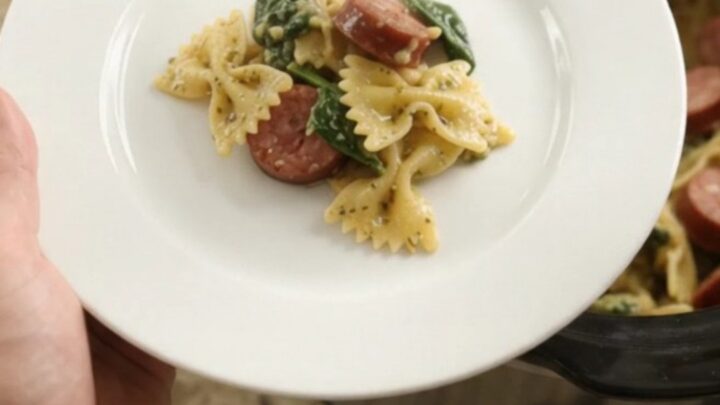
The final phase is all about serving. The pasta is tender, the sauce is thick and clinging to every piece, and the cheese pulls in long, stretchy strands. The kielbasa is glistening and caramelized at the edges. Spoon generous portions onto plates, and watch the steam curl upward. It's ready to eat immediately.
Common mistakes
A common mistake is adding too much liquid—the slow cooker creates enough moisture from the pesto, spinach, and the kielbasa's juices. Don't add broth unless the pasta seems dry at the end.
Another pitfall is overcooking the pasta, turning it mushy. Check at the 3-hour mark and adjust. Also, avoid lifting the lid repeatedly, as that slows the cooking. Finally, don't skip the cheese—it's essential for the creamy texture and flavor.
How to tell it’s done
The dish is done when the pasta is al dente—tender but not mushy—and the sauce is thick and creamy. The cheese should be completely melted and the top lightly golden. The kielbasa will be heated through and slightly caramelized at the edges.
If the pasta is still hard, continue cooking in 15-minute increments. The internal temperature of the kielbasa should reach 165°F (74°C) if you want to check, but since it's pre-smoked, it's already safe to eat; the cooking ensures it's hot throughout.
Up next · Part 3 of 3
4 variations · storage & make-ahead · 5 answers · printable card
Tips, FAQ & printable recipe (Part 3)← Back to the ingredients (Part 1)