Dinner · Part 2 of 3: Instructions
Crockpot Gruyère Cream Garlic Potato Beef Bites Step-by-step instructions
- Prep
- Cook
- Total
- Serves
- 6
Before you start
Before you start, cut the beef chuck into 1-inch cubes if not already done. Halve the baby potatoes so they cook evenly. Mince the garlic or use pre-minced garlic from a jar.
Soften the cream cheese by leaving it at room temperature for about 30 minutes, or microwave it in 10-second bursts until soft. Shred the Gruyère if you bought it in a block. Have a 6-quart slow cooker ready. No other prep is needed; this recipe is designed to be as simple as possible.
Ingredients at a glance (8)
- 2 lb beef chuck stew meat, cut into 1-inch cubes
- 1 1/2 lb baby Yukon Gold potatoes, halved
- 2 tbsp minced garlic
- 8 oz softened cream cheese, cut into chunks
- 1 1/2 cups shredded aged Gruyère cheese
- 1 tsp kosher salt
- 1/2 tsp black pepper
- toasted garlic brioche slices, for serving
Instructions
Layer and Cook
- Layer the raw ingredientsPlace the beef chuck cubes in the bottom of a 6-quart slow cooker in an even layer. Scatter the halved baby potatoes over the beef, then sprinkle the minced garlic over the top. Season with salt and pepper. Do not stir.Look for The beef and potatoes should fill the pot about halfway, with garlic scattered evenly.Tip For even cooking, keep the beef in a single layer as much as possible.
- Add the cheesesDot the surface with chunks of softened cream cheese, then sprinkle the shredded Gruyère evenly over the top. The cheese will melt and form a rich sauce as the slow cooker works.Look for The cream cheese and Gruyère should cover the beef and potatoes in a thick, patchy layer.Tip Cut the cream cheese into smaller chunks so it melts more evenly.
- Cook low and slowCover the slow cooker and cook on LOW for 6 to 7 hours, or on HIGH for 3 to 4 hours, until the beef is fork-tender and the potatoes are soft. The sauce will be bubbling and slightly thickened. Do not open the lid during cooking unless necessary. Let it rest for 3 minutes before slicing.Look for The sauce should be gently bubbling around the edges and the beef should shred easily with a fork.Safe temperature 145°F (63°C) internal temperature (steaks, chops and roasts)Tip Resist the urge to lift the lid; every peek adds 20 minutes of cooking time.
At the end of this phase, the slow cooker is full of raw ingredients: beef cubes, halved potatoes, garlic, and chunks of cream cheese and Gruyère. The cheese is not yet melted, and the beef is still raw.
The pot should be covered and set to cook. There is no visual change yet, but the aromas will start to develop after a few hours. Before moving to the next phase, ensure the slow cooker is set to the correct temperature and the lid is sealed.
Check and Rest
- Check for donenessAfter the minimum cooking time, check the beef by piercing a cube with a fork. It should offer no resistance and pull apart easily. The potatoes should be tender all the way through when pierced with a knife. If not done, continue cooking in 30-minute increments. Let it rest for 3 minutes before slicing.Look for The beef is fork-tender and the potatoes are soft; the sauce is thick and creamy.Safe temperature 145°F (63°C) internal temperature (steaks, chops and roasts)Tip For the safest result, use an instant-read thermometer: the beef should register at least 145°F (63°C).
- Rest the beefTurn off the slow cooker and let the beef rest in the sauce for at least 3 minutes. This allows the juices to redistribute and keeps the meat moist. The sauce will also settle and thicken slightly.Look for The bubbling subsides and the sauce becomes glossy.Safe temperature 145°F (63°C) internal temperature (steaks, chops and roasts)Tip Resting the beef is essential for the most tender bites.
After the cooking time, the sauce is bubbling gently around the edges, and the beef is fork-tender. The potatoes are soft, and the cheese has melted into a smooth, creamy sauce. The kitchen smells rich and savory. Before serving, turn off the slow cooker and let the beef rest for at least 3 minutes. This allows the juices to redistribute and the sauce to thicken slightly. Check the beef temperature to ensure it is at least 145°F (63°C).
Serve
- Serve over briochePlace a slice of toasted garlic brioche on each plate. Using a slotted spoon, ladle the beef, potatoes, and a generous amount of the creamy sauce over the brioche. Serve hot.Look for The beef is coated in a thick, cheesy sauce and the brioche soaks up the juices.Tip For a prettier presentation, spoon the sauce over the meat after plating.
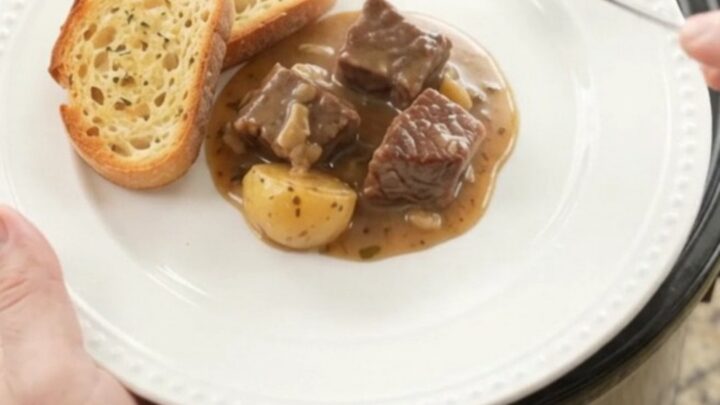
The finished dish is a hearty, creamy stew with tender beef, soft potatoes, and a glossy cheese sauce. The sauce clings to the meat and potatoes, and the garlic brioche adds a crisp, buttery contrast. The dish looks comforting and inviting, with steam rising from the bowl. Serve immediately while hot. The sauce may thicken as it cools, so have extra brioche on hand to soak up every drop.
Common mistakes
The most common mistake is lifting the lid too often to check on the dish. Every time you open the slow cooker, heat escapes and extends the cooking time. Another mistake is using a lean cut of beef, which can become dry and tough.
Stick with chuck or another well-marbled cut. Also, resist the urge to stir the ingredients after adding the cheese; stirring can break up the potatoes and make the sauce grainy. Finally, don't undercook the potatoes—they should be completely soft, not crunchy.
How to tell it’s done
The dish is done when the beef is fork-tender and the potatoes are soft all the way through. To test, pierce a piece of beef with a fork; it should offer no resistance and shred easily. A potato should be easily pierced with a knife.
The sauce should be thick and creamy, not watery. For food safety, the beef should reach an internal temperature of at least 145°F (63°C). Let the beef rest for at least 3 minutes before serving to allow the juices to redistribute.
- Steaks, chops and roasts: 145°F (63°C) in the thickest part, then a 3-minute rest
Up next · Part 3 of 3
4 variations · storage & make-ahead · 5 answers · printable card
Tips, FAQ & printable recipe (Part 3)← Back to the ingredients (Part 1)