Dinner · Part 1 of 3: Ingredients
Crockpot Bayou Butter Lobster Tails and Shrimp
- Prep
- Cook
- Total
- Serves
- 4
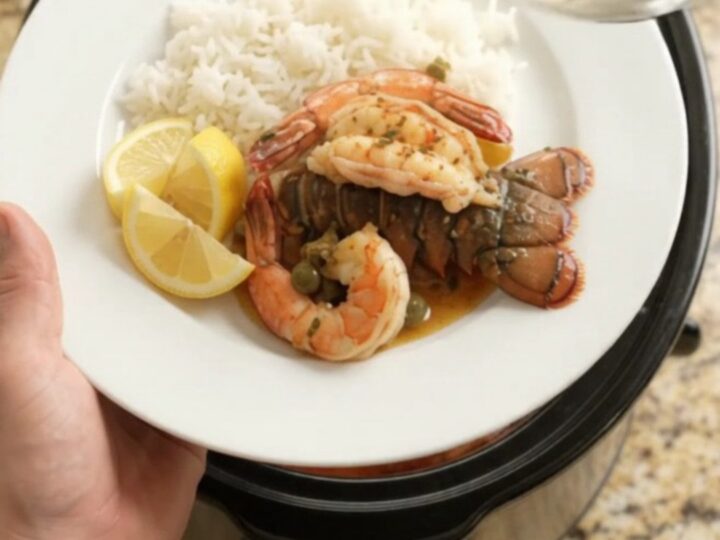
This crockpot recipe turns a handful of premium ingredients into a spectacular dinner with almost no effort. Split lobster tails and jumbo shrimp cook low and slow in a spiced Cajun butter sauce with lemon, capers, and white wine.
The result is tender, buttery seafood with a bright, savory finish. Just dump everything into the slow cooker and let it work its magic. Serve over steamed rice for a meal that feels special any night of the week.
Imagine coming home to the aroma of lobster and shrimp simmering in a rich, garlicky butter sauce. That's the promise of this slow-cooker seafood dish. The beauty is in its simplicity: raw seafood goes into the crockpot with lemon, capers, white wine, and a spiced Cajun butter.
After a couple of hours on low, you have a restaurant-quality entrée without standing over a stove. The sauce is perfect for spooning over jasmine rice, and the lemon wedges add a fresh, bright finish.
Ingredients
- 4 split cold-water lobster tails
- 1 lb raw jumbo shrimp, peeled and deveined
- 1 fresh yellow Meyer lemon, sliced
- 2 tbsp brined capers, drained
- 1/2 cup crisp white wine, such as Sauvignon Blanc
- 1/2 cup melted Cajun garlic-paprika butter
- 2 tbsp fresh lemon juice
for serving
- Steamed jasmine rice, for serving
- Lemon wedges, for serving
Why this recipe works
The slow cooker provides gentle, even heat that keeps delicate lobster and shrimp moist and tender. Unlike high-heat methods that can toughen seafood, the low setting allows the proteins to cook slowly, absorbing the flavors of the butter, wine, and aromatics without drying out. The result is a luxurious texture that feels indulgent yet effortless.
The combination of Cajun butter, lemon, capers, and white wine creates a sauce that is both rich and bright. The butter carries the spices and garlic, while the wine adds acidity and depth, and the capers bring a briny pop.
As the seafood cooks, it releases its juices into the sauce, creating a cohesive, flavorful broth that is far more than the sum of its parts.
Notes and substitutions
For the best flavor, use fresh, high-quality lobster tails and jumbo shrimp. If you can find them, cold-water tails are sweeter and more tender. The Meyer lemon adds a slightly floral note, but regular lemons work just as well. The Cajun butter can be store-bought or homemade; if using store-bought, look for one that is rich and spicy.
This recipe is designed for a 6-quart slow cooker. If your cooker runs hot, check the seafood at the 1.5-hour mark. The sauce will be thin at first, but it will thicken slightly as the seafood cooks.
For a thicker sauce, you can whisk in a little cornstarch slurry at the end, but it's not necessary. Serve the dish immediately for the best texture.
- Meyer lemon: Regular lemon works well; use 1 lemon sliced and 2 tablespoons juice.
- White wine: Use chicken or vegetable broth with a splash of lemon juice for a non-alcoholic version.
- Cajun butter: Melt 1/2 cup butter and stir in 1 teaspoon Cajun seasoning, 1 teaspoon paprika, and 1 clove minced garlic.
- Jumbo shrimp: Large shrimp or even scallops can be used; adjust cooking time as needed.
Equipment
- 6-quart slow cooker
- Slotted spoon
- Cutting board
- Chef's knife
- Measuring cups and spoons
- Small bowl for butter
Up next · Part 2 of 3
6 steps · 2 h of cooking · what to look for at each stage
Step-by-step instructions (Part 2)