Dinner · Part 2 of 3: Instructions
Crispy Yuzu Kosho Salmon Rice Bowl with Jammy Egg Step-by-step instructions
- Prep
- Cook
- Total
- Serves
- 2
Before you start
Before starting, make sure the rice is cooked and warm. If using leftover rice, reheat it in the microwave or on the stovetop with a splash of water.
Prepare the onsen egg ahead of time, or use a soft-boiled egg if you prefer. Have all ingredients measured and ready, as the cooking goes quickly once the pan is hot.
Ingredients at a glance (11)
- 2 fillets salmon, skin-on (about 6 oz each)
- 2 cups warm steamed Japanese short-grain rice
- 1 tbsp yuzu kosho paste
- 2 tbsp soy sauce
- 1 tbsp mirin
- 1 tbsp butter
- 2 tbsp furikake seasoning
- 1 soft-boiled onsen egg
- 1/2 avocado, sliced
- 1 tbsp kewpie mayonnaise
- 1 scallion, sliced
Instructions
Prepare the Rice and Egg
- Prepare the rice and eggCook the Japanese short-grain rice according to package directions, or use leftover warm rice. For the onsen egg, bring a small pot of water to 170°F (77°C) and gently lower the egg in its shell into the water. Cook for 13 minutes, then remove and immediately place in an ice bath to stop cooking. Peel carefully and set aside.Look for The rice should be tender and slightly sticky. The egg white should be set but the yolk still creamy when pressed.Safe temperature 160°F (71°C) internal temperature (egg dishes)Tip If you don't have a thermometer, use the 'low simmer' method: bring water to a boil, then add 1/2 cup cold water, then add the egg and cook for 12 minutes.
- Slice avocado and scallionHalve the avocado, remove the pit, and slice the flesh into thin wedges. Slice the scallion thinly, using both white and green parts. Set both aside for assembly.Look for The avocado should be ripe but still firm enough to slice neatly.Tip To keep avocado from browning, squeeze a little lemon juice over it, or place it in a bowl with the pit.
The rice should be warm and fluffy, and the egg should be peeled and ready. The avocado and scallion should be sliced and set aside.
At this point, the kitchen is calm, and everything is in place for the fast cooking ahead.
Sear and Glaze the Salmon
- Sear the salmonPat the salmon fillets dry with paper towels. Heat a large skillet over medium-high heat and add a thin layer of oil (or use a nonstick pan with no oil). Place the salmon skin-side down in the hot pan and press firmly with a spatula for 10 seconds to ensure even contact. Cook undisturbed for 5 minutes, until the skin is deeply golden and crisp.Look for The skin should be crackling and release easily from the pan. The flesh should be opaque about halfway up the side.Safe temperature 145°F (63°C) internal temperature (fish)Tip Resist the urge to move the salmon while it sears—this helps the skin crisp evenly.
- Flip and cook the flesh sideCarefully flip the salmon fillets using a thin spatula. Cook on the flesh side for 2 to 3 minutes, until the salmon is just cooked through and flakes easily with a fork. The internal temperature should reach 145°F (63°C) for food safety.Look for The salmon should feel firm to the touch and flake easily. The center should be opaque, not translucent.Safe temperature 145°F (63°C) internal temperature (fish)Tip If the salmon sticks, let it cook a little longer—it will release when the skin is crisp.
- Make the yuzu kosho glazeIn a small bowl, whisk together the yuzu kosho paste, soy sauce, mirin, and butter. After removing the salmon from the pan, pour the glaze into the hot skillet. It will bubble immediately. Stir and let it simmer for 30 seconds until slightly thickened and fragrant.Look for The glaze should be bubbly and fragrant, with the butter melted and the sauce slightly reduced.Tip If the glaze reduces too much, add a splash of water to loosen it.
- Glaze the salmonReturn the salmon fillets to the skillet, skin-side up, and spoon the bubbling glaze over the top. Let them sit in the glaze for 30 seconds, spooning the sauce over the fish continuously, until the fillets are well coated and shiny.Look for The salmon should be glossy and coated with a sticky, amber glaze.Safe temperature 145°F (63°C) internal temperature (fish)Tip Keep the heat on low to avoid burning the glaze.
The salmon skin is deeply golden and crackling, and the flesh is just cooked through. The glaze is bubbling and fragrant, coating the fish with a glossy, amber sheen. The pan should smell of citrus, soy, and butter.
Assemble the Bowls
- Assemble the rice bowlsDivide the warm steamed rice between two bowls. Sprinkle each bowl generously with furikake seasoning, using about 1 tablespoon per bowl. Arrange the sliced avocado on one side of each bowl.Look for The rice should be evenly coated with furikake, and the avocado arranged neatly.Tip Use warm rice—cold rice will not absorb the flavors as well.
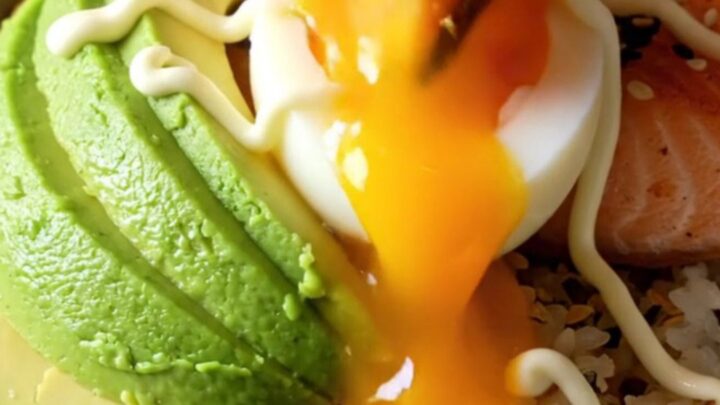
- Top with salmon and eggPlace a glazed salmon fillet on top of the furikake rice in each bowl. Gently place the soft-boiled onsen egg on top of the salmon or next to it. Using chopsticks or a knife, pierce the egg yolk so it runs over the rice and salmon.Look for The yolk should be creamy and golden, flowing over the rice and salmon.Safe temperature 160°F (71°C) internal temperature (egg dishes)Tip If the egg is too soft to handle, use a spoon to scoop it out of its shell.
- Drizzle with mayo and garnishDrizzle the kewpie mayonnaise over the top of each bowl in a zigzag pattern. Sprinkle with the sliced scallion. Serve immediately while the rice is warm and the salmon is crisp.Look for The bowl should look vibrant with the green scallion, yellow yolk, and creamy mayo.Tip For extra heat, add a little more yuzu kosho on top before serving.
The rice is dusted with furikake, the avocado is arranged, and the salmon sits on top. When the egg is pierced, the yolk flows out, mixing with the mayo and scallions. The bowl looks vibrant and inviting, ready to serve.
Common mistakes
A common mistake is moving the salmon too soon. Let the skin sear undisturbed for the full 5 minutes—it will release easily when it's ready.
Another mistake is overcooking the salmon, which makes it dry. Use a thermometer for accuracy. Also, don't skip pressing the salmon down; this ensures even crisping.
How to tell it’s done
The salmon is done when the internal temperature reaches 145°F (63°C) and the flesh flakes easily with a fork. The skin should be deeply golden and crisp.
The egg is done when the white is set but the yolk is still creamy—if you prefer a firmer yolk, cook it a few minutes longer.
- Fish: 145°F (63°C) in the thickest part
- Egg dishes: 160°F (71°C) in the thickest part
Up next · Part 3 of 3
4 variations · storage & make-ahead · 5 answers · printable card
Tips, FAQ & printable recipe (Part 3)← Back to the ingredients (Part 1)