Dinner · Part 1 of 3: Ingredients
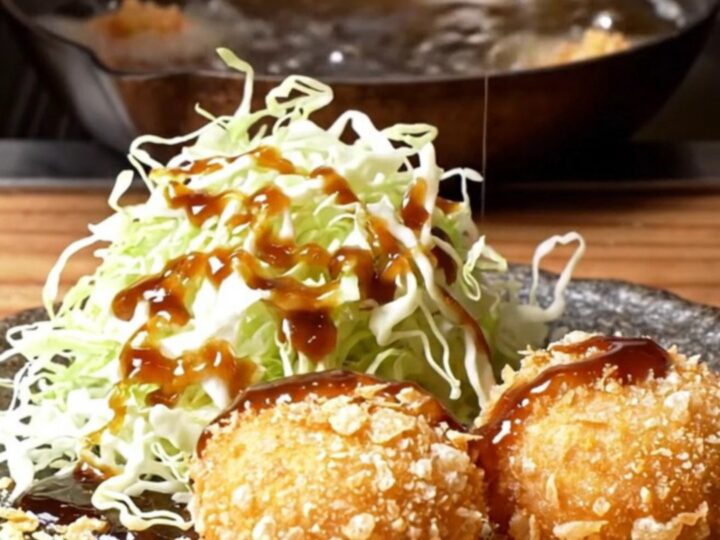
Crispy Wagyu Potato Korokke in 30 Minutes
- Prep
- Cook
- Total
- Serves
- 4
Korokke is Japan's beloved take on the croquette: a soft, savory potato filling hidden inside a crust of giant panko flakes that shatters at the first bite.
This version folds caramelized sweet onion and rich wagyu beef into dry, fluffy mashed potatoes, shapes the mixture into tight ovals and fries them fast at 360°F so the coating turns golden-amber and airy instead of greasy. A drizzle of fruity tonkatsu sauce over cool shredded cabbage finishes it exactly the way the izakaya counters of Tokyo serve it.
These croquettes look like restaurant work but come together with everyday technique: boil potatoes hard, mash them dry, cook the beef fully, shape, coat and fry for barely three minutes. The whole recipe runs about an hour and fifteen minutes from pantry to plate, most of it hands-off boiling and cooling.
The filling is deliberately seasoned with white pepper only, letting the sweetness of the onion and the richness of the wagyu carry the flavor. Serve four croquettes as a main over shredded cabbage, or split the batch smaller for a party appetizer that disappears in minutes. Everything can be shaped hours ahead, which makes this a practical dish for guests as well as a weeknight treat.
Ingredients
- 1 lb Russet potatoes, peeled and cut into chunks
- 1 1/2 tbsp unsalted butter
- 1 sweet onion, finely diced
- 5 oz ground wagyu beef
- 1/2 tsp white pepper
- 1 1/2 cups panko breadcrumbs, giant-flake if available
- 4 cups rice bran oil, or another neutral oil, for deep-frying
For serving
- Shredded cabbage, for serving
- Tonkatsu sauce, for serving
Why this recipe works
The method works because of one word: dryness. Russet potatoes are steamed dry after draining, so the mash absorbs the buttery onion and wagyu fat without turning gluey or heavy.
A dry, starchy filling is firm enough to shape into clean ovals with no flour or egg binder, which keeps the interior tender and lets it heat through in the short fry. White pepper rather than black keeps the filling pale and adds a gentle warming heat that reads as Japanese comfort food rather than pepper heat.
The crust depends on temperature discipline, not luck. Panko's large, flat flakes trap air, and frying at a steady 360°F makes the water in the coating flash to steam, which pushes the flakes outward into a light, hollow armor instead of letting oil soak in. Frying only two to three croquettes at a time keeps the temperature from dropping, so each batch comes out with the same crackling shell and the same pale-gold color from edge to edge.
Notes and substitutions
Ground wagyu gives the filling its signature richness, but regular 80% lean ground beef or ground pork makes an excellent everyday korokke. Look for panko sold as Japanese-style breadcrumbs; the giant-flake kind fries dramatically crispier than fine breadcrumbs and should be used here rather than substituted.
Tonkatsu sauce is the dark, fruity vegetable sauce sold near the soy sauces in most supermarkets; it is worth seeking out, since its tang and sweetness cut through the fried crust.
Equipment is simple: a heavy pot for frying, a thermometer you trust, and a wire rack for draining so the bottoms stay crisp instead of steaming on paper towels. If the filling feels too soft to shape, it needs a few more minutes of steam-drying, not extra breadcrumbs. Rice bran oil is traditional for its clean flavor and high smoke point, but any neutral oil with a smoke point above 400°F behaves the same way.
- ground wagyu beef: Regular ground beef or ground pork works well; choose 80% lean so the filling stays juicy and flavorful.
- rice bran oil: Use any neutral, high-heat oil such as canola, vegetable or refined peanut oil for frying.
- tonkatsu sauce: Stir together ketchup, Worcestershire sauce, a little soy sauce and a pinch of sugar for a quick homemade version.
- white pepper: Ground black pepper can be used, though white pepper keeps the filling pale and has a gentler heat.
Equipment
- Large pot
- Box grater or potato ricer
- Large skillet
- Deep heavy pot or Dutch oven
- Deep-fry or candy thermometer
- Santoku knife
- Slotted spoon or spider
- Wire cooling rack set over a sheet pan
Up next · Part 2 of 3
9 steps · 25 min of cooking · what to look for at each stage
Step-by-step instructions (Part 2)