Appetizers · Part 1 of 3: Ingredients
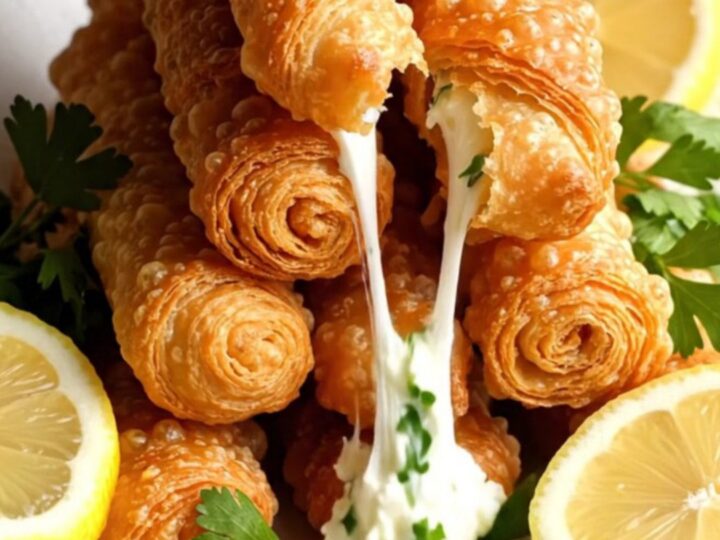
Crispy Turkish Sigara Böreği with Feta and Parsley
- Prep
- Cook
- Total
- Serves
- 8
Turkish Sigara Böreği are the ultimate crispy, savory bite: thin, flaky phyllo rolled into slender cigars around a salty feta and parsley filling, then shallow-fried until blistered and golden. The first crackle of the crust gives way to a molten, herb-flecked center that is impossible to resist.
These little rolls are a beloved Turkish meze and street-food favorite, perfect for parties, snacks, or a quick appetizer. With just a handful of ingredients and about thirty minutes, you can bring the vibrant flavors of Turkey to your table.
These golden phyllo cigars are a staple of Turkish cuisine, known for their shattering crispness and savory cheese filling. The key is a simple combination of crumbled white feta, fresh parsley, and a touch of egg white to bind it all together.
Rolled tightly in triangular yufka sheets, they fry up in minutes to a beautiful amber color. Serve them hot with lemon wedges for a bright, tangy contrast. Whether as a meze platter star or a casual snack, they are guaranteed to disappear quickly.
Ingredients
- 1 packet triangular yufka sheets (24 triangles)
- 250 g Turkish white feta cheese, crumbled
- 1/2 cup flat-leaf parsley, chopped
- 1 egg white
- frying oil, for shallow frying, to taste
- lemon wedges, for serving
Why this recipe works
The magic of Sigara Böreği lies in the contrast between the ultra-crispy, blistered phyllo exterior and the creamy, salty cheese interior. Using yufka, a thin Turkish pastry similar to phyllo but slightly thicker, provides a sturdy yet delicate wrapper that fries to a shattering crunch.
The egg white acts as a binder, holding the feta and parsley together so the filling stays put while frying, while also adding a slight richness that complements the cheese.
Shallow frying, rather than deep frying, allows the cigars to cook evenly, producing a golden, blistered surface without absorbing too much oil. The high heat quickly sets the pastry, creating a rigid shell that protects the cheese as it melts. Turning them gently ensures all sides get that desirable crackled texture. The result is a perfectly balanced bite: crisp, salty, herby, and utterly satisfying.
Notes and substitutions
Turkish white feta is a brined cheese with a creamy, crumbly texture and a salty, tangy flavor. If unavailable, use a good-quality feta from a deli counter, preferably one in brine rather than pre-crumbled, for the best texture. Flat-leaf parsley adds a fresh, peppery note that cuts through the richness of the cheese. The egg white is essential for binding the filling; do not omit it, or the filling may spill out during frying.
Triangular yufka sheets are specifically cut for making börek; you can find them in Middle Eastern or Turkish grocery stores. If you can only find large rectangular phyllo sheets, cut them into triangles (about 6 per sheet).
Keep the unused sheets covered with a damp towel to prevent them from drying out. For frying, choose a neutral oil with a high smoke point, such as canola or sunflower oil, to avoid overpowering the delicate flavors.
- Turkish white feta: Use a creamy, salty feta or a combination of feta and ricotta for a milder filling.
- Triangular yufka sheets: If yufka is unavailable, use 6 sheets of phyllo dough cut into 4 triangles each (24 total).
- Frying oil: Use a neutral oil with a high smoke point, such as canola, sunflower, or vegetable oil.
- Flat-leaf parsley: Substitute with fresh dill or a mix of dill and mint for a different herb note.
Equipment
- Mixing bowl
- Fork
- Pastry brush
- Large skillet
- Tongs
- Paper towels
- Cutting board
- Knife
Up next · Part 2 of 3
7 steps · 10 min of cooking · what to look for at each stage
Step-by-step instructions (Part 2)