Desserts · Part 3 of 3: Tips & recipe card
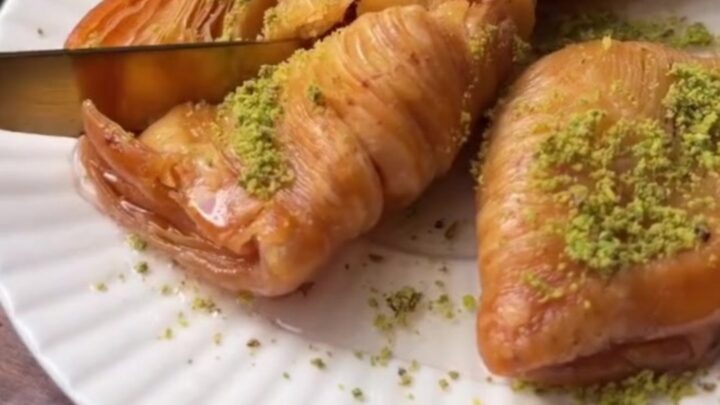
Crispy Turkish Mussel Baklava with Lemon Syrup Tips, FAQ & printable recipe
- Prep
- Cook
- Total
- Serves
- 12
Tips for success
For the crispiest result, bake the baklava until it's deeply golden—don't underbake. The layers need time to dry out and crisp. Use a high-quality unsalted butter for the best flavor, and make sure it's foaming when you pour it over the dough, as this helps it absorb.
If the syrup is too thick, it may crystallize; add a little water if needed. Let the baklava cool completely before cutting to avoid crumbling.
When cutting the baklava, use a sharp, thin-bladed knife and cut with a gentle sawing motion. This prevents the layers from crushing. If you're making this ahead, keep the syrup separate and pour it just before serving to maintain crispness.
The baklava is best enjoyed the same day, but leftovers can be stored in an airtight container for up to a week—just be aware that the crispness may soften slightly.
Variations
- Walnut Baklava: Replace the pistachios with finely chopped walnuts for a classic flavor. Toast the walnuts lightly to deepen their nuttiness. The syrup can be made with orange juice instead of lemon for a sweeter, fruitier note.
- Spiced Syrup: Add a cinnamon stick and a few cloves to the syrup while simmering, then remove before pouring. This adds a warm, aromatic depth that pairs well with the nuts. For a floral twist, add a teaspoon of rose water to the cooled syrup.
- Chocolate Drizzle: After the baklava has cooled, drizzle melted dark chocolate over the top. The bitterness of the chocolate contrasts beautifully with the sweet, lemony pastry. Let the chocolate set before cutting to keep the pieces clean.
- Savory Version: For a savory twist, omit the syrup and instead sprinkle the baked pastry with sea salt, black pepper, and a little za'atar. Serve as an appetizer with crumbled feta and fresh herbs. This is unexpected but delicious.
Storage and make-ahead
- Fridge
- Store in an airtight container at room temperature for up to 5 days. Do not refrigerate, as it will soften the pastry.
- Freezer
- Freeze unbaked assembled baklava for up to 3 months. Bake from frozen, adding 10 minutes to the baking time.
- Reheat
- Reheat baked baklava in a 300°F (150°C) oven for 5-7 minutes to crisp it up again. Avoid microwaving.
Store leftover baklava in an airtight container at room temperature for up to 5 days. To maintain crispness, place a sheet of parchment paper between layers.
Avoid refrigerating, as it can make the pastry soggy. If the baklava becomes too soft, reheat it in a 300°F (150°C) oven for 5 minutes to restore some crunch.
The dough spirals can be assembled and refrigerated for up to 24 hours before baking. Cover the dish tightly with plastic wrap.
The lemon syrup can also be made ahead and stored in the refrigerator for up to a week. When ready to bake, pour the cool syrup over the hot baklava as directed. This makes it perfect for entertaining.
Serving ideas
Serve the baklava at room temperature for the best texture. Arrange the pieces on a platter, and if desired, garnish with a few extra chopped pistachios and a light dusting of confectioners' sugar. The bright lemon flavor pairs beautifully with strong Turkish coffee or a cup of mint tea.
For a more indulgent presentation, serve with a dollop of clotted cream or vanilla ice cream—the cold creaminess contrasts with the crisp pastry. The baklava is also lovely with fresh berries on the side. Cut pieces are best served within a few hours of adding the syrup, as the pastry will gradually soften.
Frequently asked questions
What is mussel baklava?
Can this recipe be made ahead of time?
Why is the syrup poured cold over hot baklava?
Can you use phyllo dough instead of yufka?
How do you keep the baklava crispy?
Crispy Turkish Mussel Baklava with Lemon Syrup
Ingredients
- 20 thin dough rounds (yufka or phyllo)
- 1/2 cup cornstarch, for dusting
- 70 g unsalted butter, melted
- 1 cup shelled pistachios, finely chopped
- 1 cup granulated sugar
- 1 cup water
- 1/4 cup fresh lemon juice
Instructions
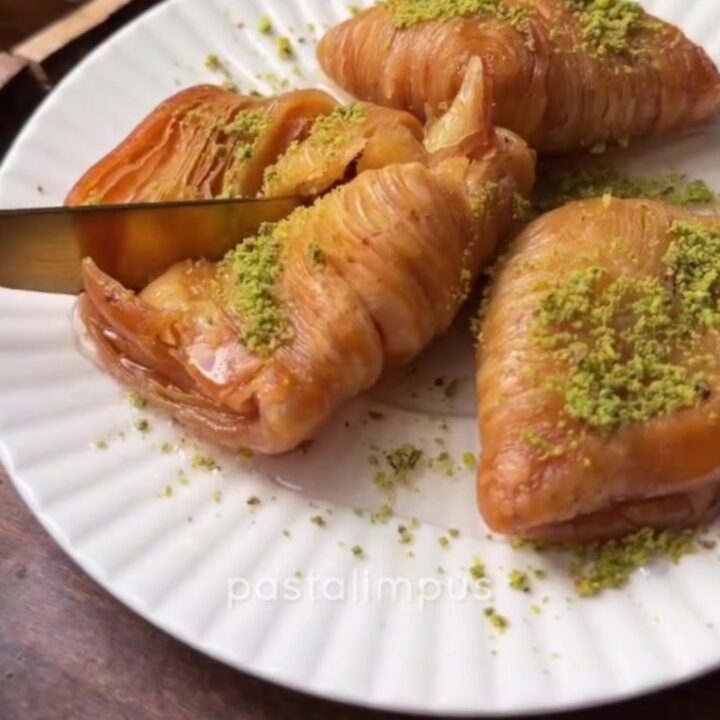
- Stack the 20 thin dough rounds on a work surface, generously dusting cornstarch between each layer to prevent sticking. Use a rolling pin to roll the entire stack together into one paper-thin sheet, about 18 inches wide. Roll the stack into a tight cylinder log, then use a sharp knife to cut the log into 1/2-inch pinwheel discs. Each disc should show distinct spiral rings.
- Place the pinwheel discs snugly in a buttered 9x13-inch baking dish, cut side up. Press them gently to fill any gaps. The layers should be tightly packed so they hold together during baking.
- Sprinkle the finely chopped pistachios evenly over the top of the arranged discs, pressing them gently into the dough so they adhere during baking.
- Melt the butter in a small saucepan over low heat until foaming. Spoon the hot melted butter evenly over the entire surface of the pastry, making sure every disc gets coated. Let the butter soak in for a few minutes.
- Preheat the oven to 350°F (180°C). Bake the baklava for 30–35 minutes, until the pastry is deep golden brown and has visibly puffed and separated into hundreds of layers. The top should feel crisp and sound hollow when tapped.
- While the baklava bakes, combine the sugar, water, and lemon juice in a small saucepan. Bring to a boil over medium heat, stirring until the sugar dissolves. Reduce the heat and simmer for 5 minutes until slightly thickened. Remove from heat and let cool to room temperature.
- Remove the baklava from the oven and immediately pour the cool lemon syrup evenly over the hot pastry. The syrup will sizzle and be absorbed quickly. Let the baklava sit for at least 30 minutes to absorb the syrup fully.
- Allow the baklava to cool completely on a wire rack. Once cool, use a sharp knife to cut through the pieces along the existing spiral lines. Serve at room temperature.
Estimated nutrition per serving
- Calories
- 320
- Protein
- 4 g
- Carbohydrates
- 35 g
- Fat
- 18 g
Next recipe

Crispy Tahini Walnut Cookies with a Halva Crumb
See the recipe → →This recipe is based on a short cooking video and is published under the pen name Clara Weller. It was checked before publication, but errors can slip through. Nutrition, when shown, is an estimate. Read more in our editorial policy and on our food safety page.
More recipes to try
No-Bake Cardamom Date Nut Rolls
Total time: 1 h 25 min
Whole Lemon Blender Loaf Cake with Tangy Glaze
Total time: 1 h 10 min
Caramel Trileçe: Rich Milk Soaked Cake with Caramel
Total time: 1 h
Chilled Turkish Kadayıf Dessert with Chocolate and Pistachio
Total time: 45 min
Brown Butter Chocolate Chip Banana Bread
Total time: 1 h 25 min