Desserts · Part 1 of 3: Ingredients
Crispy Turkish Mussel Baklava with Lemon Syrup
- Prep
- Cook
- Total
- Serves
- 12
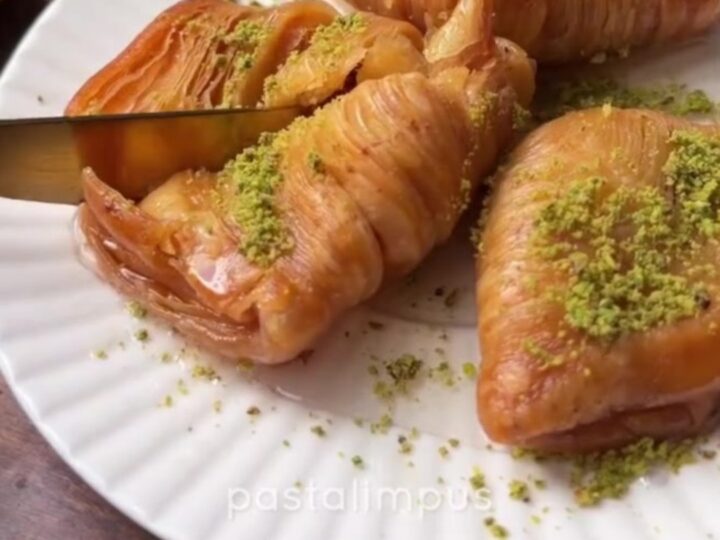
Imagine a dessert that shatters with a musical crunch, revealing syrup-soaked pistachio treasure in every bite. This Turkish mussel baklava, with its paper-thin layers rolled into tight spirals, is a showstopper for any gathering.
The contrast of cool, bright lemon syrup against the warm, buttery pastry creates an irresistible harmony. Each piece is a work of art—crisp, nutty, and deeply satisfying. Whether you're a seasoned baker or a curious home cook, this recipe guides you through every step to achieve that perfect crackle.
Turkish mussel baklava, named for its mussel-like spiral shape, is a beloved variation of the classic dessert. Here, 20 thin dough rounds are stacked and rolled together, then sliced into pinwheels that bake into hundreds of whisper-thin, crispy layers.
The final flourish is a cool lemon syrup poured over the hot pastry, creating a sound like no other. This recipe stays true to the video's method: simple ingredients, precise technique, and a dramatic finish. The result is a dessert that's both elegant and approachable, perfect for special occasions or a weekend baking project.
Ingredients
- 20 thin dough rounds (yufka or phyllo)
- 1/2 cup cornstarch, for dusting
- 70 g unsalted butter, melted
- 1 cup shelled pistachios, finely chopped
Lemon Syrup
- 1 cup granulated sugar
- 1 cup water
- 1/4 cup fresh lemon juice
Why this recipe works
The magic of this baklava lies in the paper-thin layers. Rolling the entire stack together ensures each pinwheel has dozens of delicate sheets that separate during baking, creating that signature shattering crispness. The generous cornstarch dusting between layers prevents them from fusing, allowing the pastry to bloom in the oven.
The contrast of temperatures is key: cool lemon syrup poured over hot pastry ensures the syrup is absorbed quickly without making the layers soggy.
The lemon's acidity balances the richness of the butter and nuts, while the sugar provides the classic baklava sweetness. This method yields a dessert that's crisp on the outside, tender within, and bursting with flavor.
Notes and substitutions
Use the thinnest dough you can find—yufka or phyllo sheets work best. If using phyllo, thaw it overnight in the refrigerator and keep it covered with a damp towel while working. The cornstarch is not just for dusting; it also helps create the distinct layers. Don't skip it, as it's essential for the texture.
For the pistachios, choose unsalted, shelled ones and chop them finely but not to a powder. If you prefer a different nut, walnuts or almonds are great substitutes.
The lemon syrup can be adjusted to taste—add a bit more lemon juice if you like it tarter, or a cinnamon stick for warmth. Use a heavy-bottomed saucepan for the syrup to prevent scorching.
- cornstarch: potato starch or rice flour, for dusting
- pistachios: finely chopped walnuts or almonds for a different nut flavor
- unsalted butter: ghee or clarified butter for a richer taste and crispier texture
- lemon juice: orange juice or a mix of orange and lemon for a citrus variation
Equipment
- Rolling pin
- Sharp knife
- Baking dish (9x13-inch)
- Pastry brush
- Small saucepan
- Wire rack
Up next · Part 2 of 3
8 steps · 35 min of cooking · what to look for at each stage
Step-by-step instructions (Part 2)