Desserts · Part 2 of 3: Instructions
Crispy Turkish Mussel Baklava with Lemon Syrup Step-by-step instructions
- Prep
- Cook
- Total
- Serves
- 12
Before you start
Before starting, gather all ingredients and equipment. Clean and dry the mussel shells thoroughly. Melt the clarified butter and set aside. Line a baking tray with parchment paper. Have a small saucepan ready for the syrup.
Measure all ingredients precisely, as the dough's texture depends on the balance of wet and dry ingredients. Let the egg and yogurt come to room temperature for easier mixing.
Ingredients at a glance (11)
- 1/2 cup whole milk
- 1/2 cup vegetable oil
- 1/2 cup plain yogurt
- 1 large egg
- 1 tbsp white vinegar
- 1 tsp baking powder
- 2 1/2 cups all-purpose flour
- 1 cup clarified butter, melted
- 2 cups granulated sugar
- 1 cup water
- 1/4 cup fresh lemon juice
Instructions
Make and rest the dough
- Make the silky doughIn a large bowl, whisk together the milk, oil, yogurt, egg, vinegar, and baking powder until smooth. Gradually add the flour, stirring with a wooden spoon until a soft dough forms. Turn the dough out onto a lightly floured surface and knead for 5–7 minutes until silky and elastic. Divide the dough into 12 equal balls, cover with plastic wrap, and let rest for 30 minutes.Look for The dough should be smooth, soft, and not sticky; it should spring back when pressed.Safe temperature 160°F (71°C) internal temperature (egg dishes)Tip If the dough feels too sticky, add a little more flour, a tablespoon at a time.
- Rest the doughCover the dough balls with plastic wrap or a clean kitchen towel and let them rest at room temperature for 30 minutes. This resting period relaxes the gluten, making the dough easier to roll and shape without tearing.Look for After resting, the dough will be more pliable and easier to stretch.Tip Resting is essential for a tender, flaky texture; do not skip it.
The dough should be soft, silky, and elastic after kneading. It should not stick to your hands and should spring back when pressed. After resting, the dough will be more pliable and easier to roll without shrinking. The dough balls should be smooth and covered to prevent drying.
Shape and bake
- Shape the mussel shellsPreheat the oven to 360°F (180°C). On a lightly floured surface, roll one dough ball into a thin circle about 6 inches in diameter. Place a clean mussel shell in the center, then fold the dough over the shell, pressing gently to mold the dough around the shell’s ridges. Trim any excess dough, leaving a thin edge. Place the shaped dough on a baking tray. Repeat with the remaining dough balls.Look for The dough should cling to the shell, showing the ribbed pattern clearly.Tip Keep the dough pieces covered while working to prevent them from drying out.
- Bake the baklavaPour the melted clarified butter over the shaped dough on the baking tray, making sure each piece is well coated. Bake for 35 minutes, until the baklava are puffed and deeply golden brown. The butter will bubble and sizzle as the dough crisps.Look for The baklava should be golden all over, with crisp, crackling edges.Tip Rotate the tray halfway through baking for even browning.
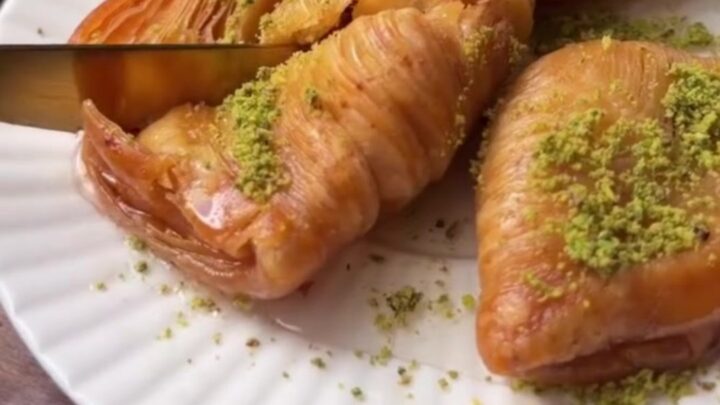
The shaped dough should cling to the mussel shells, showing the ridged pattern clearly. During baking, the butter will bubble and the dough will puff up, turning a deep golden brown. The kitchen will smell of rich butter and toasted pastry. The baklava should be crisp to the touch and sound hollow when tapped.
Syrup and serve
- Make the lemon syrupWhile the baklava bake, combine the sugar, water, and lemon juice in a small saucepan. Bring to a boil over medium heat, stirring until the sugar dissolves. Reduce the heat and simmer for 5 minutes, until the syrup thickens slightly. Remove from heat and let cool to room temperature.Look for The syrup should be clear and slightly thickened, like a light honey.Tip Cooling the syrup is important; hot syrup on hot pastry can make it soggy.
- Drench with syrupAs soon as the baklava come out of the oven, pour the cooled lemon syrup evenly over the hot pastries. The syrup will sizzle and be absorbed as the pastries cool. Let the baklava rest for at least 10 minutes before serving so the syrup soaks in and the crust stays crisp.Look for The baklava will absorb the syrup and become glossy, with a crackling sound as it cools.Tip Serve warm or at room temperature; the crunch is best within a few hours.
The syrup should be clear and slightly thickened, with a bright lemon aroma. When poured over the hot baklava, it should sizzle and be absorbed quickly, leaving a glossy, sticky surface.
As the pastries cool, you'll hear a faint crackling sound—that's the sugar syrup hardening into a crisp shell. Let them rest for at least 10 minutes before serving.
Common mistakes
Overworking the dough can make it tough; knead just until smooth. If the dough tears when shaping, let it rest for a few more minutes. Using too much flour when rolling can make the dough dry; use only as needed.
Pouring hot syrup over hot pastry can make it soggy—always cool the syrup to room temperature. Baking at too high a temperature can burn the butter before the dough cooks through; stick to 360°F (175°C).
How to tell it’s done
The baklava are done when they are puffed, deeply golden brown, and feel crisp to the touch. The edges should be slightly darker and crackly. If using an instant-read thermometer, the internal temperature of the dough should be at least 160°F (71°C) to ensure the egg is fully cooked.
After the syrup is poured, the pastries should be glossy and the syrup absorbed within 10 minutes. The final texture should be crisp on the outside with a tender, syrupy interior.
- Egg dishes: 160°F (71°C) in the thickest part
Up next · Part 3 of 3
4 variations · storage & make-ahead · 5 answers · printable card
Tips, FAQ & printable recipe (Part 3)← Back to the ingredients (Part 1)