Desserts · Part 1 of 3: Ingredients
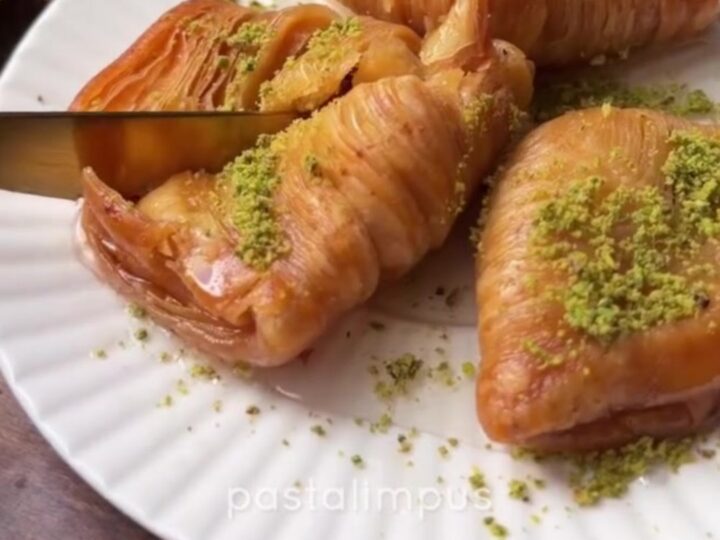
Crispy Turkish Mussel Baklava with Lemon Syrup
- Prep
- Cook
- Total
- Serves
- 12
Traditional Turkish mussel baklava gets a stunning, crunchy twist: a silky dough shaped over real mussel shells, baked in bubbling clarified butter, then drenched in a bright lemon syrup that crackles with every bite.
The result is a dessert that looks like a seaside treasure and tastes like pure indulgence. The hundreds of micro-thin ridges on the dough create an incredible texture that soaks up the syrup while staying shatteringly crisp.
This recipe brings the iconic Turkish street-food favorite to your home kitchen. Mussel baklava, or midye baklava, is a specialty from the Aegean coast, where pastry chefs shape delicate dough over mussel shells to create a crisp, shell-like crust.
The dough is enriched with milk, yogurt, and oil, giving it a tender crumb that bakes to a deep golden brown. The finishing touch is a lemon-infused sugar syrup poured over the hot pastries, creating a crackling, glossy finish that is impossible to resist.
Ingredients
- 1/2 cup whole milk
- 1/2 cup vegetable oil
- 1/2 cup plain yogurt
- 1 large egg
- 1 tbsp white vinegar
- 1 tsp baking powder
- 2 1/2 cups all-purpose flour
- 1 cup clarified butter, melted
Lemon Syrup
- 2 cups granulated sugar
- 1 cup water
- 1/4 cup fresh lemon juice
Why this recipe works
The dough is enriched with milk, yogurt, and oil, which creates a tender, pliable texture that can be stretched over the shells without tearing.
The yogurt adds a slight tang and helps the dough brown beautifully in the oven. The resting period allows the gluten to relax, making the dough easier to shape and ensuring a delicate, flaky crumb once baked.
Clarified butter is the key to a crisp, golden crust. Because the milk solids have been removed, clarified butter has a higher smoke point and won't burn during the long bake.
The butter saturates the dough, creating layers that puff and crisp as they bake. The lemon syrup, poured over the hot pastries, is absorbed slowly, adding moisture and flavor without making the crust soggy.
Notes and substitutions
Use fresh, clean mussel shells. If you don't have them, you can shape the dough over small ovenproof ramekins or even your thumb to create a similar ridged effect. The shells are only used as molds; they are not eaten. Make sure to wash and dry them thoroughly before using.
For the syrup, use freshly squeezed lemon juice for the brightest flavor. The syrup should be cooled to room temperature before pouring over the hot baklava; this contrast helps the crust stay crisp. If you prefer a less sweet dessert, reduce the sugar to 1 1/2 cups, but keep the water and lemon juice the same.
- whole milk: Any milk (2% or whole) works; plant-based milks may alter the dough texture.
- vegetable oil: Sunflower or canola oil can be used in place of vegetable oil.
- plain yogurt: Greek yogurt can be used; thin with a tablespoon of milk if too thick.
- clarified butter: Ghee is a perfect substitute for clarified butter.
Equipment
- Mussel shells (clean, dry)
- Baking tray
- Rolling pin
- Pastry brush
- Small saucepan
- Mixing bowl
- Plastic wrap
- Fork
Up next · Part 2 of 3
6 steps · 35 min of cooking · what to look for at each stage
Step-by-step instructions (Part 2)