Dinner · Part 1 of 3: Ingredients
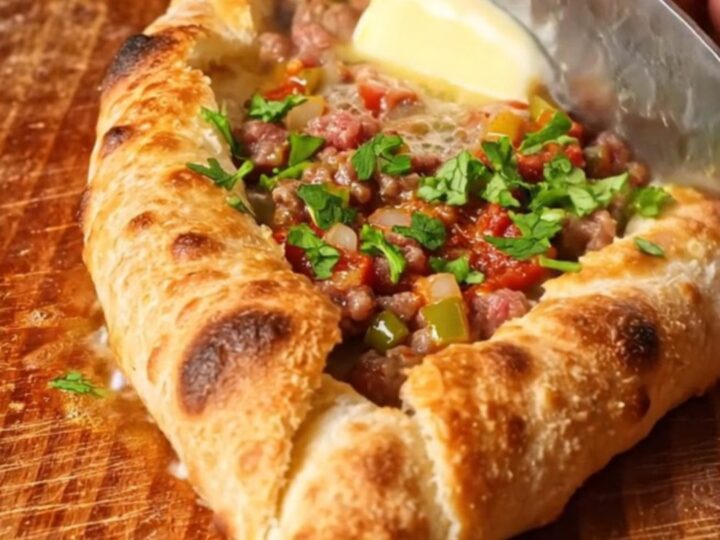
Crispy Turkish Kıymalı Pide with Melted Butter
- Prep
- Cook
- Total
- Serves
- 4
This Turkish pide is a boat-shaped flatbread with a crackling crust, a spiced ground beef filling, and a final brush of melting butter that turns every bite glossy and rich.
The dough is simple, the filling comes together in minutes, and the blazing-hot oven does the rest — giving you blistered edges, a tender center, and a savory, satisfying dinner that feels like a trip to a Turkish bakery. Serve it hot, straight from the oven, with a shower of fresh parsley.
Kıymalı pide is one of Turkey's most beloved street foods: a canoe-shaped flatbread filled with seasoned ground beef, baked until the edges blister and char, then finished with a generous rub of cold butter. The contrast between the crisp, crackly crust and the moist, spiced filling is what makes it irresistible.
This recipe recreates that experience at home with a simple yeast dough, a quick no-cook filling, and a very hot oven. The result is a golden, buttery pide that slices with a loud crunch and tastes best the moment it comes out.
Ingredients
Dough
- 2 1/4 cups bread flour
- 1 tsp active dry yeast
- 1 tsp salt
- 1 cup warm water
Filling
- 10 1/2 oz ground beef
- 1 grated onion
- 1 diced tomato
- 1 green pepper, finely chopped
- 1 tbsp tomato paste
- 1 tsp pul biber (Turkish red pepper flakes)
- 1 tsp salt
For brushing
- 1.75 oz village butter (or high-fat butter), cold
For serving
- Fresh flat-leaf parsley, chopped, for serving
Why this recipe works
The dough uses bread flour, which has a higher protein content than all-purpose flour. That extra gluten gives the crust a chewy, substantial bite that stands up to the heavy filling and the high heat. Kneading develops the gluten fully, so the dough stretches into a thin, even oval without tearing, and the long rest allows the yeast to ferment slowly, building flavor and making the dough easier to shape.
Baking on a preheated stone at 480°F (250°C) mimics the intense heat of a professional bread oven. The stone absorbs moisture from the dough's surface, creating a dry, blistering environment that produces a crisp, crackly crust in just 10 minutes.
The filling, spread thin and exposed, cooks quickly without drying out, and the cold butter brushed on afterward melts into the hot crust, adding richness and a glossy sheen that makes the pide truly unforgettable.
Notes and substitutions
Bread flour is the key to the crust's texture; if you only have all-purpose, the pide will still be good but slightly less chewy. The filling uses grated onion, which releases moisture and keeps the beef tender, and pul biber — Turkish red pepper flakes — which provide a mild, fruity heat.
If you can't find pul biber, a mix of Aleppo pepper and regular red pepper flakes works well. Use a high-fat butter for brushing; village butter is traditional, but European-style butter is a good substitute.
The dough needs a warm spot to rise; an oven with the light on or a sunny counter works. When shaping, keep the dough covered so it doesn't dry out. The filling should be spread in a thin, even layer — too much will make the pide soggy. Don't skip the hot stone; a cold pan will result in a pale, tough crust. Finally, brush the butter generously while the pide is still hot, so it melts and soaks into every crevice.
- bread flour: All-purpose flour works, but the crust will be slightly less chewy.
- pul biber: Use 1/2 tsp Aleppo pepper plus 1/2 tsp regular red pepper flakes for a similar mild heat.
- village butter: Use high-fat European-style butter for a richer, more authentic flavor.
- ground beef: Ground lamb is traditional and adds a deeper, gamey note.
Equipment
- Large mixing bowl
- Rolling pin
- Baking stone or heavy sheet pan
- Pastry brush
- Rocker knife or sharp chef's knife
- Measuring cups and spoons
Up next · Part 2 of 3
7 steps · 10 min of cooking · what to look for at each stage
Step-by-step instructions (Part 2)