Dinner · Part 2 of 3: Instructions
Crispy Turkish Hamsi Tava: Pan-Fried Black Sea Anchovies Step-by-step instructions
- Prep
- Cook
- Total
- Serves
- 4
Before you start
Before cooking, make sure the anchovies are completely dry; pat them with paper towels to remove excess moisture. Measure out the cornmeal and salt, and have a flat lid or plate ready for the flip.
Heat the oil in a heavy skillet over medium-high heat until it shimmers, but not smoking. Prepare a serving plate and lemon wedges so the finished dish can be served immediately, as the crust is best enjoyed right after frying.
Ingredients at a glance (6)
- 1 1/4 lb fresh anchovies, cleaned and butterflied
- 1 cup coarse yellow cornmeal
- 1 tsp sea salt
- 3 tbsp neutral oil (such as sunflower or canola)
- 2 tbsp butter
- 1 lemon, cut into wedges
Instructions
Prep and Arrange
- Prepare the AnchoviesPat the cleaned, butterflied anchovies dry with paper towels. In a large bowl, combine the cornmeal and sea salt. Add the anchovies and toss gently until each piece is evenly coated with the cornmeal mixture.Look for The anchovies should be lightly but thoroughly crusted, with no bare spots.Tip Work in batches if needed, and shake off excess cornmeal before frying.
- Arrange the PinwheelHeat the oil in a large skillet over medium-high heat until shimmering. Arrange the coated anchovies in a snug radial pinwheel pattern, tails facing inward, to form a solid disk.Look for The fish should fit tightly together, like a sunflower.Tip Pressing gently helps them hold their shape during frying.
The anchovies are coated in a thin, even layer of cornmeal, with no bare spots. They are arranged in a tight pinwheel in the hot oil, tails toward the center, forming a solid disk. The oil sizzles gently as the fish settle, and the aroma of cornmeal toasting fills the kitchen.
Fry and Flip
- Fry the First SideCook the anchovies over medium-high heat for about 4 minutes, without moving them, until the bottom is deep golden and crackling crisp.Look for The edges will look lacy and browned, and you'll hear a steady sizzle.Safe temperature 145°F (63°C) internal temperature (fish)Tip Resist the urge to peek; letting the crust set ensures a clean flip.
- Flip the SkilletPlace a flat lid or plate over the skillet. Carefully invert the skillet in one smooth motion, transferring the anchovy cake onto the lid. Slide the cake back into the skillet, cooked side up.Look for The cake should release cleanly and hold together.Tip Use a confident, quick motion; protect your hands with a towel.
- Crisp the Second SideAdd the butter to the skillet around the edges. Cook for 3 minutes more until the second side is golden and crisp, and the fish reaches an internal temperature of 145°F (63°C).Look for The crust should be uniformly golden and the fish flaky.Safe temperature 145°F (63°C) internal temperature (fish)Tip Baste with the butter for extra richness and even browning.
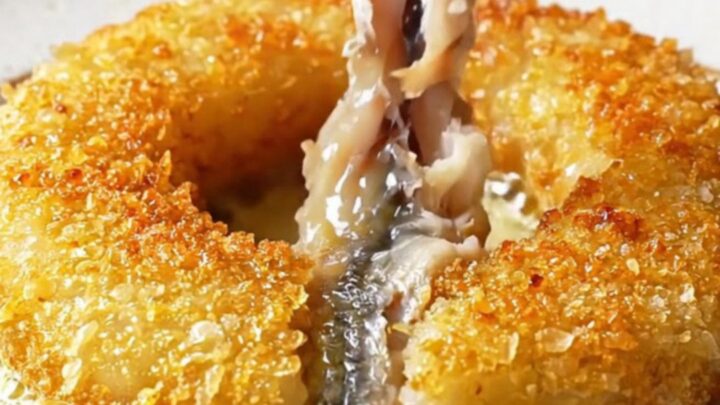
The bottom of the cake is deep golden and crackling, with lacy edges. The fish are cooked through, reaching an internal temperature of 145°F (63°C). The cake holds together when flipped, and the second side browns evenly with the added butter.
Serve and Savor
- Serve with LemonSlide the crispy anchovy cake onto a serving plate. Squeeze fresh lemon juice over the top just before serving. Tear into the crackling crust and enjoy warm.Look for The crust shatters audibly when broken.Tip Serve immediately for maximum crispness.
The golden wheel slides onto a serving plate, radiating heat and a crisp, toasty scent. Lemon wedges are squeezed over the top, and tearing into the crust produces an audible, satisfying crunch.
The fish is moist and flaky, with a salty, briny essence that pairs perfectly with the citrus.
Common mistakes
One common mistake is overcrowding the pan with too many anchovies, which traps steam and prevents browning. Use a large skillet and arrange the fish in a single, snug layer. Another pitfall is moving the fish before the crust sets; let it cook undisturbed for the full 4 minutes.
Flipping too slowly can break the cake, so use a confident, quick motion with the lid. Finally, don't skip the butter—it adds flavor and helps achieve a golden, glossy crust.
How to tell it’s done
The anchovies are done when the crust is deep golden brown and crackling, and the fish flakes easily with a fork. To be certain, insert an instant-read thermometer into the thickest part of the fish; it should read at least 145°F (63°C).
The second side should be crisp and evenly browned, with no raw or translucent areas. The cake should hold together when lifted, and the aroma will be irresistibly toasty and briny.
- Fish: 145°F (63°C) in the thickest part
Up next · Part 3 of 3
4 variations · storage & make-ahead · 5 answers · printable card
Tips, FAQ & printable recipe (Part 3)← Back to the ingredients (Part 1)