Dinner · Part 2 of 3: Instructions
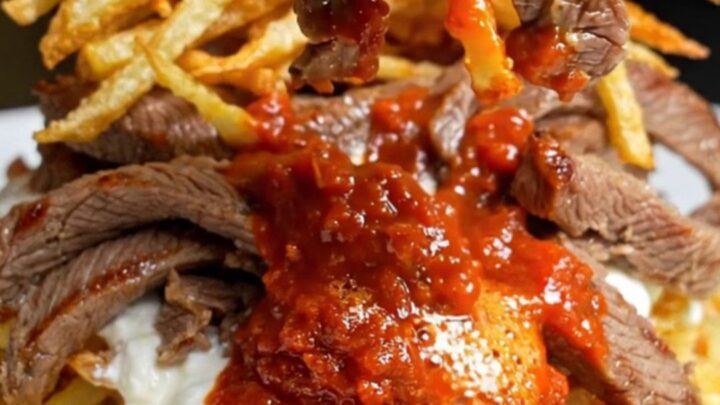
Crispy Turkish Çökertme Kebabı with Garlic Yogurt Step-by-step instructions
- Prep
- Cook
- Total
- Serves
- 4
Before you start
Before starting, prepare all ingredients: cut the beef into thin matchsticks, julienne the potatoes and soak them in cold water, mince the garlic, and measure out the yogurt, spices, and butter. Have a deep-fry thermometer ready for the oil.
Set up a paper-towel-lined plate for the fried potatoes. The garlic yogurt can be mixed and refrigerated up to a day ahead. Ensure the skillet is large enough to sear the beef in a single layer; if not, cook in batches. Finally, have a serving platter ready for assembly.
Ingredients at a glance (11)
- 400 g beef tenderloin, cut into matchsticks
- 3 large russet potatoes, julienned
- 2 cups plain full-fat yogurt
- 3 cloves garlic, minced
- 1 tsp salt, divided
- 1/2 tsp black pepper, freshly ground
- 2 tbsp olive oil
- 2 tbsp butter
- 1 tbsp tomato paste
- 1 tsp Turkish pul biber (Aleppo pepper flakes)
- Vegetable oil, for deep frying, to taste
Instructions
Crispy Potatoes and Cool Yogurt
- Prep and Fry the PotatoesCut the potatoes into thin matchsticks, about 1/8 inch thick. Soak them in cold water for 10 minutes, then drain and pat thoroughly dry with a clean kitchen towel. Heat 2 inches of vegetable oil in a deep pot to 350°F (175°C). Working in batches, fry the potatoes for about 4 minutes until golden and crisp. Remove with a slotted spoon and drain on paper towels. Season lightly with salt while hot.Look for The potatoes should be deep golden and shatteringly crisp when bitten.Tip Do not overcrowd the pot; fry in small batches to keep the oil temperature steady.
- Make the Garlic YogurtIn a small bowl, stir the yogurt with the minced garlic and a pinch of salt. Mix well and refrigerate until needed. The yogurt should be cold and thick, with a pronounced garlic flavor.Look for The yogurt is smooth and well combined, with a sharp garlic aroma.Tip For a stronger garlic kick, let the mixture sit for 15 minutes before serving.
After this phase, you should have a pile of golden, crispy matchstick potatoes and a bowl of cold, garlicky yogurt. The potatoes should be dry and crunchy, not greasy. The yogurt should be thick and well seasoned.
Taste and adjust salt if needed. If the potatoes are not crisp enough, return them to the hot oil for another minute. The yogurt can be kept in the fridge until assembly.
Sizzling Beef and Tomato Butter
- Sear the BeefPat the beef tenderloin strips dry and season with salt and black pepper. Heat a large skillet over high heat and add the olive oil. When the oil shimmers, add the beef in a single layer. Sear for 2-3 minutes without moving until nicely browned on one side, then toss and cook for another minute until just cooked through. Remove from the skillet and set aside. Let it rest for 3 minutes before slicing.Look for The beef is browned on the outside and still tender inside, with an internal temperature of 145°F (63°C).Safe temperature 145°F (63°C) internal temperature (steaks, chops and roasts)Tip Do not overcrowd the pan; cook in two batches if needed to get a good sear.
- Make the Tomato Butter SauceIn the same skillet, reduce the heat to medium and add the butter. When it melts and foams, stir in the tomato paste and pul biber. Cook for 1-2 minutes, stirring constantly, until the mixture is fragrant and a deep red. The sauce should be sizzling and aromatic.Look for The butter is foamy and the tomato paste has deepened in color, releasing a rich aroma.Tip If the sauce seems too thick, add a tablespoon of water to loosen it.
The beef should be seared to a deep brown on the outside while remaining tender and juicy inside. The internal temperature should read 145°F (63°C) on an instant-read thermometer. The tomato-butter sauce should be foamy, red, and aromatic, with the butter fully melted and the tomato paste cooked down. The skillet will have browned bits from the beef, which will flavor the sauce.
Layer and Serve
- Assemble and ServeSpread the crispy matchstick potatoes on a large serving platter. Spoon the cold garlic yogurt evenly over the potatoes. Top with the seared beef strips. Pour the hot tomato butter sauce over the beef and potatoes. Serve immediately, ensuring each portion gets some of each layer. Let it rest for 3 minutes before slicing.Look for The dish is layered with crispy potatoes, cool yogurt, warm beef, and sizzling sauce.Safe temperature 145°F (63°C) internal temperature (steaks, chops and roasts)Tip For the best texture contrast, serve right away while the potatoes are still crisp.
The assembled kebab should have distinct layers: a base of crispy potatoes, a generous spread of cool yogurt, a layer of warm beef, and a drizzle of sizzling tomato butter. The contrast of temperatures is key. Serve immediately, making sure each plate gets a bit of every component. The potatoes should remain crisp for a few minutes after assembly, so enjoy right away.
Common mistakes
One common mistake is not drying the potatoes thoroughly before frying, which causes them to steam rather than crisp. Another is overcrowding the pan when frying, which drops the oil temperature and results in soggy potatoes.
When searing the beef, avoid moving it too soon; let it develop a crust before flipping. Overcooking the beef will make it tough, so keep a close eye on the time. Finally, do not skip the rest period for the beef—it is essential for juiciness.
How to tell it’s done
The potatoes are done when they are deep golden brown and crisp; they should make a audible crunch when bitten. The beef is cooked through when it reaches an internal temperature of 145°F (63°C) for medium-rare, or up to 160°F (71°C) for well-done.
After searing, let the beef rest for at least 3 minutes before serving to allow the juices to redistribute. The tomato-butter sauce is ready when it is fragrant and has thickened slightly. The dish should be assembled immediately to enjoy the contrast of temperatures and textures.
- Steaks, chops and roasts: 145°F (63°C) in the thickest part, then a 3-minute rest
Up next · Part 3 of 3
4 variations · storage & make-ahead · 5 answers · printable card
Tips, FAQ & printable recipe (Part 3)← Back to the ingredients (Part 1)