Dinner · Part 1 of 3: Ingredients
Crispy Teriyaki Salmon Yakisoba in 20 Minutes
- Prep
- Cook
- Total
- Serves
- 2
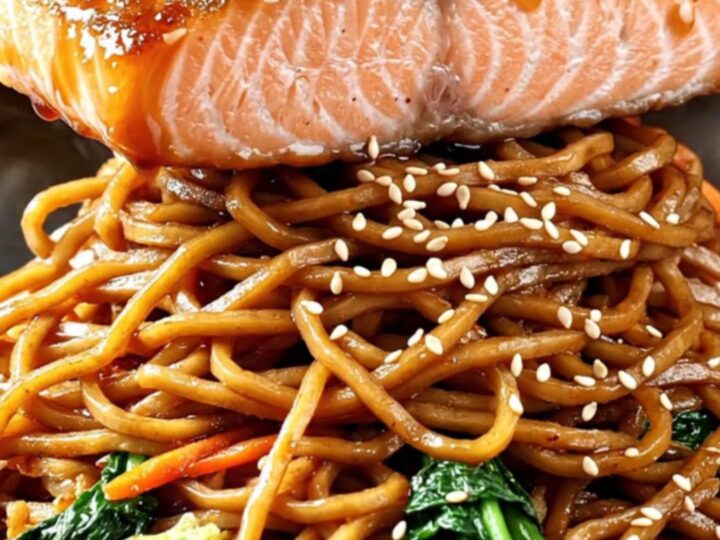
Crispy-skinned salmon, lacquered in a glossy homemade teriyaki glaze, resting on a tangle of sizzling yakisoba noodles with charred bok choy and sweet carrots — this is a twenty-minute dinner that eats like a night out. One glaze, one pan for the fish, one wok for the noodles, and a finish of bonito flakes and sesame that makes the whole bowl smell like a Japanese grill.
Yakisoba is Japanese street food at its best: chewy fried noodles, tangy Worcestershire-soy sauce, and vegetables blistered until their edges char. Pairing it with seared salmon turns a snack into a full dinner, and the two elements cook so quickly they can share one twenty-minute window.
The fish sears skin-side down in a hot skillet while the teriyaki glaze — mirin, soy sauce, sake, brown sugar and fresh ginger — bubbles down into a thick lacquer.
Meanwhile the wok does its work: bok choy and carrots char over high heat, the noodles toss through the savory sauce, and everything lands in a bowl under a shower of bonito flakes, sesame and pickled ginger. The result hits every register at once — crisp, flaky, glossy, smoky, tangy — in the time it takes to decide on takeout.
Ingredients
- 2 salmon fillets (6 oz each), skin-on
Teriyaki glaze
- 1/4 cup mirin
- 1/4 cup soy sauce
- 2 tbsp sake
- 2 tbsp brown sugar, packed
- 2 tsp grated ginger, freshly grated
- 14 oz fresh yakisoba noodles
- 2 heads baby bok choy, halved or quartered
- 1 carrot, cut into thin matchsticks
- 3 tbsp Worcestershire-soy yakisoba sauce
For serving
- Bonito flakes, for serving
- Toasted sesame seeds, for serving
- Pickled ginger, for serving
Why this recipe works
The method works because the skin-on salmon and the noodle stir-fry use the same high-heat logic. Starting the fish skin-side down in a screaming-hot pan renders the fat beneath the skin, and pressing the fillet flat for the first ten seconds keeps the skin in full contact so it crisps evenly instead of curling.
Meanwhile the teriyaki glaze is built to reduce fast: mirin and sake carry alcohol and sugar, soy brings salt and depth, and brown sugar rounds out the edges. Simmered at a steady bubble around the fish, it thickens into a syrup that coats rather than soaks.
The noodles follow the same principle of fierce, dry heat. Fresh yakisoba noodles go straight into a smoking wok — never boiled — so they toast and separate instead of going soggy.
Charred bok choy and carrots add smoke and sweetness, and the Worcestershire-soy yakisoba sauce clings to every strand. Because each component finishes in minutes, the whole dish keeps its textures distinct: crackling skin, springy noodles, crunchy vegetables.
Notes and substitutions
Choose two skin-on salmon fillets of even thickness, about 6 ounces each, so they finish at the same moment; thicker tails and thin bellies on the same fillet cook unevenly. Fresh yakisoba noodles come in soft, portioned packets, often with sauce included — discard or reserve the packet sauce and use the Worcestershire-soy yakisoba sauce described in the substitutions if a bottled version is hard to find.
A cast-iron or heavy stainless skillet gives the salmon the steady, even heat its skin needs, and a wok — or the widest nonstick skillet available — gives the vegetables room to char. Mirin and sake are both sulphite-containing rice wines, so read labels if that matters to the table. Everything here is cooked to temperature, and the garnishes — bonito flakes, sesame, pickled ginger — are optional in quantity but worth keeping in role.
- sake: Use 2 additional tablespoons of mirin, or dry sherry; the glaze stays glossy and balanced.
- fresh yakisoba noodles: Use ramen noodles or fresh chow mein noodles, discarding the seasoning packets; cook just until pliable.
- baby bok choy: Swap in thinly sliced napa or green cabbage; char it the same way in a hot, barely oiled wok.
- yakisoba sauce: Stir together 2 tablespoons Worcestershire sauce, 1 tablespoon soy sauce and 1 teaspoon ketchup or oyster sauce.
Equipment
- Large cast-iron or stainless skillet
- Wok or large nonstick skillet
- Small mixing bowl and whisk
- Tongs
- Fish spatula
- Instant-read thermometer
Up next · Part 2 of 3
8 steps · 15 min of cooking · what to look for at each stage
Step-by-step instructions (Part 2)