Dinner · Part 2 of 3: Instructions
Crispy Sweet and Sour Pork Bites Step-by-step instructions
- Prep
- Cook
- Total
- Serves
- 4
Before you start
Before starting, ensure all ingredients are pre-measured and the pork is cut into uniform, bite-sized pieces. Set up a deep-frying station with a thermometer to monitor oil temperatures accurately, as heat control is vital for the double-fry technique.
Have a wire rack or paper towels ready for draining the pork between frying sessions and after the final fry. Ensure your wok is clean and ready for the final sauce reduction phase.
Ingredients at a glance (9)
- 1.5 lb pork shoulder collar, cut into cubes
- 2 tbsp soy sauce
- 1 egg yolk
- 1 cup potato starch
- 1 cup fresh pineapple, chopped
- 1 cup red bell pepper, chopped
- 1/3 cup rice vinegar
- 1/3 cup ketchup
- 1/4 cup brown sugar
Instructions
Preparation and Marination
- Marinate the porkPlace the cubed pork shoulder in a mixing bowl. Add the soy sauce and egg yolk. Mix thoroughly until each piece is coated evenly. Ensure the egg yolk is fully incorporated to safely coat the meat. Allow the pork to marinate in the refrigerator for at least 15 minutes while preparing the other ingredients.Look for The pork should be evenly coated and have absorbed the marinade liquid.Safe temperature 160°F (71°C) internal temperature (egg dishes)Tip Ensure the pork is cut into uniform, bite-sized cubes for consistent cooking times.
- Prepare the coatingDredge each marinated pork cube into the potato starch, ensuring a thick, even layer covers the entire surface of the meat. Shake off any excess starch before frying. Prepare the chopped pineapple and red bell pepper to have ready for the stir-fry phase.Look for The pork cubes should be dry and dusty with starch on all sides.Tip Do not skip the shaking step; too much excess starch will create a gummy texture.
The pork should be fully marinated and the starch coating should be applied in a thin, uniform layer. The vegetables should be chopped and ready to go.
The kitchen should smell clean and organized, with all ingredients prepped for the fast-paced frying and stir-frying stages that follow immediately.
Double-Frying the Pork
- Double-fry the porkHeat oil in a deep fryer to 350°F. Fry the pork in batches until light golden. Remove and drain. Increase the oil temperature to 385°F. Re-fry the pork briefly until it reaches a deep, glass-crisp texture and the internal temperature reaches 145°F (63°C). Let the pork rest for 3 minutes before saucing.Look for The pork should be golden brown and shatteringly crisp when tapped.Safe temperature 145°F (63°C) internal temperature (steaks, chops and roasts)Tip Keep the batches small to maintain the oil temperature and prevent the pork from sticking.
The pork should be a light golden brown after the first fry and reach a deep, rich color after the second. The crust should be firm to the touch and sound crisp when tapped with tongs. Ensure the oil temperature is strictly maintained to prevent the pork from absorbing too much oil.
Wok-Tossing and Glazing
- Wok-toss in glazeIn a hot wok, combine the rice vinegar, ketchup, and brown sugar. Bring to a boil until the sauce thickens into a bubbling, vibrant ruby-red glaze. Add the pineapple and bell pepper, tossing for 30 seconds. Finally, toss in the fried pork until perfectly coated in the sticky sauce.Look for The sauce should be thick enough to coat the back of a spoon and smell tangy.Tip Add the pork at the very last moment to preserve the crispy texture of the fried coating.
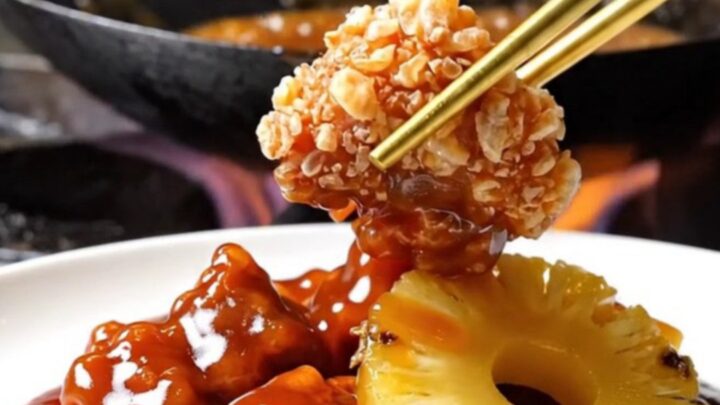
The sauce should be bubbling and thick, with a vibrant color. The pineapple and bell pepper should be slightly softened but still retain their shape and color. The final dish should look glistening, with a sticky, even coating of sauce covering every crispy pork bite and fruit chunk.
Common mistakes
Avoid overcrowding the fryer, which drops the oil temperature and leads to soggy, greasy pork. Do not skip the second fry, as this is critical for the final texture.
Be careful not to over-reduce the sauce, as it can turn into a hard candy-like consistency if left on the heat too long. Finally, avoid using too much starch, which can result in an unpleasantly thick, doughy coating.
How to tell it’s done
The pork is done when the internal temperature reaches 145°F (63°C). Visually, the crust should be a deep golden brown and appear rigid and glassy.
When lifted with chopsticks, the pork should feel light and airy, not heavy or greasy. The sauce should be glossy, thick, and cling to the meat without pooling at the bottom of the wok.
- Steaks, chops and roasts: 145°F (63°C) in the thickest part, then a 3-minute rest
- Egg dishes: 160°F (71°C) in the thickest part
Up next · Part 3 of 3
2 variations · storage & make-ahead · 3 answers · printable card
Tips, FAQ & printable recipe (Part 3)← Back to the ingredients (Part 1)