Dinner · Part 1 of 3: Ingredients
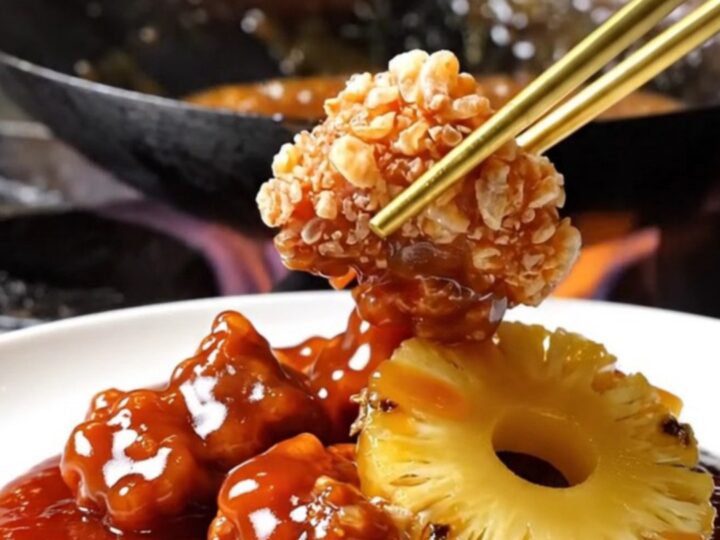
Crispy Sweet and Sour Pork Bites
- Prep
- Cook
- Total
- Serves
- 4
Transform your kitchen into a classic Cantonese takeout spot by making these crispy sweet and sour pork bites. With a double-fry technique that ensures a glass-crisp exterior and a tangy, vibrant sauce, this dish proves that the best takeout is the kind you make in your own home.
Sweet and sour pork is a beloved classic, characterized by its perfect balance of crunchy meat and a bold, acidic glaze. This recipe focuses on achieving that elusive texture that stays crispy even after it meets the sauce.
By utilizing high-quality pork shoulder and a two-stage frying process, each bite remains juicy on the inside while maintaining a delicate, shatteringly crisp crust that holds up to the sticky, sweet-and-sour glaze.
Ingredients
Pork and Marinade
- 1.5 lb pork shoulder collar, cut into cubes
- 2 tbsp soy sauce
- 1 egg yolk
Coating
- 1 cup potato starch
Vegetables
- 1 cup fresh pineapple, chopped
- 1 cup red bell pepper, chopped
Sauce
- 1/3 cup rice vinegar
- 1/3 cup ketchup
- 1/4 cup brown sugar
Why this recipe works
The double-fry method is the key to achieving professional-level results. The first fry at 350°F cooks the interior of the pork thoroughly, while the second, hotter fry at 385°F flash-cooks the coating to create a rigid, glass-like structure.
This prevents the moisture from the meat from softening the crust too quickly, allowing for a longer-lasting crunch.
Using a starch-heavy coating creates a specific type of crust that is lighter and more porous than a traditional batter.
Potato starch is particularly effective for this, as it creates a very distinct, crispy shell that adheres perfectly to the meat. When combined with the high-heat reduction of vinegar, sugar, and ketchup, the sauce creates a perfect sticky finish.
Notes and substitutions
The choice of pork shoulder is essential. This cut has enough fat to remain tender during the frying process, preventing the meat from becoming dry or stringy. Ensure you trim any excess gristle before cutting the meat into uniform cubes, as this ensures that every piece cooks at the same rate and achieves the same level of crispness.
While a wok is the traditional tool for finishing the dish, any large, heavy-bottomed skillet will work for the sauce reduction.
The goal is to have enough surface area to toss the pork quickly without crowding the pan. Always use a high-smoke point oil for frying, such as vegetable, canola, or peanut oil, to ensure the best flavor and safety.
- potato starch: cornstarch can be used if potato starch is unavailable, though the texture will be slightly less glass-like.
- pork shoulder: pork loin can be used, but the shoulder provides better fat content for juicy results.
Equipment
- Deep fryer or heavy-bottomed pot
- Wok
- Mixing bowls
- Tongs
- Chopsticks
- Knife and cutting board
Up next · Part 2 of 3
4 steps · 15 min of cooking · what to look for at each stage
Step-by-step instructions (Part 2)