Appetizers · Part 2 of 3: Instructions
Crispy Spiced Okra Fries with Zero Slime Step-by-step instructions
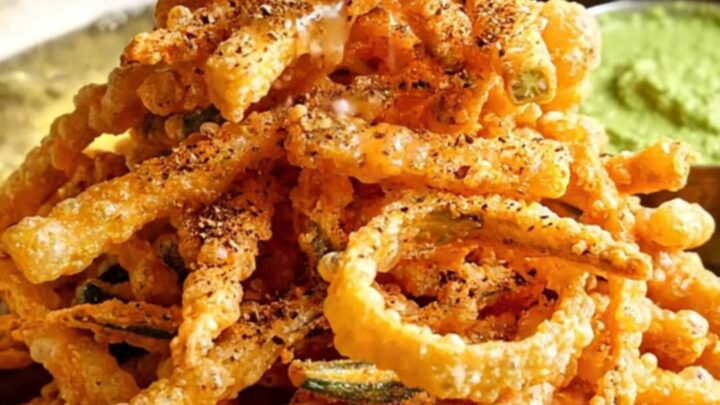
- Prep
- Cook
- Total
- Serves
- 4
Before you start
Before beginning, organize all ingredients and have your frying equipment ready. Ensure the okra is washed and dried thoroughly, as any residual moisture will negatively impact the final texture. Prepare a large mixing bowl for tossing the okra and a tray lined with paper towels for draining.
Having a spider strainer or slotted spoon within reach is essential for managing the small batches in the hot oil. Maintain a clean, organized workspace to ensure you can move efficiently when the frying process begins, as the cooking time is very short.
Ingredients at a glance (9)
- 400 g fresh okra pods
- 40 g besan (chickpea flour)
- 20 g rice flour
- 1 tsp Kashmiri chili powder
- 1/4 tsp turmeric powder
- 1 tsp amchur (dried mango powder)
- 2 cups peanut oil for frying
- chaat masala to taste
- fresh lime wedges for serving
Instructions
Preparing the okra ribbons
- Prep the okraWash and thoroughly pat the okra pods dry. Slice each pod in half lengthwise and carefully scrape out the seeds using the edge of a knife. Slice the cleaned pods into thin, uniform strips to ensure they crisp up evenly during the frying process.Look for The okra strips should be thin and completely dry to ensure maximum crunch.Tip Removing the seeds is essential for eliminating sliminess and achieving a chip-like texture.
The okra should be sliced into thin, uniform strips with all seeds removed. The ribbons should feel dry to the touch, and there should be no signs of the internal gel that typically characterizes okra. This step is the foundation for achieving the desired crunch, so take the time to ensure each strip is clean and properly prepared before proceeding to the seasoning stage.
Coating with spices
- Season the ribbonsPlace the okra strips in a large mixing bowl. Add the chickpea flour, rice flour, Kashmiri chili powder, turmeric, and amchur powder. Toss the strips thoroughly until every piece is lightly coated with the dry spice and flour mixture.Look for The strips should be evenly coated with a fine layer of flour and spices.Tip Do not add water; the natural moisture on the okra is sufficient to make the flour adhere.
Each okra strip should be lightly and evenly coated with the flour and spice mixture. The coating should look like a fine, dry dust rather than a thick, wet batter.
If the mixture appears clumpy, you may have used too much flour or the okra was not dry enough; aim for a light, consistent layer that allows the green color of the okra to still be visible through the coating.
Flash frying to perfection
- Flash fry and serveHeat the peanut oil in a deep pot to 375°F (190°C). Fry the okra strips in small batches for approximately 2.5 minutes until they curl and turn golden brown. Remove with a spider strainer, drain on paper towels, then immediately toss with chaat masala and a squeeze of fresh lime juice.Look for The okra should be curled, golden, and stop bubbling aggressively when done.Tip Working in small batches prevents the oil temperature from dropping and ensures maximum crispiness.
The okra should be light, airy, and curled into crispy golden ribbons. When you lift them from the oil, they should feel rigid and sound brittle. The oil should be clear of excess bubbling, indicating that the moisture has successfully escaped. Once drained and tossed with seasoning, the aroma should be bright, spicy, and tangy, ready for immediate serving.
Common mistakes
Avoid overcrowding the fryer, as this causes the oil temperature to plummet and leads to greasy, limp okra. Always fry in small batches to maintain the heat. Skipping the removal of seeds is a common error that guarantees a slimy texture regardless of the frying technique.
Additionally, do not season the okra with chaat masala until the very last second; adding it too early while the okra is still extremely hot and releasing steam can cause the spices to clump or soften the crispy coating.
How to tell it’s done
The okra is perfectly done when the strips are deeply golden brown, curled into delicate ribbons, and produce a distinct rattling sound when moved on a plate. There should be no visible moisture, and the strips should snap easily when broken.
The okra does not require an internal temperature check as it is a vegetable, but achieving the correct visual and auditory cues confirms it is ready to be drained and seasoned.
Up next · Part 3 of 3
2 variations · storage & make-ahead · 3 answers · printable card
Tips, FAQ & printable recipe (Part 3)← Back to the ingredients (Part 1)