Appetizers · Part 2 of 3: Instructions
Crispy Sesame Puff Pastry Potato Pockets Step-by-step instructions
- Prep
- Cook
- Total
- Serves
- 12
Before you start
Before starting, ensure the puff pastry is thawed but still cold. Boil the potatoes until fork-tender, then peel them while they are still warm; this makes mashing easier. Chop the onion and herbs. Have all ingredients measured and ready.
Preheat the oven to 400°F (200°C) when you begin assembling, so it is hot by the time the pockets are ready to bake. Line a baking sheet with parchment paper. The filling can be made up to a day ahead and stored in the refrigerator; let it come to room temperature before using.
Ingredients at a glance (10)
- 1 package (17.3 oz) puff pastry, thawed
- 4 medium boiled potatoes, peeled
- 1 small onion, finely chopped
- 2 tbsp tomato paste
- 2 tbsp mixed fresh herbs (such as parsley, dill, chives), chopped
- 1/2 tsp salt, plus more to taste
- 1/4 tsp black pepper
- 1 large egg white, lightly beaten
- 1/2 cup sesame seeds
- 1 large egg yolk, lightly beaten
Instructions
Phase 1: Filling and Pastry Prep
- Make the herbed potato fillingIn a large bowl, mash the boiled potatoes until smooth. Sauté the onion in a little oil until soft and golden, then add to the potatoes along with the tomato paste, herbs, salt, and pepper. Mix until well combined. Taste and adjust seasoning. Form the mixture into 12 walnut-sized balls, about 1 1/2 inches in diameter. Set aside.Look for The filling should be thick and hold together when shaped into balls.Tip If the mixture is too soft, chill it for 15 minutes to make it easier to handle.
- Prepare the pastryOn a lightly floured surface, unfold the puff pastry sheets. Roll each sheet slightly to even out the thickness. Cut each sheet into 6 equal squares, giving you 12 squares total. Brush each square with a thin layer of beaten egg white. Sprinkle generously with sesame seeds, pressing lightly so they adhere.Look for The sesame seeds should cover the surface evenly but not clump.Tip Keep the pastry cold while working; if it warms up, return it to the fridge for a few minutes.
The filling should be smooth and well-seasoned, holding its shape when formed into balls. The pastry squares are brushed with egg white and coated with sesame seeds, which should stick evenly.
The work surface should be lightly floured, and the pastry should remain cold and pliable. If the pastry warms up, chill it briefly before proceeding. The sesame coating should be generous but not clumpy, creating an even layer that will toast beautifully in the oven.
Phase 2: Assembly and Baking
- Assemble the pocketsPlace a potato ball in the center of each sesame-coated pastry square. Gather the corners of the pastry up and over the filling, pinching the edges together to seal. Pleat the edges to create a flower-like rosette shape. Place the assembled pockets on a parchment-lined baking sheet, leaving space between them.Look for The seams should be tightly sealed to prevent leaking during baking.Tip Use a little water on your fingers to help seal the pastry edges.
- Glaze and bakeHeat the oven to 400°F (200°C). Brush the exposed pastry surfaces with the beaten egg yolk. Bake for 20 to 25 minutes, until the pastry is puffed, deep golden brown, and blistered in spots. The sesame seeds should be toasted and fragrant.Look for The pockets should be uniformly golden and sound hollow when tapped.Safe temperature 160°F (71°C) internal temperature (egg dishes)Tip If the tops brown too quickly, tent loosely with foil for the last 5 minutes.
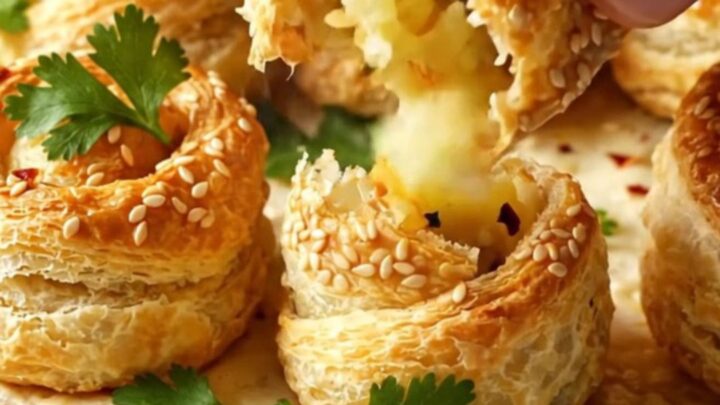
The pockets are neatly pleated and sealed, with no cracks or exposed filling. They are placed on the baking sheet with enough space to expand. After brushing with egg yolk, they go into the hot oven. As they bake, the pastry puffs up and turns golden, with the sesame seeds toasting to a rich brown. The kitchen fills with the nutty aroma of sesame and buttery pastry. The pockets should be deeply colored and crisp to the touch before removing from the oven.
Phase 3: Finishing and Serving
- Cool and serveRemove the baking sheet from the oven and let the pockets cool on the sheet for 5 minutes. Transfer to a wire rack to cool slightly. Serve warm, snapping one open to reveal the steaming, fluffy potato filling.Look for The pastry should be crisp and flaky, with a visible steam when broken.Tip Serve immediately for the best crunch; they soften as they cool.
The baked pockets are transferred to a wire rack to cool slightly. When you break one open, the layers separate with a loud crunch, releasing a cloud of fragrant steam. The potato filling is moist, fluffy, and seasoned perfectly. The pastry is crisp all the way through, with no doughy spots. The sesame crust adds a delightful nuttiness that complements the herbed potato. Serve warm for the best texture and flavor.
Common mistakes
One common mistake is overfilling the pastry, which can cause the pockets to burst open during baking. Stick to the walnut-sized balls and ensure the pastry is sealed tightly. Another issue is using warm pastry, which becomes sticky and difficult to handle; keep it chilled.
Skipping the egg white wash can cause the sesame seeds to fall off, so be generous with it. Finally, underbaking will result in soggy pastry, so bake until deep golden brown, not just lightly colored.
How to tell it’s done
The pockets are done when the pastry is puffed, deep golden brown, and blistered in spots. The sesame seeds should be toasted and fragrant, and the pastry should feel crisp and sound hollow when tapped.
The internal temperature of the filling should reach 160°F (71°C) if you want to check, but since the filling is already cooked, the main indicator is the pastry's color and crispness. Let the pockets cool for a few minutes before serving; they will be very hot inside.
- Egg dishes: 160°F (71°C) in the thickest part
Up next · Part 3 of 3
4 variations · storage & make-ahead · 5 answers · printable card
Tips, FAQ & printable recipe (Part 3)← Back to the ingredients (Part 1)