Appetizers · Part 3 of 3: Tips & recipe card
Crispy Sesame Potato Pockets with Flaky Puff Pastry Tips, FAQ & printable recipe
- Prep
- Cook
- Total
- Serves
- 6
Tips for success
For the crispiest results, serve the pockets immediately after baking. If they sit for too long, the pastry may soften.
If you need to keep them warm, place them on a wire rack in a low oven (200°F/95°C) for up to 30 minutes. To reheat, pop them back in a 350°F (175°C) oven for 5-7 minutes to restore the crunch.
Customize the filling to your liking by adding crumbled feta cheese, chopped olives, or a pinch of smoked paprika.
For a spicier kick, include a finely chopped jalapeño or a dash of cayenne. The sesame crust can also be varied by mixing in poppy seeds or nigella seeds for extra flavor and texture.
Variations
- Cheesy Potato Pockets: Add 1/2 cup shredded cheddar or mozzarella to the potato filling for a gooey, cheesy center. The cheese will melt and blend with the herbs, adding richness and a golden pull when the pocket is torn open.
- Spiced Curry Pockets: Sauté the onions with 1 teaspoon of curry powder and a pinch of garam masala. Add a handful of frozen peas and chopped cilantro to the filling for a fragrant, warmly spiced variation that pairs well with a cooling yogurt dip.
- Mediterranean Pockets: Stir in 1/4 cup crumbled feta, 2 tablespoons chopped Kalamata olives, and a teaspoon of dried oregano to the potato mixture. The salty feta and briny olives give these pockets a distinctly Mediterranean flair.
- Herb and Garlic Pockets: Add 2 minced garlic cloves and an extra tablespoon of mixed herbs to the filling. For a more intense garlic flavor, roast the garlic cloves before mashing them into the potatoes. This version is aromatic and deeply savory.
Storage and make-ahead
- Fridge
- Store leftover pockets in an airtight container in the refrigerator for up to 3 days. Reheat in the oven to maintain crispness.
- Freezer
- Freeze unbaked pockets on a baking sheet until solid, then transfer to a freezer bag for up to 3 months.
- Reheat
- Reheat baked pockets in a 350°F (175°C) oven for 8-10 minutes until hot and crispy. Avoid microwaving to prevent sogginess.
Store leftover pockets in an airtight container in the refrigerator for up to 3 days. To reheat, place them on a baking sheet and warm in a 350°F (175°C) oven for 8-10 minutes, or until heated through and crispy again. Avoid microwaving, as it will make the pastry soggy.
The potato filling can be prepared up to 2 days in advance and stored in the refrigerator. The assembled pockets can also be made ahead, covered, and refrigerated for up to 24 hours before baking.
If baking from cold, add a few extra minutes to the baking time. For longer storage, freeze unbaked pockets for up to 3 months.
Serving ideas
Serve these sesame potato pockets warm as an appetizer, alongside a dipping sauce such as a simple yogurt-based sauce or a spicy tomato chutney.
They also make a great addition to a brunch spread, paired with a fresh salad or roasted vegetables. The contrast of crispy pastry and creamy filling is sure to please a crowd.
For a heartier meal, serve the pockets as a main course with a side of steamed greens or a crisp green salad. They can also be sliced in half and stuffed into a pita with lettuce and tomatoes for a portable lunch. These pockets are versatile and delicious at any time of day.
Frequently asked questions
Can these sesame potato pockets be made ahead of time?
Why did your pastry pockets turn out soggy?
Can you use a different type of pastry?
What can you serve with these pockets?
How do you reheat leftover pockets to keep them crispy?
Crispy Sesame Potato Pockets with Flaky Puff Pastry
Ingredients
- 6 sheets puff pastry sheets, thawed
- 4 medium potatoes, boiled and peeled
- 1 small onion, finely chopped
- 2 tbsp tomato paste
- 1/4 cup mixed fresh herbs (parsley, dill, chives), chopped
- 1/2 tsp salt
- 1/4 tsp black pepper
- 1 large egg white
- 1/2 cup sesame seeds
- 1 large egg yolk
Instructions
- In a large bowl, mash the boiled potatoes with a potato masher until smooth but still slightly chunky. Add the sautéed onions, tomato paste, chopped fresh herbs, salt, and black pepper. Mix until everything is well combined. Taste and adjust seasoning if needed. The filling should be thick and hold together when formed into balls.
- Using your hands, roll the potato mixture into 12 walnut-sized balls, about 1 inch in diameter. Set them aside on a plate. If the mixture is too sticky, lightly wet your hands with water. If too dry, add a teaspoon of water or olive oil.
- Lay the puff pastry sheets on a lightly floured surface. Brush each sheet generously with the egg white. Sprinkle the sesame seeds evenly over the egg white, pressing gently so they stick. The entire surface should be covered with a generous sesame crust.
- Cut each sesame-coated pastry sheet into 2 equal rectangles. Place one potato ball in the center of each rectangle. Fold the pastry over the filling to create a half-moon shape. Press the edges firmly with a fork to seal, ensuring no filling escapes.
- Place the filled pockets on a baking sheet lined with parchment paper, seam side down. Brush the exposed pastry with the egg yolk, covering the tops and edges. This will give the pockets a beautiful golden sheen as they bake.
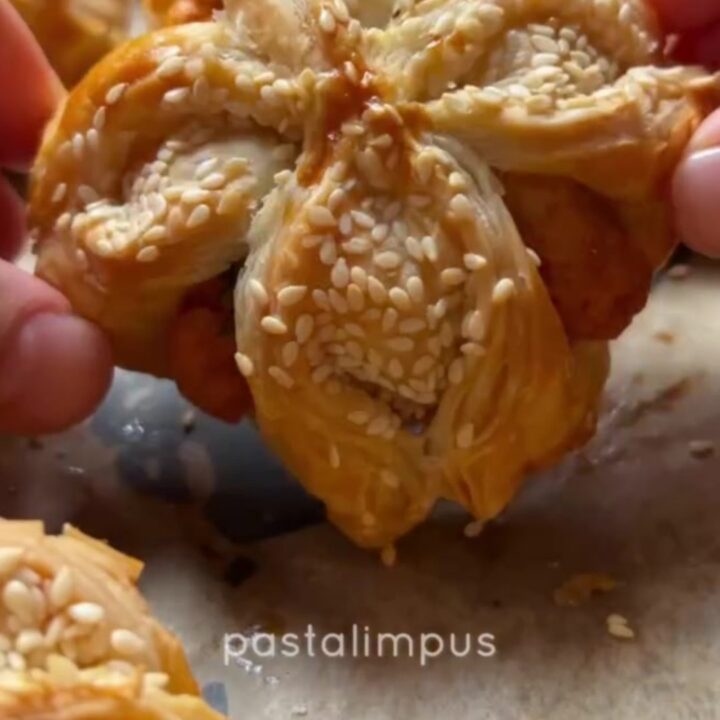
- Preheat the oven to 400°F (200°C). Bake the pockets for 20-25 minutes, until the pastry is puffed, deeply golden, and crisp. The sesame seeds will toast and become fragrant. If the tops brown too quickly, loosely tent with foil.
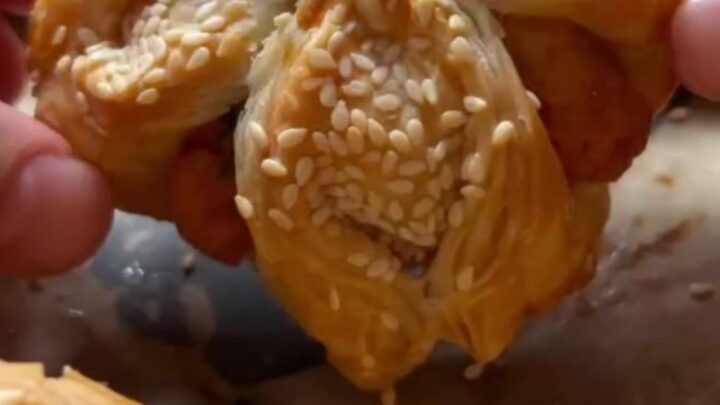
- Remove from the oven and let the pockets cool on the baking sheet for 5 minutes before serving. The filling will be hot and steaming. Serve warm, snapping one open to reveal the fluffy herbed potato filling and the crispy, crackling layers.
Estimated nutrition per serving
- Calories
- 320
- Protein
- 6 g
- Carbohydrates
- 32 g
- Fat
- 18 g
Next recipe

Cheese-Stuffed Pickled Jalapeño Peppers
See the recipe → →This recipe is based on a short cooking video and is published under the pen name Clara Weller. It was checked before publication, but errors can slip through. Nutrition, when shown, is an estimate. Read more in our editorial policy and on our food safety page.
More recipes to try

Extra-Crunchy Spiral Potato Fries
Total time: 35 min
Twisted Crispy Potato Churro Fries with Sweet Chili Sauce
Total time: 35 min
Crispy Blooming Eggplant Fan Fries with Garlic Lemon Mint Yogurt Dip
Total time: 30 min
Garlic Parmesan Chicken Rangoons
Total time: 30 min
Twisted Crispy Potato Churro Fries with Sweet Chili Sauce
Total time: 30 min