Dinner · Part 2 of 3: Instructions
Crispy Seared Steak Medallions Step-by-step instructions
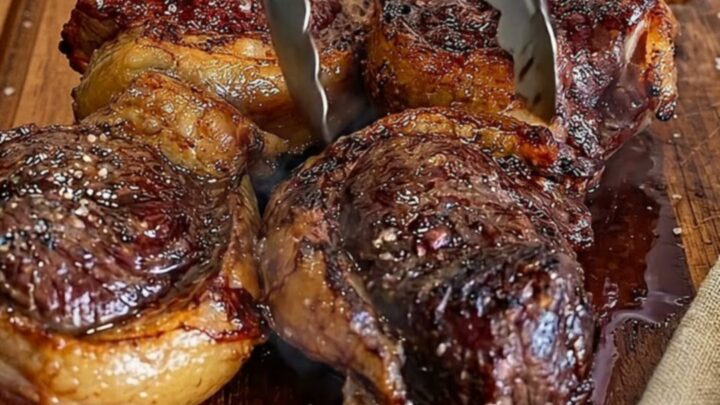
- Prep
- Cook
- Total
- Serves
- 2
Before you start
Before turning on the burner, remove the steak medallions from the refrigerator up to 30 minutes prior to cooking so they temper evenly.
Have paper towels, metal tongs, cooking oil, a clean wooden cutting board, and an instant-read meat thermometer arranged right beside the stove.
High-heat searing moves rapidly, so setting out your tools in advance keeps the process organized, safe, and completely under control.
Ingredients at a glance (2)
- 2 pieces steak medallions, about 1-inch thick
- 1 tbsp high-smoke-point cooking oil
Instructions
Tempering and Drying Phase
- Prepare the MedallionsRemove the steak medallions from the refrigerator up to 30 minutes before cooking. Thoroughly pat the surface dry on all sides using paper towels to eliminate any excess moisture.Look for Surface of the meat feels completely dry.Tip Drying the exterior thoroughly is the secret to creating a deep, caramelized crust rather than steaming the meat.
The medallions should feel dry to the touch on all surfaces after thorough blotting with clean paper towels. The skillet should be set on the burner and heating thoroughly, with oil shimmering lightly across the surface before any meat is introduced.
Intense Searing Phase
- Sear in a Hot SkilletHeat a heavy cast iron skillet over high heat, add the high-smoke-point cooking oil, and swirl to coat. Place the medallions into the pan and sear undisturbed for 3 to 4 minutes until a deep brown crust forms. Turn the medallions over with metal tongs and cook for another 3 to 4 minutes.Look for Dark brown crust forms and meat releases easily.Tip Do not move or crowd the medallions until they naturally release from the hot surface.
The skillet sizzles loudly and consistently the moment the medallions touch the metal. The underside develops an even, deep mahogany crust that releases smoothly from the skillet surface without tearing when lifted with tongs after several minutes of undisturbed cooking.
Resting and Temperature Phase
- Check Temperature and RestConfirm the thickest part of the medallions reaches at least 145°F (63°C) with an instant-read thermometer. Transfer the medallions to a wooden cutting board immediately and let the meat rest for at least 5 minutes before slicing or serving so the juices redistribute.Look for Juices pool gently on the board as the meat rests.Safe temperature 145°F (63°C) internal temperature (steaks, chops and roasts)Tip Resting guarantees that the interior stays succulent and tender upon slicing.
The internal temperature reads at least 145°F (63°C) on a digital probe thermometer. Once transferred to the wooden cutting board, the medallions sit quiet and undisturbed for a full five minutes, allowing steam to subside and natural juices to settle before carving.
Common mistakes
The most common mistake is placing damp meat into the pan, which boils the surface and produces a gray crust rather than a deep brown sear.
Another frequent error is shifting or nudging the meat too soon; allow the crust to form until the medallion releases on its own. Finally, skipping the post-cooking rest causes hot juices to escape immediately onto the cutting board, resulting in dry, chewy slices.
How to tell it’s done
Check doneness by inserting an instant-read meat thermometer into the geometric center of the thickest portion of the medallion. Safe doneness for whole cuts of beef requires an internal temperature of at least 145°F (63°C), followed by a mandatory rest of at least 3 minutes.
The exterior should feel resilient yet yielding when pressed gently with tongs, signaling that the meat remains tender while meeting proper safety guidelines.
- Steaks, chops and roasts: 145°F (63°C) in the thickest part, then a 3-minute rest
Up next · Part 3 of 3
3 variations · storage & make-ahead · 4 answers · printable card
Tips, FAQ & printable recipe (Part 3)← Back to the ingredients (Part 1)