Dinner · Part 2 of 3: Instructions
Crispy Pugliese Focaccia Barese with Sun-Dried Tomatoes Step-by-step instructions
- Prep
- Cook
- Total
- Serves
- 8
Before you start
Before beginning, ensure your potato-enriched dough has completed its final proofing stage so it is light and airy. Preheat your oven to 475°F (246°C) at least 30 minutes before baking to ensure the oven is fully saturated with heat.
Prepare all your toppings by pitting the olives and crushing the tomatoes by hand, ensuring you have the oregano and olive oil measured and ready. A well-organized workspace makes the assembly process much smoother, allowing you to move quickly before the dough loses its structure.
Ingredients at a glance (6)
- 1 recipe potato-enriched focaccia dough, prepared ahead
- 1 cup hand-crushed tomatoes
- 1/3 cup Bari olives, pitted
- 1 tbsp dried oregano
- 3 tbsp extra virgin olive oil, plus more for drizzling
- 2 tbsp semolina flour, for dusting
Instructions
Pan Preparation
- Prepare the panGenerously oil your cast-iron or round baking pan with extra virgin olive oil. Dust the bottom of the pan evenly with semolina flour. The semolina is the secret to achieving that signature crispy, golden-brown bottom crust that defines a true Focaccia Barese.Look for The bottom of the pan is well-coated with oil and a thin layer of semolina.Tip Ensure the oil reaches the edges of the pan to prevent the dough from sticking during the high-heat bake.
The pan is thoroughly coated with oil, and the semolina creates a uniform layer across the entire base. There should be no dry spots, as this ensures the entire bottom of the dough will crisp evenly without sticking. Check that the oil is visible at the edges, as this helps the crust fry during the initial moments of contact with the hot oven.
Topping Assembly
- Assemble the toppingsPlace the prepared potato-enriched dough into the pan. Gently press the hand-crushed tomatoes into the surface of the dough, creating characteristic dimples. Distribute the Bari olives evenly across the surface and sprinkle generously with dried oregano. Press the ingredients firmly so they partially sink into the dough.Look for The toppings are embedded into the dough and the surface is dimpled.Tip Use your fingertips to create deep indentations, which allows the olive oil and tomato juices to pool and caramelize during baking.
The tomatoes, olives, and oregano are firmly pressed into the dough. You should see distinct dimples where the toppings have been pushed in.
Ensure the dough is distributed evenly to the edges of the pan so it bakes into a perfect round shape. The surface should look textured and rustic, with the ingredients partially submerged in the dough and oil.
High-Heat Baking
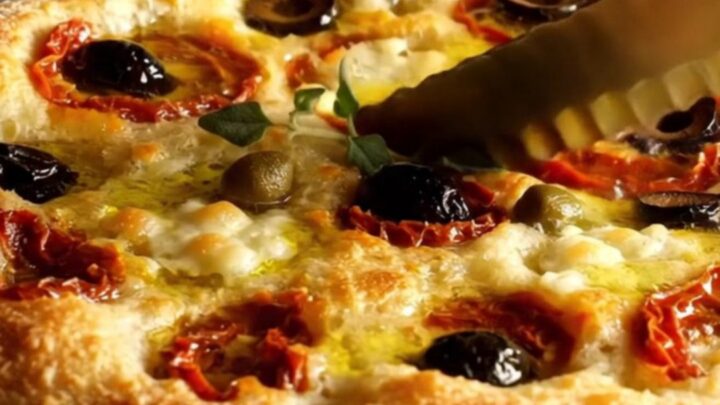
- Bake to perfectionPreheat your oven to 475°F (246°C). Place the pan in the oven and bake for exactly 20 minutes. The focaccia is ready when the edges are charred and crispy, the tomatoes are blistered, and the dough has puffed up to a beautiful golden brown color. Remove from the oven immediately.Look for The crust is deep golden brown and the tomatoes show charred, blistered edges.Tip For the best results, use a stone or cast-iron pan to ensure maximum heat transfer for that authentic crispy bottom.
The focaccia has risen and the surface is golden brown with dark, charred spots around the tomato edges. The kitchen should smell strongly of toasted bread and roasted tomatoes. The final test is the sound of the crust when tapped; it should be firm and audible, indicating the semolina base has achieved the desired level of crunch.
Common mistakes
A common mistake is using too little oil in the pan, which prevents the crust from frying properly and can cause the dough to stick. Another frequent error is overcrowding the pan with too many toppings, which releases too much moisture and prevents the dough from getting crispy.
Ensure your oven is truly at 475°F (246°C); baking at a lower temperature will result in a soft, pale bread that lacks the characteristic crunch of an authentic Barese-style focaccia.
How to tell it’s done
The focaccia is done when it is deeply golden brown on top and the edges are slightly charred. The tomatoes should appear blistered and shrunken, indicating they have concentrated their flavor.
Most importantly, use a spatula to lift the edge; the bottom should be firm, crispy, and dark golden from the semolina crust. The internal structure should feel light and airy when sliced, and the aroma should be intensely fragrant with baked tomatoes and toasted oregano.
Up next · Part 3 of 3
2 variations · storage & make-ahead · 3 answers · printable card
Tips, FAQ & printable recipe (Part 3)← Back to the ingredients (Part 1)