Desserts · Part 1 of 3: Ingredients
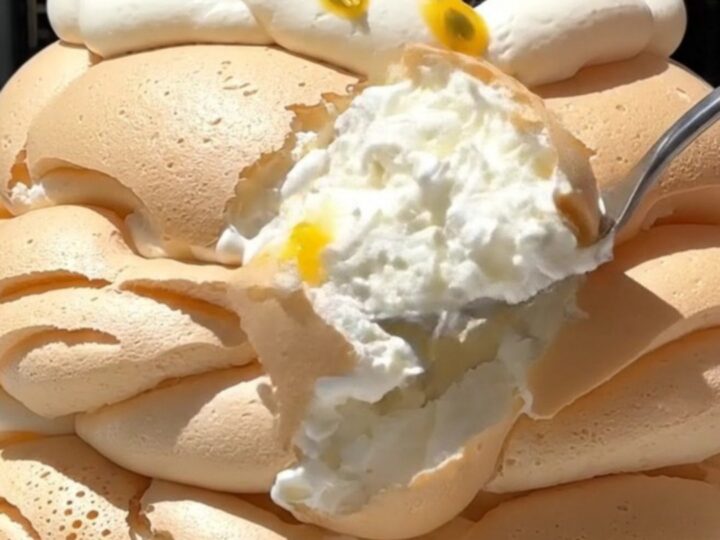
Crisp Passionfruit Pavlova with Marshmallow Center
- Prep
- Cook
- Total
- Serves
- 8
Crack through the crisp, sugary shell to reveal a marshmallow-soft center that melts in the mouth. This passionfruit pavlova is piled high with whipped mascarpone, fresh berries, and tangy passionfruit pulp—a dessert that looks like a cloud and tastes like heaven.
The contrast of textures and bright, fruity flavors makes it the perfect finale to any meal, yet it's surprisingly simple to make. With just a few ingredients and a low, slow bake, anyone can create this showstopper.
This pavlova recipe delivers a crisp, airy meringue shell with a soft, marshmallow-like center, topped with a luscious mascarpone cream and vibrant passionfruit. The key is whipping egg whites to stiff peaks with superfine sugar, then baking at a low temperature to dry the meringue without browning.
The result is a dessert that's both elegant and effortless, ideal for summer gatherings or festive celebrations. With clear steps and pro tips, this recipe ensures pavlova success every time.
Ingredients
- 6 large egg whites, room temperature
- 300 g superfine sugar
- 10 g cornstarch
- 5 ml white vinegar
Topping
- 300 ml heavy cream
- 1/2 cup mascarpone cheese
- 2 cups mixed fresh berries (such as strawberries, blueberries, raspberries)
- 1/2 cup fresh passionfruit pulp (from about 4 passionfruits)
Why this recipe works
The combination of superfine sugar and a low oven temperature is what gives pavlova its signature texture. Superfine sugar dissolves more easily into the egg whites, creating a smooth, stable meringue that bakes to a crisp shell.
The low heat of 250°F (120°C) dries the meringue gently, so the outside becomes crunchy while the inside stays soft and marshmallow-like. Adding cornstarch and vinegar further stabilizes the meringue, helping to maintain the soft center and prevent weeping.
Cooling the pavlova slowly in the turned-off oven is crucial. This gradual cooling allows the meringue to set fully without cracking or collapsing from a sudden temperature change. The result is a pavlova that holds its shape beautifully when sliced, with a crisp exterior that shatters satisfyingly and a tender, moist interior that contrasts perfectly with the creamy topping and fresh fruit.
Notes and substitutions
Use room-temperature egg whites for maximum volume—they whip up higher and more stable than cold ones. Superfine sugar is essential; if unavailable, process granulated sugar in a food processor for a finer texture. The vinegar and cornstarch are not for flavor but for structure; they help create the marshmallow center and prevent cracks. Use a clean, grease-free bowl and beaters to ensure the egg whites whip properly.
For the topping, heavy cream and mascarpone create a rich yet light cream that balances the sweet meringue. Fresh berries add brightness, and passionfruit pulp provides a tangy contrast that cuts through the sweetness.
If passionfruit is not in season, use a good-quality passionfruit pulp or substitute with mango or kiwi. Assemble the pavlova just before serving to keep the meringue crisp—leftovers will soften but still taste delicious.
- superfine sugar: Regular granulated sugar processed in a food processor for 30 seconds to make it finer.
- white vinegar: Lemon juice or apple cider vinegar (use the same amount).
- mascarpone cheese: Cream cheese softened, or use all heavy cream (skip the mascarpone).
- mixed fresh berries: Any combination of fresh fruit: sliced kiwi, mango, or passionfruit only.
Equipment
- Stand mixer or hand mixer
- Large mixing bowl
- Baking sheet
- Parchment paper
- Spatula
- Cooling rack
- Serving plate
Up next · Part 2 of 3
6 steps · 1 h 30 min of cooking · what to look for at each stage
Step-by-step instructions (Part 2)