Dinner · Part 2 of 3: Instructions
Crispy Oven-Roasted Spatchcock Chicken with Golden Potatoes Step-by-step instructions
- Prep
- Cook
- Total
- Serves
- 6
Before you start
Before you begin cooking, ensure all your ingredients are prepped and ready. Soften the unsalted butter at room temperature so it can be easily whipped with the seasonings. Wash, peel, and chop the carrots into uniform chunks, and cut the potatoes into even wedges.
If your whole chicken is not yet spatchcocked, use sharp kitchen shears to cut along both sides of the backbone, remove it, flip the chicken over, and press firmly on the breastbone to flatten it. Pat the chicken completely dry with paper towels inside and out.
Ingredients at a glance (6)
- 1 whole chicken, spatchcocked (about 4 to 5 pounds)
- 1/2 cup unsalted butter, softened
- 1 tbsp poultry seasoning
- 4 large Yukon Gold potatoes, cut into wedges
- 4 medium carrots, peeled and cut into 2-inch chunks
- fresh herbs, finely chopped, for serving
Instructions
Preparation and Vegetable Bed Setup
- Prepare the Seasoned ButterIn a small mixing bowl, combine the softened butter and poultry seasoning. Use a spoon or spatula to mix the ingredients thoroughly until a smooth, uniform paste forms. This seasoned butter will provide flavor and moisture to both the chicken meat and the skin.Look for The butter mixture should be completely smooth and evenly colored.Tip Ensure the butter is soft enough to spread easily without tearing the chicken skin.
- Prep the Vegetables and PanArrange the cut Yukon Gold potato wedges and carrot chunks in a single, even layer across the bottom of a large dark roasting pan. These vegetables will serve as a flavorful bed for the chicken, catching all the dripping juices and butter as it roasts in the oven.Look for The vegetables should be spread out evenly to ensure uniform cooking.Tip Dry the cut potatoes thoroughly with a paper towel to help them crisp up better.
At the end of this initial phase, the seasoned butter rub is thoroughly blended into a smooth, fragrant paste. The potatoes and carrots are cut into uniform pieces and arranged neatly across the bottom of the roasting pan. The vegetables should look clean, dry, and ready to catch the savory drippings, with no overlapping layers that might prevent even cooking.
Buttering and Pan Assembly
- Apply the Butter RubPat the spatchcocked chicken completely dry with paper towels. Gently loosen the skin over the breast and thigh areas with your fingers. Spread about half of the seasoned butter mixture directly under the skin, then rub the remaining butter evenly over the entire outer skin of the chicken.Look for The chicken should be fully coated with the butter rub, both under and on top of the skin.Tip Dry skin is the secret to getting a beautifully golden and crispy finish.
- Assemble in the Roasting PanPlace the seasoned, spatchcocked chicken skin-side up directly on top of the layer of potatoes and carrots in the roasting pan. Tuck the wing tips behind the shoulders to prevent them from burning during the roasting process.Look for The chicken should rest flat on the vegetables without overlapping the edges of the pan.Tip Keep the chicken centered so the melting butter drips directly onto the vegetables.
By the end of this second phase, the spatchcocked chicken is perfectly positioned skin-side up on top of the seasoned vegetables. The butter rub is distributed evenly, with a visible layer beneath the skin and a glistening coat covering the entire exterior. The wing tips are tucked neatly, and the bird lies flat, ready for the high heat of the oven.
Roasting, Resting, and Herb Garnish
- Roast the Chicken and VegetablesPreheat the oven to 400°F (200°C). Roast the chicken and vegetables for 50 to 60 minutes. The hot oven will melt the butter, crisp the skin, and cook the vegetables in the bubbling pan juices until tender.Look for Listen for a vigorous sizzling sound and look for bubbling pan juices around the vegetables.Tip Rotate the roasting pan halfway through for the most even browning.
- Check Temperature and RestEnsure the chicken is fully cooked by inserting a meat thermometer into the thickest part of the thigh, avoiding the bone; it must read at least 165°F (74°C). Remove the pan from the oven and let the chicken rest for 10 minutes to allow the juices to redistribute before carving. Sprinkle with finely chopped fresh herbs and serve hot over the roasted vegetables.Look for The chicken skin should be deeply golden and crispy, and the juices should run clear when sliced.Safe temperature 165°F (74°C) internal temperature (poultry)Tip Do not tent the chicken tightly with foil while resting, as trapped steam will soften the crispy skin.
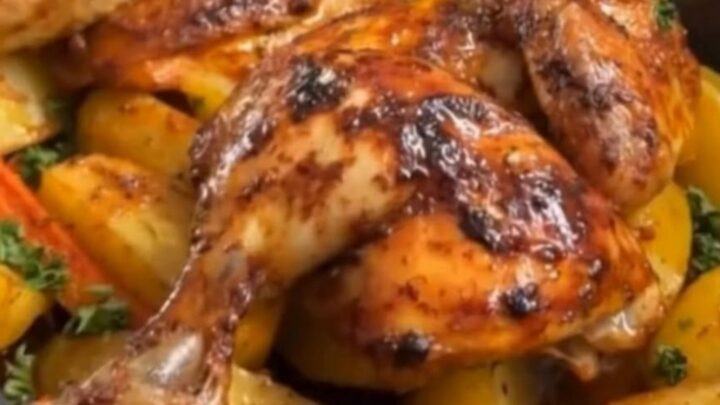
At the final checkpoint, the chicken skin is deeply bronzed, taut, and shatteringly crisp. The pan juices are bubbling vigorously around the tender, caramelized potato wedges and carrots.
When sliced, the chicken releases clear, savory juices and steam, and the meat thermometer registers a safe internal temperature. A fresh sprinkle of green herbs adds a vibrant contrast to the golden dish.
Common mistakes
One common mistake is failing to dry the chicken skin thoroughly before applying the butter rub. Any excess moisture on the skin will create steam in the oven, preventing the skin from achieving that coveted, crackling texture.
Another error is cutting the vegetables too small; because the chicken takes nearly an hour to roast, small vegetable pieces will overcook, turn mushy, or burn in the hot pan juices. Finally, do not skip the resting period after roasting. Carving the chicken immediately will cause all the delicious juices to run out onto the board, leaving you with dry meat.
How to tell it’s done
To accurately determine doneness, always rely on a reliable digital meat thermometer rather than visual cues alone. Insert the probe into the thickest part of the chicken thigh, taking care not to touch the bone, which can give a false reading.
The poultry is fully cooked and safe to eat when the internal temperature reaches 165°F (74°C). At this point, the juices running from the chicken should be completely clear, and the potato wedges should be easily pierced with a fork, showing caramelized edges and a fluffy interior.
- Poultry: 165°F (74°C) in the thickest part
Up next · Part 3 of 3
2 variations · storage & make-ahead · 3 answers · printable card
Tips, FAQ & printable recipe (Part 3)← Back to the ingredients (Part 1)