Dinner · Part 2 of 3: Instructions
Crispy Japanese Tonkatsu with Tangy Katsu Sauce Step-by-step instructions
- Prep
- Cook
- Total
- Serves
- 2
Before you start
Before starting, set up your breading station: three shallow dishes for flour, egg, and panko. Pat the pork dry and have your meat mallet ready. Fill a heavy-bottomed pot with about 2 inches of oil and attach a deep-fry thermometer. Shred the cabbage and set it aside.
Make the sauce by whisking the Worcestershire, ketchup, oyster sauce, and sugar in a small bowl; this can be done ahead and refrigerated. Have a wire rack placed over a baking sheet ready for the fried cutlets. The oil should be heated to 340°F (170°C) before you begin frying.
Ingredients at a glance (12)
- 2 thick-cut boneless pork loin chops (200g each)
- salt, to taste
- freshly cracked black pepper, to taste
- 1/2 cup all-purpose flour
- 1 large egg, beaten
- 1 cup panko breadcrumbs
- neutral oil, for frying, to taste
- 2 cups finely shredded green cabbage
- 2 tbsp Worcestershire sauce
- 2 tbsp ketchup
- 1 tbsp oyster sauce
- 1 tsp sugar
Instructions
Prep and Bread
- Prepare the PorkPat the pork loin chops dry with paper towels. Using a sharp knife, score the fat cap in a crosshatch pattern, cutting about 1/4 inch deep. Place the chops between two sheets of plastic wrap and pound with a meat mallet to an even 1/2-inch thickness. Season both sides generously with salt and freshly cracked black pepper.Look for The chops should be evenly thick and well seasoned.Tip Scoring the fat prevents curling during frying. Pounding ensures even cooking.
- Set Up the Breading StationPlace the flour in a shallow dish. Beat the egg in a second dish. Put the panko breadcrumbs in a third dish. Working with one chop at a time, dredge it in the flour, shaking off excess. Dip it into the beaten egg, letting any excess drip off. Press the chop firmly into the panko, coating all sides evenly. Repeat with the remaining chop.Look for The panko should form a thick, even crust that adheres well.Tip Press the panko firmly so it sticks; this gives the signature craggy crust.
At the end of this phase, the pork chops are scored, pounded to an even thickness, and seasoned. The breading station is ready, and each chop has a thick, even coat of panko that adheres firmly. The flour and egg layers ensure the panko sticks. The chops should look dry and fully coated, with no bare spots. The oil is heating on the stove, and the cabbage and sauce are prepped. This is the calm before the sizzle—everything is in place.
Fry to Golden
- Heat the OilPour about 2 inches of neutral oil into a large heavy-bottomed pot or deep skillet. Heat over medium-high heat until the oil reaches 340°F (170°C) on a deep-fry thermometer.Look for The oil should shimmer and a breadcrumb dropped in should sizzle immediately.Tip Maintaining the temperature is key: too hot and the crust burns, too cool and it gets greasy.
- Fry the CutletsCarefully lower one breaded pork chop into the hot oil. Fry for about 2 1/2 minutes per side, or until golden amber and cooked through, turning once. The oil should stay around 340°F (170°C). Transfer to a wire rack and let rest for 3 minutes. Repeat with the second chop.Look for The crust is deep golden brown and the pork is juicy with no pink in the center.Safe temperature 160°F (71°C) internal temperature (egg dishes)Tip Frying in batches keeps the oil temperature steady. Resting on a rack keeps the bottom crust crisp.
The cutlets are frying in oil at 340°F (170°C), turning from pale to deep golden amber. The oil bubbles steadily around the crust, and the aroma of toasted panko fills the kitchen. After about 5 minutes total, the cutlets float to the surface, signaling they're nearly done.
They're transferred to a wire rack to rest, the crust crackling gently as it cools. The pork is cooked through, and the interior is juicy. The sauce is ready, and the cabbage is waiting.
Slice and Serve
- Make the Katsu SauceIn a small bowl, whisk together the Worcestershire sauce, ketchup, oyster sauce, and sugar until the sugar dissolves. Set aside.Look for The sauce is smooth, glossy, and balanced between tangy, sweet, and savory.Tip Taste and adjust with a pinch more sugar or ketchup if desired.
- Slice and ServePlace the rested cutlets on a cutting board. Slice each into 1-inch-wide strips with a sharp knife, cutting through the crust with a clean motion. Arrange the sliced tonkatsu over a bed of shredded cabbage. Drizzle generously with the katsu sauce and serve immediately.Look for The cutlets cut cleanly with a loud crunch, revealing juicy pork.Tip Slicing against the grain makes each piece easier to bite. Serve extra sauce on the side.
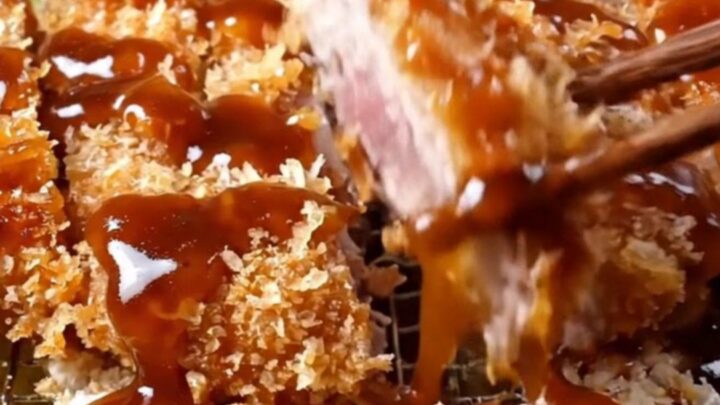
The rested cutlets are sliced into thick strips, each cut producing a loud, satisfying crunch. The pork inside is moist and tender, with a faint blush of pink gone—fully cooked. The slices are arranged over a bed of crisp shredded cabbage, and the tangy katsu sauce is drizzled generously over the top. The plate looks vibrant: golden crust, pale green cabbage, and glossy dark sauce. It's ready to serve immediately, with extra sauce on the side.
Common mistakes
One common mistake is frying at too high a temperature, which burns the panko before the pork cooks through. Keep the oil at a steady 340°F (170°C) and adjust the heat as needed. Another is overcrowding the pan, which drops the oil temperature and leads to greasy crusts—fry one cutlet at a time.
Skipping the rest after frying can cause the crust to soften and the juices to run out when slicing. Finally, don't press down on the cutlets while they fry; that pushes out moisture and makes the crust dense.
How to tell it’s done
The tonkatsu is done when the crust is deep golden amber and the pork is cooked through. To check, insert an instant-read thermometer into the thickest part of the cutlet; it should register at least 145°F (63°C). The meat should be white with no pink in the center, and the juices should run clear.
After frying, let the cutlets rest for at least 3 minutes; this allows the juices to redistribute and the internal temperature to rise a few more degrees. The crust should be crisp and crunchy, not greasy or soggy.
- Steaks, chops and roasts: 145°F (63°C) in the thickest part, then a 3-minute rest
- Egg dishes: 160°F (71°C) in the thickest part
Up next · Part 3 of 3
4 variations · storage & make-ahead · 5 answers · printable card
Tips, FAQ & printable recipe (Part 3)← Back to the ingredients (Part 1)