Dinner · Part 1 of 3: Ingredients
Crispy Japanese Chicken Katsu Sando
- Prep
- Cook
- Total
- Serves
- 2
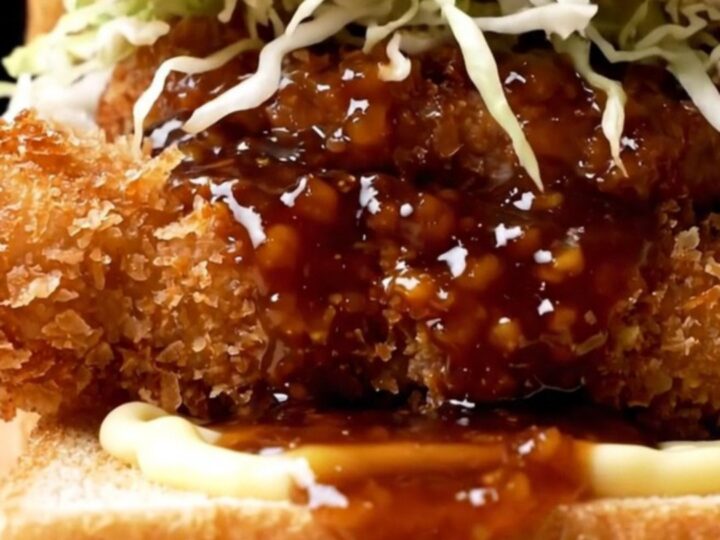
Elevate your lunch routine with a crispy, savory Japanese chicken katsu sando. This iconic sandwich balances the intense crunch of a golden panko-crusted chicken thigh with the soft, cloud-like texture of toasted shokupan milk bread.
Drenched in a tangy, fruit-forward tonkatsu sauce and finished with fresh cabbage, every bite offers a perfect harmony of flavors. It is the ultimate comfort food experience that brings the precise, minimalist art of a Tokyo sandwich shop right into your own home kitchen.
The chicken katsu sando is a masterpiece of Japanese culinary simplicity. At its core, it is about the contrast between textures: the aggressive crunch of the panko coating against the tender, juicy chicken thigh and the pillowy, airy crumb of toasted shokupan bread. This recipe focuses on mastering the fry to achieve that deep golden-brown exterior while ensuring the interior remains succulent.
By following the traditional assembly order—mustard mayo, sauce, and cabbage—you create a sandwich that is not only visually stunning with its perfect cross-section but also deeply satisfying in every mouthful. It is a quick, high-impact dish that requires only a few quality components to achieve professional results.
Ingredients
Main
- 2 pieces boneless chicken thigh (220g each)
Breading
- 1/2 cup all-purpose flour
- 1 large egg, beaten
- 1 cup fresh Japanese panko
Assembly
- 4 slices shokupan milk bread, toasted
- 2 tbsp karashi mustard mayo
- 4 tbsp tonkatsu sauce
- 1 cup shredded cabbage
Why this recipe works
The secret to the perfect katsu sando lies in the preparation of the chicken. Pounding the thighs to an even thickness is essential, as it allows the meat to cook uniformly within the short five-minute frying window. This process also breaks down connective tissues, resulting in a noticeably more tender bite. Using fresh Japanese panko is the second key; unlike standard breadcrumbs, these larger, airy flakes create a distinctively light and shattered-glass crunch that defines a truly authentic katsu.
The assembly process is designed to manage moisture and flavor balance. By spreading the karashi mustard mayo directly onto the bread, you provide a moisture barrier that prevents the sauce from making the bread soggy.
Drenching the chicken in tonkatsu sauce right before adding the cabbage ensures the flavors meld instantly. The cabbage provides a necessary crisp, refreshing contrast to the richness of the fried chicken, cutting through the savory notes of the tonkatsu sauce and the heat of the mustard.
Notes and substitutions
For the best results, use actual shokupan or a high-quality, thick-cut white bread. The bread should be toasted just enough to have a light golden surface while remaining soft inside. If you cannot find karashi mustard, which is a Japanese hot mustard, a mixture of Dijon mustard with a small amount of cayenne or hot sauce provides a similar kick.
The tonkatsu sauce is non-negotiable for the flavor profile; look for a thick, savory-sweet variety that clings well to the meat. Please note that the mayo used in this recipe is served soft, so use pasteurised eggs to ensure safety for all diners.
Equipment-wise, a meat mallet is vital for consistent results, and a digital thermometer is essential for monitoring both the oil temperature and the internal temperature of the chicken. When frying, use a neutral oil with a high smoke point, such as canola or vegetable oil. If you are preparing multiple sandwiches, keep the fried chicken on a wire rack rather than a plate to prevent steam from softening the bottom of the crust, which is the primary enemy of a perfect katsu sando.
- shokupan milk bread: thick-cut brioche or high-quality white bread
- karashi mustard: Dijon mustard mixed with a pinch of cayenne pepper
Equipment
- Meat mallet
- Deep fryer or heavy pot
- Tongs
- Breading stations
- Toaster
Up next · Part 2 of 3
3 steps · 5 min of cooking · what to look for at each stage
Step-by-step instructions (Part 2)