Dinner · Part 2 of 3: Instructions
Crispy Japanese Chicken Katsu Curry with Velvety Sauce Step-by-step instructions
- Prep
- Cook
- Total
- Serves
- 2
Before you start
Before you begin, ensure your workspace is organized and all ingredients are measured. Pound the chicken thighs to an even thickness of about half an inch to ensure they cook through evenly. Prepare three shallow bowls for the breading station: one for the cake flour, one for the beaten egg, and one for the panko flakes.
Set a wire rack over a baking sheet or paper towels to catch drips and provide a place for the chicken to rest after frying. Ensure your frying oil is heated to the target temperature before adding the chicken, and have your curry sauce ready to simmer in a separate pot.
Ingredients at a glance (7)
- 2 thighs boneless skinless chicken thighs
- 1/4 cup cake flour
- 1 large egg, beaten
- 2 cups fresh coarse Japanese panko flakes
- 2 cups neutral frying oil
- 2 cups caramelized onion Japanese curry roux
- 2 cups steamed short-grain rice
Instructions
Breading the Chicken
- Prepare the ChickenScore the chicken thighs lightly and use a meat mallet to pound them to an even thickness to ensure consistent cooking. Dredge each thigh in the cake flour, shaking off any excess. Dip the floured chicken into the beaten egg, then press firmly into the coarse panko flakes, ensuring the entire surface is well-coated for maximum crunch.Look for The chicken should be evenly coated with panko breadcrumbs without any bare spots.Tip Press the panko onto the chicken with the palm of your hand to ensure it sticks properly during frying.
At the end of this phase, the chicken should be completely coated in a uniform layer of panko. The breading should be pressed firmly into the chicken so that no bare patches of meat are visible. The chicken pieces should feel substantial and well-coated, ready for the hot oil. Check that your oil is preheating correctly while you finish this step.
Frying to Perfection
- Fry the KatsuHeat the neutral oil in a deep pan to 340°F (171°C). Carefully lower the breaded chicken into the oil and fry for approximately 5 minutes, or until the panko stands upright like golden spikes and the chicken reaches an internal temperature of 165°F (74°C). Remove the chicken from the oil and let it rest on a wire rack for at least 5 minutes before slicing.Look for Look for a deep golden-brown color and a rigid, spiked panko crust.Safe temperature 165°F (74°C) internal temperature (poultry)Tip Maintain the oil temperature consistently to prevent the crust from becoming greasy or burning.
The chicken is ready when the panko spikes are golden and crispy. The oil should be bubbling steadily around the chicken, not violently. The meat will feel firm but yielding when poked with tongs.
After removing from the oil, the chicken should sound hollow when tapped lightly, and it should rest on a wire rack to maintain its crispness before it is sliced.
Final Assembly
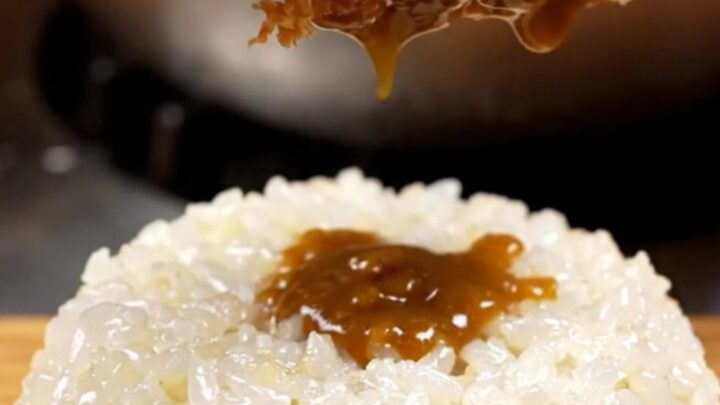
- Warm Curry and ServeWhile the chicken is frying, gently simmer the caramelized onion Japanese curry roux in a separate saucepan until it reaches 200°F (93°C). Slice the rested chicken katsu into thick, uniform strips using a sharp knife. Arrange the crispy chicken over a bowl of steamed short-grain rice and ladle the warm, velvety curry sauce generously over the side of the chicken.Look for The curry should be thick, smooth, and aromatic, coating a spoon easily.Tip Keep the curry sauce warm on low heat so it remains fluid and easy to ladle over the rice.
The final dish should have a beautiful contrast between the steaming, fluffy white rice and the dark, rich curry sauce. The sliced katsu should show off the tender meat inside its golden shell. The curry sauce should be smooth and thick enough to cling to the rice and the crispy chicken without being watery or excessively runny.
Common mistakes
A common mistake is failing to pat the chicken dry before seasoning, which prevents the flour from adhering properly. Another error is overcrowding the fryer, which drops the oil temperature and leads to greasy katsu.
Avoid skipping the resting step; resting allows the temperature to stabilize and the juices to set. Finally, do not add the curry sauce until the very last second, as it will soften the crust if allowed to sit, turning the crispy exterior mushy and losing the intended texture.
How to tell it’s done
The chicken is perfectly cooked when the internal temperature reaches 165°F (74°C). The crust should be a deep, uniform golden brown with panko spikes that feel rigid to the touch. When slicing, the knife should meet very little resistance, and you should hear a distinct, satisfying crunch.
The meat inside should be opaque and juicy, not dry or stringy. If the crust darkens before the center reaches the safe temperature, lower the heat slightly and continue cooking until finished.
- Poultry: 165°F (74°C) in the thickest part
Up next · Part 3 of 3
2 variations · storage & make-ahead · 3 answers · printable card
Tips, FAQ & printable recipe (Part 3)← Back to the ingredients (Part 1)