Dinner · Part 2 of 3: Instructions
Crispy Duck Confit Hoisin Noodles in One Skillet Step-by-step instructions
- Prep
- Cook
- Total
- Serves
- 3
Before you start
Before anything touches the stove, set up the whole bowl. Cut the cucumber into ribbons and the scallions into fine julienne, then park them in the refrigerator so they are properly cold at serving time. Whisk the hoisin sauce, plum sauce, sesame oil, and five-spice into a smooth glaze and keep it by the stove.
Put a large pot of water on to boil for the noodles, and set a colander in the sink. Take the duck confit legs out of their packaging and pat the skin dry with paper towels; dry skin crisps, damp skin steams. Finally, place a large cast-iron or heavy skillet over medium heat so it preheats while the noodles cook.
Ingredients at a glance (9)
- 2 duck confit legs, store-bought or made ahead
- 12 oz cooked wheat noodles (about 350 g)
- 1/4 cup hoisin sauce
- 2 tbsp plum sauce
- 1 tbsp toasted sesame oil
- 1/2 tsp five-spice powder
- 2 tbsp rendered duck fat
- 3 scallions, julienned
- 1/2 cucumber, cut into thin ribbons
Instructions
Stage the cold and the glaze
- Cut the cool, crisp toppingsSlice the cucumber half into thin ribbons with a sharp knife or a vegetable peeler, stopping at the seedy core. Cut the scallions into fine julienne, whites and greens alike. Spread both on a plate and keep them cold so they stay snappy against the hot noodles.Look for The ribbons curl slightly and glisten; the scallion julienne looks silky, not bruised.Tip Chill the toppings in the refrigerator while the duck crisps for maximum contrast.
- Whisk the plum-hoisin glazeIn a small bowl, whisk the hoisin sauce, plum sauce, toasted sesame oil, and five-spice powder until completely smooth and glossy, with no streaks of spice left. The glaze should be thick but pourable, coating the whisk in slow ribbons. Set it beside the stove within easy reach.Look for A uniform mahogany sauce with a slow, thick ribbon falling off the whisk.Tip If it is thicker than ketchup, whisk in a teaspoon of water so it coats noodles instead of clumping.
- Cook and drain the noodlesBoil the wheat noodles in a large pot of unsalted water until springy and just tender, following the package timing. Drain them in a colander and shake well for a full ten seconds so surface water is gone; wet noodles dilute the glaze and turn the bowl soupy.Look for The noodles bend around the tongs with a springy bounce and no chalky center.Tip Undercook by one minute; the noodles finish in the hot glaze and stay chewy, never mushy.
By the end of this phase, everything that needs no heat is finished and waiting. The cucumber ribbons and scallion julienne should look fresh and chilled, with no wet, bruised patches. The glaze should be a smooth, uniform mahogany sauce, thick enough to coat a spoon slowly, with no visible spice streaks.
The noodles should be springy and well drained, bending around the tongs with a bounce and leaving no water in the colander. Before moving on, taste a strand of noodle: it should be chewy with a slight firmness at the center, since it will soften further in the hot glaze. If the glaze feels stiffer than ketchup, loosen it now with a teaspoon of water, because it will tighten as it bubbles later.
Crisp and shred the duck
- Crisp the duck confit legsSet a large cast-iron skillet over medium heat with no oil. Lay the duck confit legs skin-side down and let them sizzle gently for 6 to 8 minutes, pressing once with a spatula, until the skin turns deep golden and shatters when tapped. The fat renders out and pools in the pan.Look for A steady quiet sizzle, the skin mahogany and blistered, fat pooling around the legs.Tip Keep the heat at medium; high heat browns the skin before the fat has fully rendered.
- Shred the duck, save the skinTransfer the legs to a cutting board and shred the warm meat into bite-size strands with two forks. Lift the crackling skin off in whole pieces, break it into rough shards, and set those shards aside separately. Keep the rendered fat in the skillet for the noodles.Look for The meat pulls apart in juicy strands with no resistance; the skin snaps cleanly.Tip Shred while warm; chilled confit meat resists shredding and turns chunky instead of feathery.
- Measure the fat in the panPour the rendered fat into a heatproof cup and return 2 tbsp to the skillet, adding rendered duck fat if the legs gave less. Warm it over medium heat until it shimmers and smells faintly of roasted poultry. Pour away any extra so the finished bowl tastes glossy, not greasy.Look for The fat shimmers across the pan and loosens with a tilt, releasing a nutty aroma.Tip Two tablespoons is the sweet spot; more fat and the glaze slides off the noodles instead of clinging.
This phase ends with the duck transformed. The skin should be deep golden to mahogany, blistered, and hard enough that it cracks when tapped; if it bends or feels leathery, keep it in the pan another minute or two. The meat should pull apart into juicy strands with no resistance, and the pan should hold two tablespoons of shimmering, fragrant rendered fat.
Listen as the legs cook: a steady, quiet sizzle means moisture is leaving the skin; aggressive spitting means the heat is too high. Before moving on, confirm the fat level in the pan and pour off any real excess. The reserved skin shards go on a separate plate, not back with the meat, so steam from the shredded duck cannot soften them.
Lacquer, fold, and crown
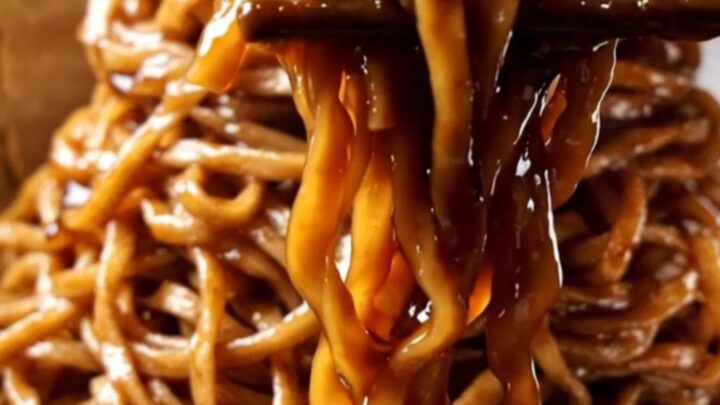
- Toss the noodles in the glazeAdd the drained noodles and the whisked glaze to the hot fat. Toss constantly with tongs for 1 to 2 minutes over medium heat until every strand is lacquered and the glaze bubbles gently at the edges of the pan. Pull the skillet off the heat the moment the coating looks even.Look for The noodles squeak softly against the pan and shine uniformly, glaze bubbling at the rim.Tip Sugary hoisin scorches fast; if the glaze tightens too much, finish the toss off the heat.
- Build the bowls and serveFold the shredded duck through the noodles so it warms through, about 30 seconds. Divide the noodles among warm bowls, then crown each one with the reserved skin shards, cucumber ribbons, and scallion julienne. Serve immediately, while the skin is still audibly crisp and the bowls steam.Look for Steam rises off the noodles, the skin shards gleam, and the cucumber stays cold and firm.Tip Add the cold toppings at the table, not in the pan, so they keep their snap.
The final phase is over when the noodles look lacquered and the bowl is assembled. The glaze should have bubbled gently around the edges of the pan, then settled into an even, glossy coat on every strand, with no thin sauce pooling at the bottom. The shredded duck should be folded through and steaming hot. The bowls should show off the contrast this dish is built on: shining dark noodles, jagged crackling shards on top, and cool cucumber ribbons and scallion julienne scattered over them. Check the skin one last time before serving; it should still snap.
Common mistakes
The most common failure is soggy skin, and it has one cause: moisture. Pat the confit legs dry, use medium rather than high heat, and give the fat time to render before expecting crispness. The second trap is a scorched glaze; hoisin and plum sauce are loaded with sugar, and over medium-high heat they burn in under a minute, turning bitter.
Keep the toss at medium and finish it off the heat if the sauce tightens. Third, waterlogged noodles dilute everything, so shake the colander hard and never rinse the noodles after draining. Fourth, adding the cucumber and scallions to the hot pan wilts them into the sauce; they belong on top, cold and raw.
How to tell it’s done
The bowl is done when three things are true at once. First, the skin: the reserved shards should be deep mahogany, glassy, and brittle enough to snap when tapped with a fork. Second, the noodles: every strand should shine with an even lacquer, with no watery glaze pooling at the bottom of the pan and no dry, pale patches. Third, the temperature: the shredded duck should be heated all the way through, steaming hot, since the confit is already fully cooked and only needs warming. Lift a forkful and look at it; the noodles should drape in slow, glossy ribbons, the way a well-sauced lo mein does.
Up next · Part 3 of 3
4 variations · storage & make-ahead · 5 answers · printable card
Tips, FAQ & printable recipe (Part 3)← Back to the ingredients (Part 1)