Dinner · Part 2 of 3: Instructions
Crispy Detroit-Style Pizza with Caramelized Frico Corners Step-by-step instructions
- Prep
- Cook
- Total
- Serves
- 2
Before you start
Before you start, make sure your oven is fully preheated to 500°F (260°C) with a rack in the middle. Have your hydrated dough at room temperature, as cold dough is harder to press and may shrink back. Cube the brick cheese and set it aside.
Warm the crushed San Marzano tomatoes in a small saucepan over low heat, just until they are warm to the touch. Measure out the olive oil and have your steel pan ready. This is a quick recipe, so having everything prepped makes the process smooth.
Ingredients at a glance (4)
- 400 g hydrated pizza dough
- 8 oz brick cheese, cubed
- 1/2 cup crushed San Marzano tomatoes, warmed
- 2 tbsp olive oil
Instructions
Build the Base
- Prepare the pan and doughPour the olive oil into the steel pan and spread it evenly over the bottom and up the sides. Place the hydrated dough in the pan and press it out to the edges with your fingertips, making sure it reaches the corners. If the dough resists, let it rest for a few minutes and press again.Look for The dough should be evenly thick and touch all four corners of the pan.Tip Oil your fingers lightly to prevent sticking while pressing the dough.
- Add the cubed brick cheeseScatter the cubed brick cheese evenly over the dough, leaving a small border around the edges. The cheese should be in small cubes rather than shredded, which helps create the crispy frico edges during baking. Press a few cubes right against the pan edges.Look for The cheese covers the surface but the edges are clearly visible with cheese touching the pan.Tip Cubed cheese melts differently than shredded, giving you those caramelized pockets.
At this stage, the dough is evenly pressed into the oiled pan, reaching all four corners. The surface is dimpled from your fingertips, and the cubed cheese is scattered evenly, with some pieces touching the pan edges.
The pan looks well-oiled, and the dough is soft and pliable. Before moving to the oven, make sure the cheese is distributed so that every bite will have cheese, and the edges are loaded for maximum frico.
Bake to Golden
- Bake at high heatPlace the pan in the oven and bake at 500°F (260°C) until the cheese edges turn lacy and dark amber, and the crust is puffed and golden brown. This should take about 12 to 15 minutes, but watch closely as ovens vary. The cheese should be bubbling and the edges deeply caramelized.Look for The edges are dark amber and lacy, the crust is golden, and the cheese is blistered in spots.Tip Rotate the pan halfway through if your oven has hot spots.
The oven is at 500°F, and the pizza is baking. After about 10 minutes, you’ll see the cheese melting and the edges starting to brown. The kitchen fills with the aroma of toasted cheese and bread. The crust is puffing up, and the cheese at the edges is turning dark amber and lacy. The top is golden brown, and the cheese is blistered in spots. The whole pan is sizzling, and the edges are deeply caramelized.
Finish and Serve
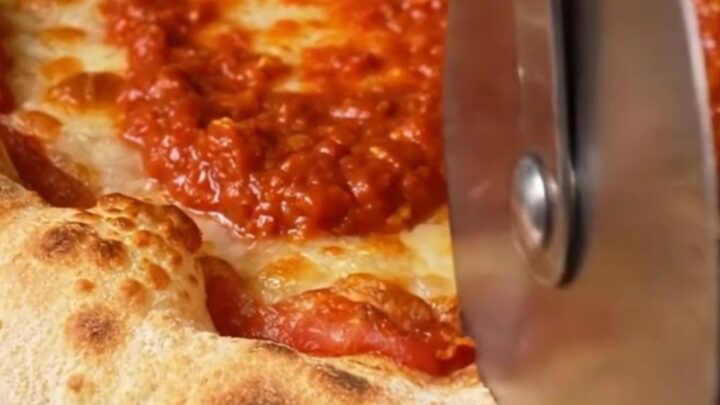
- Finish with warm sauce and serveRemove the pizza from the oven and let it cool for 2 to 3 minutes. Spoon two racing stripes of warm crushed San Marzano tomato sauce over the top. Slice with a sharp knife or pizza cutter, and listen for the crunch of the frico corners as you cut.Look for The sauce is warm and spread in two stripes, and the pizza slices cleanly with a loud crunch.Tip Warm the sauce before spooning so it doesn't cool the pizza.
The pizza is out of the oven, cooling for a few minutes. The frico edges are dark, crispy, and shatter when you press them. You spoon two stripes of warm tomato sauce across the top, and the contrast of bright red against golden cheese is striking. When you slice, you hear a loud crunch, and the pieces hold together perfectly. The sauce is warm, the cheese is molten, and the corners are crisp.
Common mistakes
One common mistake is not pressing the dough all the way into the corners, which prevents the frico from forming along the edges. Another is using too much sauce, which can make the pizza soggy; the sauce should be added after baking and in modest stripes.
Overbaking can burn the cheese, so watch closely during the last few minutes. Also, avoid using a pan that is too large or too small, as it affects the thickness of the crust and the cooking time.
How to tell it’s done
The pizza is done when the cheese edges are deeply caramelized, dark amber in spots, and have a lacy, crispy appearance. The crust should be puffed and golden brown, and the cheese in the center should be bubbling and blistered.
If you lift an edge with a spatula, the bottom should be golden and crisp. The internal temperature of the crust should be around 200°F (93°C), but the visual cues are the best indicator. Let the pizza cool for a few minutes before slicing to allow the cheese to set slightly.
Up next · Part 3 of 3
4 variations · storage & make-ahead · 5 answers · printable card
Tips, FAQ & printable recipe (Part 3)← Back to the ingredients (Part 1)