Appetizers · Part 2 of 3: Instructions
Crispy Coconut Shrimp with Sweet Mango Habanero Dip Step-by-step instructions
- Prep
- Cook
- Total
- Serves
- 4
Before you start
Before starting, make sure the shrimp are peeled and deveined with tails on. Pat them dry with paper towels to help the coating stick. Prepare the mango habanero dip first—it takes just a few minutes in a blender.
Set up a breading station with three shallow bowls: flour with seasonings, beaten eggs, and the coconut-panko mixture. Heat the oil to 350°F (175°C) just before you begin frying.
Ingredients at a glance (12)
- 12 jumbo raw shrimp, peeled and deveined (tails on)
- 60 g all-purpose flour
- 2 large eggs, beaten
- 80 g sweetened shredded coconut
- 60 g panko breadcrumbs
- 1 tsp garlic powder
- 1/2 tsp paprika
- Oil for frying (such as vegetable or canola), to taste
- 1 ripe mango, peeled and diced
- 1/2 habanero pepper, seeded
- 1 tbsp fresh lime juice
- 1 tbsp honey
Instructions
Prep the Dip and Breading
- Make the Mango Habanero DipIn a blender, combine the diced mango, seeded habanero pepper, lime juice, and honey. Blend until silky smooth, scraping down the sides as needed. Transfer to a serving bowl and set aside.Look for The dip should be completely smooth with no chunks of mango.Tip For a spicier dip, leave some of the habanero seeds in.
- Set Up the Breading StationIn a shallow bowl, mix the flour with the garlic powder and paprika. Place the beaten eggs in a second bowl. In a third bowl, combine the shredded coconut and panko breadcrumbs.Look for The dry mixtures are ready to use.Tip Use one hand for wet ingredients and one for dry to avoid clumping.
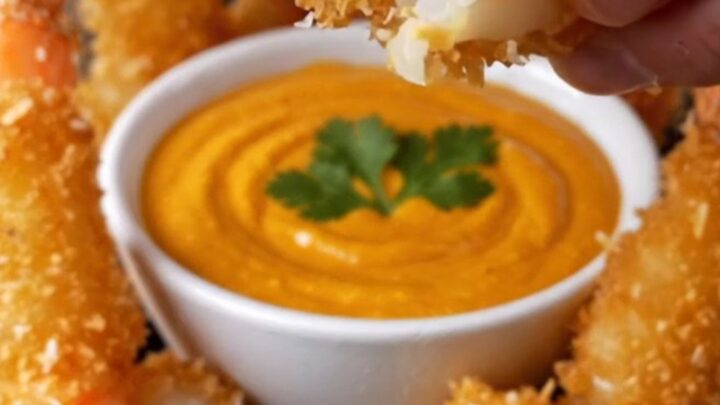
The mango habanero dip is smooth and vibrant orange, with a sweet-spicy aroma. The breading station is set up with seasoned flour, beaten eggs, and the coconut-panko mix. Everything is within reach for quick assembly.
Coat and Fry
- Coat the ShrimpPat the shrimp dry with paper towels. Dredge each shrimp in the flour mixture, then dip into the beaten eggs, letting any excess drip off. Press firmly into the coconut-panko mixture, ensuring an even coat on all sides.Look for The shrimp are fully coated with no bare spots.Tip Press the coating gently but firmly so it adheres during frying.
- Heat the OilPour about 2 inches of oil into a deep skillet or pot. Heat over medium-high until it reaches 350°F (175°C) on a cooking thermometer.Look for The oil shimmers and a small piece of bread sizzles immediately.Tip Do not overcrowd the pan; fry in batches if needed.
- Fry the ShrimpCarefully place a few coated shrimp into the hot oil. Fry for about 3 minutes, turning occasionally, until the coconut is deep golden brown and the shrimp are cooked through. The internal temperature of the shrimp should reach 145°F (63°C).Look for The crust is golden brown and the shrimp are opaque and firm.Safe temperature 160°F (71°C) internal temperature (egg dishes)Tip Use tongs to turn the shrimp gently to avoid knocking off the coating.
The shrimp are evenly coated and ready for the oil. The oil sizzles when a test piece is added.
As the shrimp fry, the kitchen fills with the scent of toasting coconut and garlic. The crust turns golden brown and crisp.
Drain and Serve
- Drain and ServeRemove the shrimp with a slotted spoon and drain on a paper towel-lined plate. Serve immediately with the mango habanero dip on the side.Look for The shrimp are crisp and golden.Safe temperature 145°F (63°C) internal temperature (shellfish)Tip Serve right away to keep the crust crunchy.
The fried shrimp are drained on paper towels, their crusts crackling as they cool slightly. The dip is ready in its serving bowl. Serve immediately, with shrimp arranged around the dip for a beautiful presentation.
Common mistakes
One common mistake is overcrowding the pan, which lowers the oil temperature and results in greasy shrimp. Fry in small batches, allowing room for the shrimp to float freely.
Another is using wet shrimp—pat them dry before breading. Also, do not skip pressing the coconut-panko mixture onto the shrimp, or it will fall off during frying.
How to tell it’s done
The shrimp are done when the crust is deep golden brown and the shrimp are opaque and firm to the touch.
To be safe, use an instant-read thermometer to check that the internal temperature of the shrimp has reached 145°F (63°C). The coconut should smell toasted and fragrant, and the coating should be crisp, not soggy.
- Shellfish: 145°F (63°C) in the thickest part
- Egg dishes: 160°F (71°C) in the thickest part
Up next · Part 3 of 3
4 variations · storage & make-ahead · 5 answers · printable card
Tips, FAQ & printable recipe (Part 3)← Back to the ingredients (Part 1)