Dinner · Part 2 of 3: Instructions
Crispy Coconut Mango Chili Chicken Tenders Step-by-step instructions
- Prep
- Cook
- Total
- Serves
- 4
Before you start
Before starting the recipe, ensure your workspace is clean and organized. Remove the chicken tenders from the refrigerator and pat them dry if they are excessively wet. Measure out all your ingredients into separate bowls to create a seamless breading station.
This setup prevents cross-contamination and makes the coating process much faster. Ensure your frying oil is ready and your thermometer is calibrated to accurately monitor the temperature of the oil. Having everything within reach will keep the cooking process smooth and efficient.
Ingredients at a glance (8)
- 1.5 lb chicken tenders
- 1/2 cup coconut milk
- 1 tsp lime zest, for serving
- 1 cup sweetened shredded coconut
- 1 cup panko breadcrumbs
- 1 tsp curry powder
- 2 cups coconut oil, for frying
- 1/2 cup mango sweet chili sauce, for serving
Instructions
Marinating
- Marinating the ChickenPlace the chicken tenders in a large bowl. Pour the coconut milk over the chicken and add the lime zest. Toss well to coat every piece evenly. Cover the bowl and refrigerate for at least 30 minutes to allow the flavors to penetrate the meat while keeping it safely chilled.Look for The chicken should be thoroughly coated in the white, creamy coconut milk mixture.Tip Ensure the chicken is kept in the refrigerator at all times while marinating to prevent bacterial growth.
The chicken should be thoroughly coated in the coconut milk and lime mixture. The smell will be fresh and slightly tropical. Ensure the bowl is covered and placed in the refrigerator. The chicken should look moist and well-hydrated, ready to absorb the flavors while the breading station is prepared.
Breading
- Preparing the Coconut CoatingIn a shallow dish, combine the sweetened shredded coconut, panko breadcrumbs, and curry powder. Mix thoroughly until the curry powder is evenly distributed throughout the dry ingredients, creating a uniform, golden-hued breading mixture.Look for The mixture should look uniform in color with no large clumps of curry powder.Tip Use a wide, shallow dish to make the pressing process easier and more efficient.
The coconut and panko mixture should be perfectly blended with the curry powder. The dry mix should look uniform in color and texture. When you press the chicken into this mixture, ensure that every side is covered, creating a thick, even layer of breading that will provide the essential crunch during the frying phase.
Frying
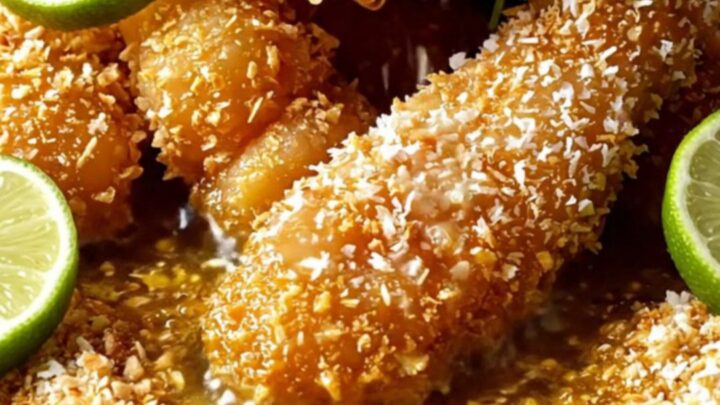
- Frying to PerfectionHeat the coconut oil in a heavy-bottomed skillet to 350°F (177°C). Take the chicken from the fridge, press each piece firmly into the coconut-panko mixture, and carefully add to the hot oil. Fry for 5 minutes, turning once, until the coconut shreds turn caramelized amber-gold and the internal temperature reaches 165°F (74°C). Remove to paper towels. Serve with the mango sweet chili sauce.Look for The crust should be deeply golden brown and crispy, not dark brown or burnt.Safe temperature 165°F (74°C) internal temperature (poultry)Tip Work in batches to avoid crowding the pan, which can drop the oil temperature and lead to greasy chicken.
The chicken tenders should be golden brown and crisp, smelling of toasted coconut and warm curry spices. The oil should be shimmering and hot.
Check that the crust is not burning and that the tenders are frying evenly. Once the internal temperature reaches 165°F (74°C), they are ready to be removed and drained on paper towels.
Common mistakes
A common mistake is overcrowding the skillet, which causes the oil temperature to drop rapidly. This results in the chicken soaking up too much oil rather than frying, leading to a greasy, soggy crust. Always fry in smaller batches to maintain the heat.
Another error is neglecting to press the coating firmly onto the chicken. If the breading is loose, it will fall off into the oil. Take a moment to firmly adhere the coconut-panko mixture to each tender before frying.
How to tell it’s done
The chicken is done when the crust is a deep, caramelized amber-gold and the internal temperature has reached 165°F (74°C). Use a meat thermometer to check the thickest part of the largest tender to ensure it is cooked through.
The meat should be opaque and juices should run clear. Do not rely on color alone, as the crust can brown quickly; the internal temperature is the only reliable way to confirm the chicken is safe and perfectly cooked for serving.
- Poultry: 165°F (74°C) in the thickest part
Up next · Part 3 of 3
2 variations · storage & make-ahead · 3 answers · printable card
Tips, FAQ & printable recipe (Part 3)← Back to the ingredients (Part 1)