Dinner · Part 3 of 3: Tips & recipe card
Crispy Chorizo and Black Bean Flautas with Avocado Crema Tips, FAQ & printable recipe
- Prep
- Cook
- Total
- Serves
- 4
Tips for success
Temperature control is the entire recipe. Hold the oil at 375°F and the tortillas blister instead of absorbing fat, which is what keeps the crust shattering even under the crema. Fry three or four flautas at a time, never more, and give the oil a minute to recover between batches.
If you have no thermometer, drop in a corner of tortilla — it should sizzle vigorously within two seconds. Fry two minutes per side, flip once, and resist the urge to keep turning.
The crema rewards restraint with salt: chorizo and queso fresco are both salty, so season it lightly and taste against a finished flauta. Blend it fully smooth — thirty seconds in the blender — so it pipes in clean ribbons rather than smearing.
If it thickens while you finish frying, whisk in a teaspoon of water. Dress the flautas at the table or just before serving, and let everyone hear the crunch before the toppings soften it. Serve extra crema alongside for dipping.
Variations
- Chicken flautas: Replace the chorizo with 6 oz of shredded cooked chicken and add 1 tsp chile powder to the mashed beans. Use the same cheese and frying method; the filling rolls slightly looser, so pack it a touch tighter.
- Baked flautas: Brush the rolled flautas lightly with avocado oil and bake at 425°F (220°C) for 18 to 20 minutes, flipping once, until blistered and crisp. The crust is less crackly than fried but still sturdy under the crema.
- Chipotle crema: Blend 1 canned chipotle in adobo into the avocado crema along with the lime. The result is smoky, gently spicy, and a deeper orange-green; start with one chipotle and add a second only after tasting.
- Vegetarian version: Swap the chorizo for 6 oz of cooked soy chorizo or 1/2 cup of roasted corn plus 1 tsp smoked paprika. Keep the Chihuahua cheese for melt, and season the beans a little more assertively to carry the filling.
Storage and make-ahead
- Fridge
- Undressed flautas: up to 3 days refrigerated, uncovered on a rack until cold, then covered. Crema separately, up to 2 days.
- Freezer
- Freeze undressed flautas on a sheet pan until solid, then bag them for up to 2 months. Reheat from frozen in a 400°F (205°C) oven.
- Reheat
- Oven only: 400°F (205°C) for 8 to 10 minutes on a wire rack. Skip the microwave — it collapses the crust. Top after reheating, never before.
Flautas are at their peak within minutes of frying, but they keep reasonably well. Let any leftovers cool for no more than 2 hours at room temperature, then refrigerate them uncovered on a rack until cold, after which they can be stacked in a container.
Store the avocado crema separately in an airtight container with plastic wrap pressed against the surface to slow browning. Keep the queso fresco and pickled onions in their own containers. Undressed flautas hold their texture far better than topped ones, so always store components separately and reassemble after reheating.
The filling is the natural make-ahead component: mash the beans, fold in the chorizo and cheese, and refrigerate the bowl covered for up to 2 days — cold filling actually rolls tighter than room-temperature filling. The avocado crema can be blended a day ahead if the wrap is pressed directly onto its surface; whisk in a teaspoon of water before piping.
Pickled red onions keep for a week, so a jar in the refrigerator covers many dinners. Roll the flautas up to 4 hours ahead and hold them uncovered on a rack at room temperature, then fry straight from there. Do not fry ahead of time; the crust is the one element that cannot wait.
Serving ideas
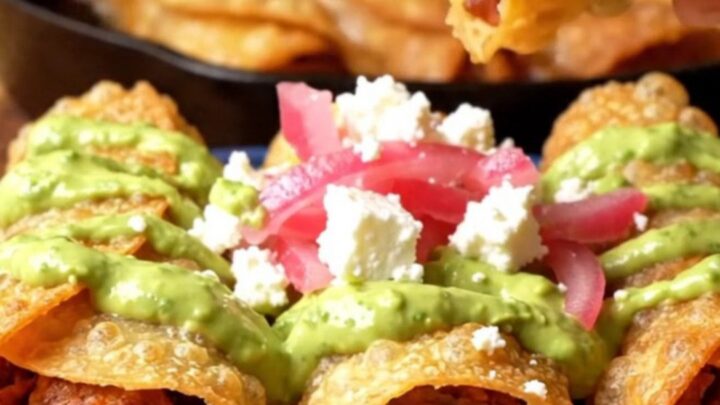
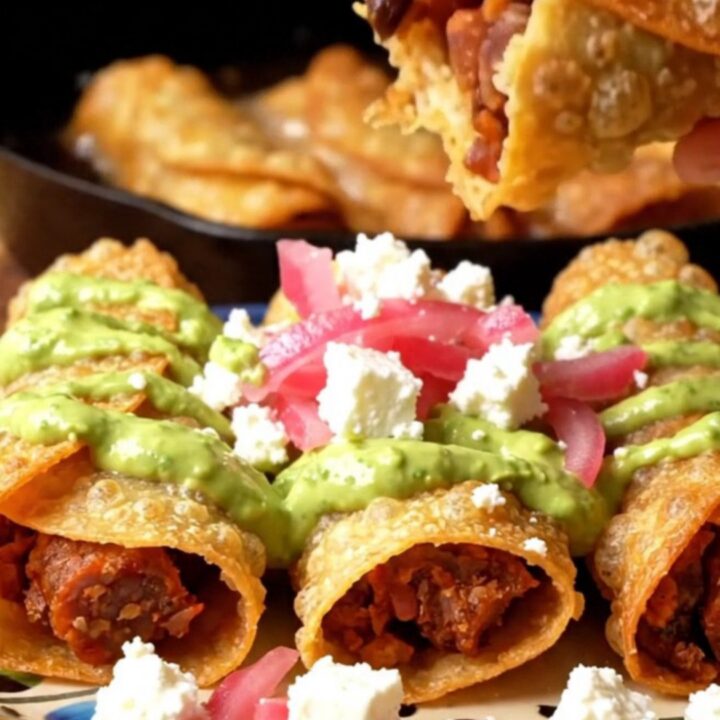
Serve the flautas family-style on a warm platter, crema ribbons already piped across the top, queso fresco scattered generously, and pickled red onions piled at the center so everyone can see the color before it gets mixed in. Two flautas per person is a satisfying dinner with rice or a simple cabbage salad; cut each flauta in half on the bias for a party platter, which exposes the swirled filling and makes them easier to pick up.
Put any extra crema in a small bowl for dipping — plenty of people double-dunk the crispy ends — and set out extra pickled onions for those who like more tang. These pair naturally with a cold lager or a limey sparkling water, and they make an excellent game-day platter because they can be held in a 200°F (95°C) oven, undressed, for up to 20 minutes before topping and serving.
Frequently asked questions
Can these flautas be rolled ahead of time?
Why did the flautas unroll during frying?
Can the avocado crema be made in advance?
What oil is best for frying flautas?
How is a flauta different from a taquito?
Crispy Chorizo and Black Bean Flautas with Avocado Crema
Ingredients
- 1 can black beans (15 oz), drained and rinsed
- 6 oz cooked pork chorizo, crumbled
- 1 cup shredded Chihuahua cheese
- 8 flour-corn tortillas, warmed
- 1 1/2 cups avocado oil, for shallow-frying
- 1 ripe avocado, pitted and peeled
- 1/2 cup sour cream
- 2 tbsp fresh lime juice
- Kosher salt, to taste
- 1/2 cup crumbled queso fresco
- 1/2 cup pickled red onions, store-bought or made ahead
Instructions
- Drain and rinse the black beans, then tip them into a large mixing bowl. Mash with a potato masher or sturdy fork until mostly smooth with a few visible pieces for texture. A chunky-smooth paste grips the tortilla far better than whole beans, which roll out of place as the flautas fry.
- Add the crumbled cooked chorizo to the mashed beans and stir until the orange-red paprika oils streak evenly through the mixture. Fold in the shredded Chihuahua cheese last so it stays in distinct strands rather than clumping. Taste and adjust the salt only if needed — chorizo and cheese both carry plenty on their own.
- Heat the flour-corn tortillas in a dry skillet over medium heat, about 20 seconds per side, or wrap the stack in a damp towel and microwave for 30 seconds. Keep them covered as you work. Warm tortillas bend without cracking; cold ones split down the seam and spill filling into the oil.
- Spoon about 3 tablespoons of filling in a thin line down the lower third of each tortilla. Roll away from you as tightly as the filling allows and set each flauta seam-side down on a cutting board. A tight roll is the whole secret: loose flautas unwind in the oil and lose their crunch.
- Pour the avocado oil into a heavy skillet to a depth of about 1/2 inch and set it over medium-high heat. Clip on a deep-fry thermometer and wait until it reads 375°F (190°C). At that temperature the tortillas blister and crisp instead of soaking up oil and turning greasy.
- Lay 3 or 4 flautas seam-side down in the hot oil without crowding. Fry for 2 minutes, flip with tongs, and fry 2 minutes more, until golden-brown and blistered on both sides. Work in batches and let the oil return to 375°F (190°C) between batches so every flauta gets the same shattering crust.
- Lift each flauta out with tongs, letting the oil drip back into the skillet, and transfer to a wire rack set over a baking sheet. Skip the paper towels — a rack lets air circulate underneath, so the bottoms stay as crunchy as the tops while the remaining batches fry.
- Combine the avocado, sour cream, lime juice, and a pinch of kosher salt in a blender or food processor. Blend until completely silky, scraping down once, about 30 seconds. The crema should ribbon slowly off a spoon; if it is too thick to pipe, blend in a teaspoon of water at a time until it flows.
- Lay the warm flautas on a platter and pipe thick ribbons of avocado crema across each one. Scatter the crumbled queso fresco over the top, then finish with the pink pickled red onions. Bring them to the table immediately — the contrast of shattering crust, creamy topping, and tangy onions is the entire point.
Estimated nutrition per serving
- Calories
- 640
- Protein
- 20 g
- Carbohydrates
- 48 g
- Fat
- 36 g
- Fiber
- 9 g
- Sugar
- 4 g
- Sodium
- 820 mg
Next recipe
Garlic Butter Crab and Shrimp Enchiladas in White Wine Cream Sauce
See the recipe → →This recipe is based on a short cooking video and is published under the pen name Clara Weller. It was checked before publication, but errors can slip through. Nutrition, when shown, is an estimate. Read more in our editorial policy and on our food safety page.
More recipes to try
One-Pan Green Chile Chicken Enchilada Skillet in 15 Minutes
Total time: 23 min
Baked Enchilada-Style Beef Burritos for a Quick Crowd Dinner
Total time: 45 min
Crispy Tortilla Smash Pizzadilla in One Skillet
Total time: 13 min
Crispy Chicken Chimichangas with Molten Pepper Jack
Total time: 40 min
Accordion Tortilla Skillet Bake: Crispy Ridges, One Pan, 20 Minutes
Total time: 36 min