Dinner · Part 3 of 3: Tips & recipe card
Crispy Chicken Lavash Wrap with Garlic Sauce Tips, FAQ & printable recipe
- Prep
- Cook
- Total
- Serves
- 4
Tips for success
For the crispiest results, use a heavy cast iron skillet and let it heat thoroughly before adding the wraps. Press down with a spatula while cooking to ensure even contact with the pan.
If making multiple batches, keep the finished wraps warm in a 200°F (93°C) oven while you toast the rest. This prevents them from softening while you work.
To avoid a soggy wrap, pat the diced tomatoes dry with paper towels before adding them. Also, let the cooked chicken rest for a few minutes before assembling—this lets the juices redistribute, so they don't pool on the lavash.
If you prefer extra garlic flavor, brush the outside of the wraps with garlic butter before toasting.
Variations
- Spicy Harissa Version: Add 1–2 tablespoons of harissa paste to the marinade for a smoky, spicy kick. Replace the garlic yogurt sauce with a harissa-laced yogurt sauce for extra heat. Serve with pickled onions and fresh cilantro.
- Vegetarian Option: Swap the chicken with 2 cups of cubed halloumi or firm tofu, tossed in the same spices and seared until golden. Use a dairy-free yogurt sauce for a vegan version, and omit the mozzarella or use a plant-based alternative.
- Breakfast Wrap: Skip the chicken and fill the lavash with scrambled eggs, crispy bacon, and cheddar cheese. Toast as directed and serve with a drizzle of hot sauce. This is a hearty breakfast or brunch option.
- Greek-Inspired Wrap: Add sliced red onions, Kalamata olives, and crumbled feta cheese to the filling. Use a tzatziki sauce instead of garlic yogurt sauce. The briny flavors pair well with the smoky chicken.
Storage and make-ahead
- Fridge
- Store leftover wraps in an airtight container in the refrigerator for up to 3 days. Separate layers with parchment paper to prevent sticking.
- Freezer
- Freeze the assembled, untoasted wraps individually in plastic wrap and a freezer bag for up to 2 months. Thaw overnight in the refrigerator before toasting.
- Reheat
- To reheat, toast the wraps in a dry skillet over medium heat for 3–4 minutes per side, or until hot and crisp. Avoid microwaving, as it makes the wrap chewy.
Leftover wraps can be stored in an airtight container in the refrigerator for up to 3 days. To keep them from getting soggy, place a paper towel in the container to absorb excess moisture. Reheat in a dry skillet over medium heat for 2–3 minutes per side, or in a toaster oven, to restore crispness.
The seasoned chicken can be prepared and refrigerated up to 1 day in advance. The garlic yogurt sauce can be made up to 3 days ahead and stored in a sealed container. Assembled but untoasted wraps can be wrapped tightly in plastic wrap and refrigerated for up to 8 hours; toast them just before serving.
Serving ideas
Serve the crispy chicken lavash wraps warm, straight from the skillet, with a bowl of extra garlic yogurt sauce for dipping. The cool, creamy sauce contrasts beautifully with the hot, crispy wrap.
Add a side of fresh vegetables or a simple salad for a complete meal. These wraps also make excellent party food—slice them into smaller pieces and serve as appetizers.
For a more substantial dinner, pair the wraps with a side of roasted potatoes or a light cucumber salad.
The flavors are bold but not overpowering, making them versatile enough to accompany a range of sides. If serving a crowd, you can cut the wraps into pinwheels and secure with toothpicks for easy handling.
Frequently asked questions
Can this recipe be made ahead of time?
What can be used instead of lavash bread?
Why does the lavash wrap become soggy?
Can the wraps be frozen?
How can the wraps be reheated without losing crispness?
Crispy Chicken Lavash Wrap with Garlic Sauce
Ingredients
- 2 lb boneless skinless chicken breasts, cut into 1-inch cubes
- 2 tbsp olive oil
- 2 tsp smoked paprika
- 1 tsp garlic powder
- 1 tsp onion powder
- 1 tsp dried oregano
- 1 tsp salt
- 1/2 tsp black pepper
- 4 large lavash flatbreads
- 1 1/2 cups shredded mozzarella cheese
- 1 cup diced tomatoes
- 1 cup garlic yogurt sauce
- 2 tbsp butter
Instructions
- In a large bowl, combine the cubed chicken breasts with olive oil, smoked paprika, garlic powder, onion powder, dried oregano, salt, and black pepper. Toss well to coat every piece evenly. Cover the bowl and refrigerate while preparing the other ingredients, or for up to 30 minutes if the chicken was just cut.
- Heat a large skillet over medium-high heat. Add the seasoned chicken cubes in a single layer. Cook without stirring for 2–3 minutes to get a good sear, then stir and continue cooking until the chicken is browned on all sides and cooked through, about 5–7 minutes total. The internal temperature should reach 165°F (74°C). Transfer the chicken to a plate and set aside.
- Lay the lavash flatbreads on a clean work surface. Evenly divide the cooked chicken, shredded mozzarella, and diced tomatoes among the four flatbreads, placing the filling in a line down the center of each. Drizzle about 2 tablespoons of garlic yogurt sauce over the filling on each wrap.
- Fold the bottom edge of each lavash over the filling, then fold in the sides and roll tightly into a snug cylinder. Press gently to seal the seam. Repeat with the remaining wraps.
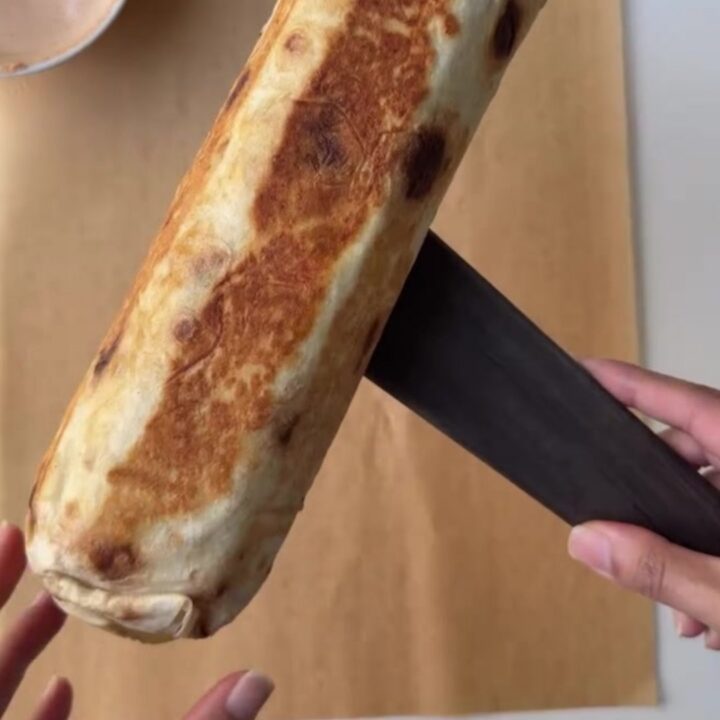
- Melt the butter in a cast iron skillet over medium heat. Place the wraps seam-side down in the skillet. Cook for 2–3 minutes per side, pressing firmly with a spatula, until golden brown and paper-crisp on both sides. Repeat with the remaining wraps, adding more butter if needed.
- Transfer the toasted wraps to a cutting board. Let them cool for 2 minutes, then slice each wrap in half crosswise with a sharp knife. Serve immediately with extra garlic yogurt sauce on the side for dipping.
Estimated nutrition per serving
- Calories
- 610
- Protein
- 52 g
- Carbohydrates
- 38 g
- Fat
- 28 g
- Fiber
- 3 g
- Sugar
- 5 g
Next recipe
Crispy Sweet Chili Garlic Chicken Tenders with Garlic Ranch
See the recipe → →This recipe is based on a short cooking video and is published under the pen name Clara Weller. It was checked before publication, but errors can slip through. Nutrition, when shown, is an estimate. Read more in our editorial policy and on our food safety page.
More recipes to try

Crispy Smash Burger Quesadilla Wrap
Total time: 30 min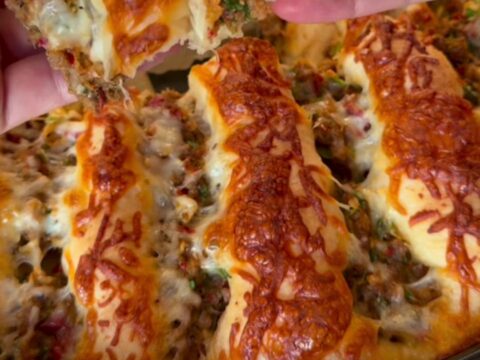
Crispy Turkish Lahmacun Pide with Spiced Beef
Total time: 1 h 11 min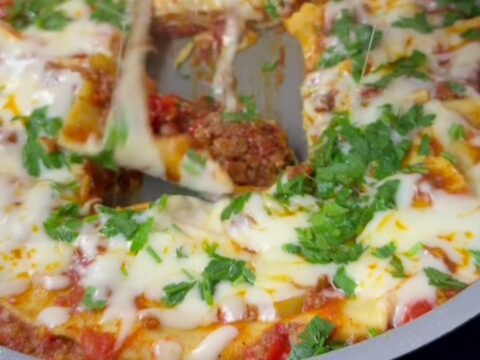
Quick Skillet Lasagna Roll-Ups with Endless Cheese Pull
Total time: 30 min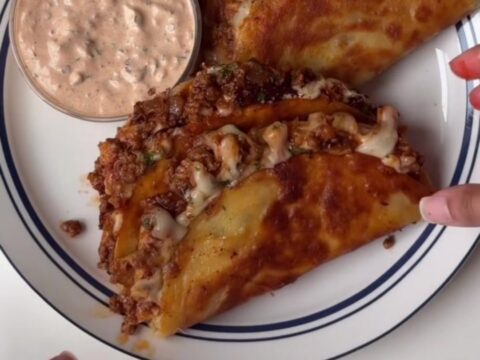
Cheesy Chipotle Beef Tacos with Lime Crema
Total time: 35 min
Shatteringly Crispy Garlic Parmesan Chicken Tenders
Total time: 35 min