Dinner · Part 2 of 3: Instructions
Crispy Chicken Katsu Sando with Tangy Tonkatsu Sauce Step-by-step instructions
- Prep
- Cook
- Total
- Serves
- 2
Before you start
Before you start, gather all your ingredients and set up a breading station with three shallow dishes. Pound the chicken breasts between plastic wrap to an even thickness, then season. Have the oil heating in a heavy skillet while you bread the chicken.
Shred the cabbage finely and set aside. Prepare the tonkatsu sauce by whisking the ingredients together. Everything should be ready before you begin frying, as the process moves quickly once the oil is hot.
Ingredients at a glance (14)
- 2 boneless, skinless chicken breasts (about 6 oz each)
- 1/2 tsp kosher salt
- 1/4 tsp black pepper
- 1/2 cup all-purpose flour
- 2 large eggs, beaten
- 1 1/2 cups panko breadcrumbs
- 2 cups neutral oil (such as canola or vegetable), for frying
- 4 slices shokupan (Japanese milk bread) or soft white bread
- 1 cup finely shredded green cabbage
- 2 tbsp Kewpie mayonnaise
- 2 tbsp tonkatsu sauce (or store-bought)
- 1 tbsp Worcestershire sauce
- 1 tbsp ketchup
- 1 tsp granulated sugar
Instructions
Prep and Bread
- Pound and Bread the ChickenPlace each chicken breast between two sheets of plastic wrap and pound to an even 1/2-inch thickness. Season both sides with salt and pepper. Set up a breading station with three shallow dishes: one with flour, one with beaten eggs, and one with panko. Dredge each breast in flour, shaking off excess, then dip in egg, letting excess drip off, and finally press into panko, coating thoroughly. Transfer to a plate.Look for The chicken is evenly coated with no bare spots; the panko adheres well.Tip Pounding to even thickness ensures quick, even cooking and a tender texture.
- Heat the OilPour the oil into a large heavy-bottomed skillet or Dutch oven to a depth of about 1/2 inch. Heat over medium-high until it reaches 350°F (175°C) on an instant-read thermometer. Adjust the heat to maintain that temperature while frying.Look for A small piece of panko sizzles immediately when dropped into the oil.Tip Using a thermometer prevents the oil from overheating and burning the crust.
At this stage, the chicken breasts are pounded thin and evenly seasoned. The breading station is set up, and each piece is coated first in flour, then egg, and finally panko, ensuring a thick, even crust. The coated cutlets sit on a plate, ready for frying. The oil is heating in the skillet, and you can see a gentle shimmer on the surface. The kitchen smells of neutral oil warming up, a prelude to the frying to come.
Fry and Sauce
- Fry the ChickenCarefully place the breaded chicken into the hot oil, one at a time if necessary to avoid crowding. Fry for 2-3 minutes per side, until deep golden brown and crispy, and the internal temperature reaches 165°F (74°C). Transfer to a wire rack to drain and rest while you prepare the sauce and assemble.Look for The crust is deeply golden and the chicken is cooked through, with juices running clear.Safe temperature 165°F (74°C) internal temperature (poultry)Tip Frying in batches keeps the oil temperature steady, ensuring a crisp crust.
- Make the Tonkatsu SauceIn a small bowl, whisk together the tonkatsu sauce, Worcestershire sauce, ketchup, and sugar until smooth. Taste and adjust with more sugar or ketchup if desired.Look for The sauce is thick, glossy, and balanced between sweet and tangy.Tip If using store-bought tonkatsu sauce, skip the extra ingredients.
The chicken is frying in the hot oil, turning a beautiful golden brown as the panko crisps up. The sizzle is loud and satisfying, and the aroma of fried chicken fills the kitchen. Once cooked through, the cutlets rest on a wire rack, their crusts crackling as they cool slightly. The tonkatsu sauce is mixed and ready, glossy and dark. The cabbage is shredded, and the bread is sliced, all components waiting for assembly.
Assemble and Serve
- Assemble the SandwichesSpread 1 tablespoon of Kewpie mayonnaise on each slice of bread. Place a fried chicken cutlet on two of the slices, then top with a generous pile of shredded cabbage and drizzle with the tonkatsu sauce. Close the sandwiches with the remaining bread slices, mayo side down.Look for The sandwiches are tall and colorful, with cabbage peeking out.Tip Press gently to help the sandwich hold together, but don't squash the bread.
- Slice and ServeUsing a sharp serrated knife, cut each sandwich in half diagonally, pressing down firmly to slice through the crispy crust cleanly. Serve immediately while the chicken is still hot and crisp.Look for The cut reveals a crisp golden crust and juicy chicken inside.Tip A serrated knife prevents squishing the soft bread.
The sandwiches are assembled: creamy mayo on soft bread, a crispy chicken cutlet, a heap of crunchy cabbage, and a generous drizzle of tonkatsu sauce, topped with another slice of bread.
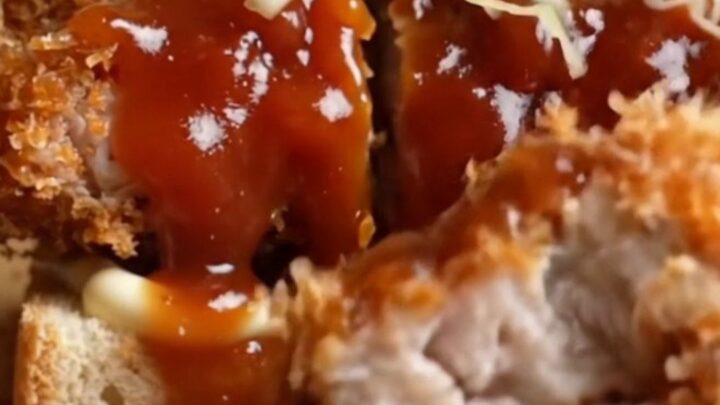
When cut in half, the layers are visible—golden crust, white chicken, green cabbage, and rich brown sauce. The sandwiches look tall and inviting, and the first bite offers a satisfying crunch followed by the soft, sweet bread and savory, tangy flavors.
Common mistakes
A common mistake is not pounding the chicken evenly, leading to uneven cooking where thin parts dry out while thick parts remain undercooked. Another is overcrowding the pan, which drops the oil temperature and results in greasy, soggy crusts. Be sure to maintain the oil at 350°F (175°C) and fry in batches if needed.
Also, don't skip the resting time after frying—cutting into the hot chicken immediately can cause the juices to run out, leaving it dry. Finally, use a serrated knife to cut the sandwich; a regular knife can squish the bread and push out the fillings.
How to tell it’s done
The chicken is done when it reaches an internal temperature of 165°F (74°C) and the crust is deeply golden brown. To check, insert an instant-read thermometer into the thickest part of the cutlet; it should read at least 165°F.
The crust should be crisp and sound crunchy when tapped. If you're unsure, cut one sandwich in half to see the chicken is no longer pink and the juices run clear. Let the chicken rest for a couple of minutes before assembling to allow the juices to redistribute.
- Poultry: 165°F (74°C) in the thickest part
Up next · Part 3 of 3
4 variations · storage & make-ahead · 5 answers · printable card
Tips, FAQ & printable recipe (Part 3)← Back to the ingredients (Part 1)