Dinner · Part 1 of 3: Ingredients
Crispy Chicken Katsu Green Curry Udon — One-Bowl Dinner
- Prep
- Cook
- Total
- Serves
- 4
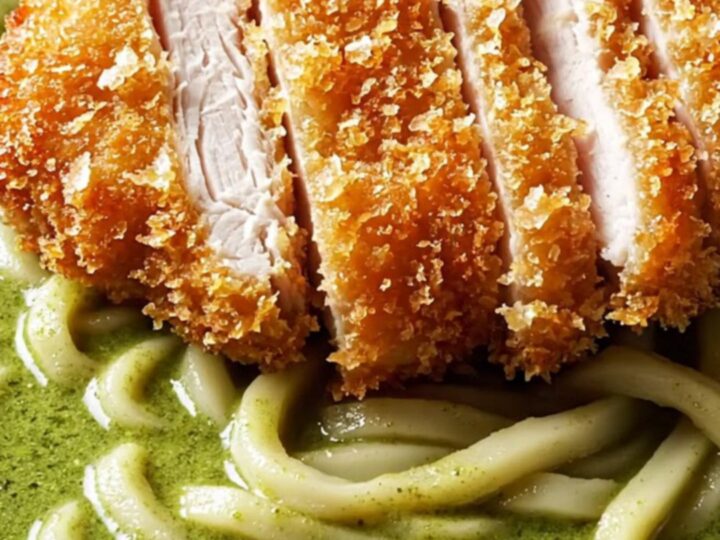
Shatteringly crispy panko chicken katsu, sliced over thick udon noodles swimming in a velvety emerald green curry coconut broth — this is the crunchy-creamy mashup that belongs in the dinner rotation. Golden cutlets meet fragrant coconut-lime curry, and every bowl delivers both textures in one bite.
This bowl borrows the best of two kitchens: the crackly panko crust of Japanese chicken katsu and the rich, lime-scented coconut broth of Thai green curry. Thin chicken cutlets are breaded in panko, fried until deep golden, then laid over thick udon noodles that have simmered for a few minutes in a green curry broth built from coconut milk, chicken stock, fish sauce and palm sugar.
The whole thing comes together in about forty-five minutes, most of it hands-off simmering. The trick that makes it work is timing: the curry broth finishes just as the chicken comes out of the oil, so the crust stays crisp right up to the table. Serve it in deep bowls with plenty of broth and a scatter of Thai basil, and expect the crunch to get all the attention.
Ingredients
Chicken katsu
- 9 oz chicken breast (250 g)
- Kosher salt, to taste
- 1/2 cup all-purpose flour, for dredging
- 2 eggs, beaten, for dredging
- 1 1/2 cups panko breadcrumbs
- 2 cups neutral frying oil, such as canola
Green curry udon
- 1/4 cup green curry paste (60 g)
- 4 kaffir lime leaves, torn
- 1 2/3 cups coconut milk (400 ml)
- 3/4 cup chicken stock (200 ml)
- 2 tbsp fish sauce
- 2 tbsp palm sugar, grated
- 14 oz thick udon noodles (400 g)
- Thai basil leaves, for serving
Why this recipe works
The method works because each component is handled the way it needs to be, separately, before they meet in the bowl. The chicken is pounded to an even half inch, so it fries in six to eight minutes instead of drying out while the crust darkens.
Panko is pressed on firmly and the cutlets drain on a wire rack, not paper towels, which keeps the underside from steaming and going soft. Frying at a steady 340°F lets the crust set and crisp at the same rate the thin cutlet cooks through.
The broth follows the same logic of building flavor in order. The curry paste is sizzled in oil first with torn kaffir lime leaves, which blooms the aromatics and deepens the paste in two minutes flat.
Coconut milk and stock go in next and reduce gently to a glossy, velvety consistency, and only then do fish sauce and palm sugar season it. Adding the cooked udon for a final three-minute soak lets the thick noodles drink up the broth without turning the pan starchy.
Notes and substitutions
Green curry paste is sold in tubs and cans in the Asian foods aisle; heat varies by maker, so start with the full quarter cup and taste after the coconut milk goes in.
Palm sugar looks like a solid puck — grate it so it dissolves fast, or swap in packed light brown sugar. Kaffir lime leaves, also called makrut lime leaves, are usually sold frozen; tear them so they release their oils, and fish them out before serving if you like.
Thick fresh or vacuum-packed udon noodles are the right choice here; dried udon works too, but cook it just to tender. A heavy skillet or Dutch oven holds frying oil at a steady temperature, and an instant-read thermometer takes the guesswork out of both the oil and the chicken. Fry the cutlets in batches so the oil temperature does not drop, and keep the first batch on a wire rack in a low oven if the broth needs more time.
- palm sugar: Use an equal amount of packed light brown sugar; the caramel notes are slightly softer but the broth stays balanced.
- kaffir lime leaves: Add one teaspoon of lime zest with the curry paste, then finish the broth with a squeeze of fresh lime juice for the same bright aroma.
- fish sauce: Stir in one teaspoon of soy sauce plus a pinch of salt; the depth is milder, so taste and adjust at the end.
- chicken breast: Boneless, skinless chicken thighs work well; pound them the same way and cook to 165°F (74°C).
Equipment
- Heavy skillet or Dutch oven
- Wire rack set over a baking sheet
- Three shallow dishes
- Instant-read thermometer
- Large pot
- Tongs
Up next · Part 2 of 3
8 steps · 25 min of cooking · what to look for at each stage
Step-by-step instructions (Part 2)