Breakfast · Part 2 of 3: Instructions
Crispy Airy Pishmaniye Bread: Turkish Fried Puff Pastry Step-by-step instructions
- Prep
- Cook
- Total
- Serves
- 6
Before you start
Before you start, gather all your ingredients and equipment. Measure the flour and salt into a bowl, and have the milk and water warmed to about 110°F (43°C)—warm to the touch but not hot. Set up your frying station with a heavy skillet or pot, a slotted spoon, and paper towels.
Ensure your work surface is lightly floured and your rolling pin is ready. The entire process, including rising, takes about an hour, so plan accordingly. If you're serving these for breakfast, you can prepare the dough the night before and let it rise slowly in the refrigerator.
Ingredients at a glance (7)
- 4 cups all-purpose flour
- 1 cup warm milk
- 1 cup warm water
- 1 tbsp active dry yeast
- 1 tbsp sugar
- 1 tsp salt
- 2 cups vegetable oil
Instructions
Making the Dough
- Activate the yeastIn a large mixing bowl, combine the warm milk, warm water, sugar, and active dry yeast. Stir gently and let sit for 5–10 minutes until the mixture becomes frothy and bubbly, indicating the yeast is active.Look for The liquid should have a layer of foam on top and smell pleasantly yeasty.Tip If the mixture doesn't foam, your yeast may be dead. Check the expiration date and try again with fresh yeast.
- Form the doughAdd the all-purpose flour and salt to the yeast mixture. Stir with a wooden spoon until a shaggy dough forms, then turn it out onto a lightly floured surface and knead for 5–7 minutes until smooth and elastic.Look for The dough should be soft, slightly tacky, and spring back when pressed with a finger.Tip If the dough is too sticky, add a little flour one tablespoon at a time; if too dry, add a splash of warm water.
- First risePlace the dough in a lightly oiled bowl, cover with a damp kitchen towel, and let it rest in a warm spot for 30 minutes, or until doubled in size.Look for The dough should have visibly expanded and feel airy when you press it.Tip A warm oven (turned off) with the light on is a great place for rising.
At the end of this phase, you should have a smooth, elastic dough that has doubled in size. When you press a finger into it, the indentation should remain. The dough should feel light and airy, and the surface should be slightly tacky but not sticky. If it's too sticky, knead in a little flour; if too dry, add a teaspoon of warm water at a time.
Frying the Bread
- Divide and shapePunch down the dough and divide it into 6 equal pieces. Roll each piece into a ball, then flatten with a rolling pin into a 6-inch round, about 1/4 inch thick.Look for Each round should be uniform in thickness for even puffing.Tip Keep the unrolled dough balls covered with a towel so they don't dry out.
- Heat the oilPour the vegetable oil into a heavy skillet or pot, filling it to a depth of about 1 inch. Heat over medium-high until the oil reaches 350°F (175°C). To test, drop a small piece of dough into the oil; it should sizzle immediately and float.Look for The oil should shimmer, and the dough piece should turn golden brown in about 60 seconds.Tip Use a thermometer for accuracy; too hot and the bread will burn, too cool and it will absorb oil.
- Fry the first sideGently slide one dough round into the hot oil. Fry for 90 seconds, or until the bottom is deep golden brown and the dough starts to puff. The bread will inflate into a pillow as it cooks.Look for The dough should balloon up, creating a hollow interior.Tip Don't overcrowd the pan; fry one or two at a time for best results.
- Flip and finishUsing tongs or a slotted spoon, carefully flip the bread and fry the other side for another 90 seconds, until both sides are evenly golden brown and the bread feels crisp. Let it rest for 3 minutes before slicing.Look for The bread should be puffed and golden all over, with a slightly crackly surface.Safe temperature 145°F (63°C) internal temperature (steaks, chops and roasts)Tip If the bread deflates slightly, that's normal; it will still be deliciously airy inside.
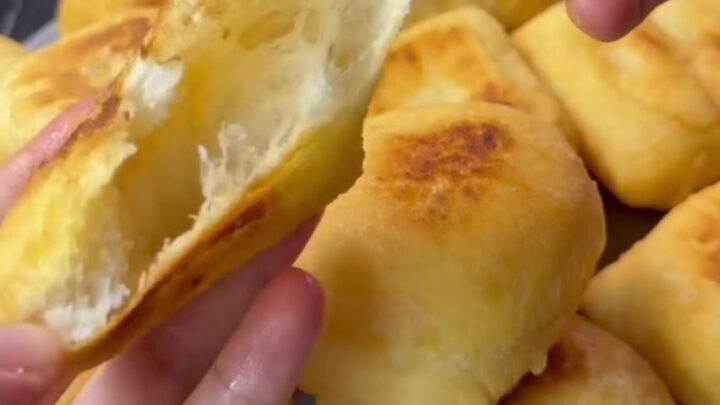
After frying, each bread should be deeply golden brown, puffed up, and crisp to the touch. When you lift it with tongs, it should feel light, and the surface should crackle slightly.
The interior should be steamy and hollow, with a soft, tender crumb. If the bread is pale or oily, the oil wasn't hot enough; if it's dark and hard, the oil was too hot.
Serving and Enjoying
- Drain and seasonRemove the fried bread from the oil and place it on a paper towel-lined plate to drain. Immediately sprinkle with a pinch of salt (or your favorite seasoning). Repeat with the remaining dough.Look for The bread should be crisp and golden, with a soft, steamy interior.Tip For a sweet version, skip the salt and brush with butter and honey.
- Serve warmServe the pishmaniye bread warm, tearing it open to reveal the steamy, airy interior. It's perfect for dipping in soups, yogurt, or jam.Look for The bread should be at its best within 15 minutes of frying.Tip If you're not serving immediately, keep them in a warm oven (200°F) for up to 30 minutes.
The breads should be served warm, within 15 minutes of frying. They should be crisp on the outside and soft inside. When you tear one open, steam should rise from the center. The texture should be airy and light, not doughy or dense. If they've cooled, reheat them in a toaster oven or under the broiler for a few minutes to restore crispness.
Common mistakes
One common mistake is frying at too low a temperature, which makes the bread greasy and heavy. Conversely, if the oil is too hot, the outside burns before the inside cooks. Another pitfall is rolling the dough too thin—it won't puff properly.
Aim for a 1/4-inch thickness. Also, don't skip the resting time; it's essential for gluten development and the signature airy texture. Finally, be gentle when flipping the bread to avoid deflating it.
How to tell it’s done
The bread is done when it's deeply golden brown on both sides and puffed up like a pillow. When you tap it, it should sound hollow. The internal temperature should reach about 200°F (93°C) to ensure the dough is cooked through.
If you're using a thermometer, insert it into the thickest part of the bread—it should read at least 190°F. The exterior should be crispy, and when you tear it open, the inside should be steamy and airy, with a soft, tender crumb.
- Steaks, chops and roasts: 145°F (63°C) in the thickest part, then a 3-minute rest
Up next · Part 3 of 3
4 variations · storage & make-ahead · 5 answers · printable card
Tips, FAQ & printable recipe (Part 3)← Back to the ingredients (Part 1)