Dinner · Part 2 of 3: Instructions
Creamy Tuscan Chicken Skillet in One Pan Step-by-step instructions
- Prep
- Cook
- Total
- Serves
- 4
Before you start
Before turning on the stove, organize all your ingredients to ensure a smooth cooking process. Measure out the heavy cream, slice the sun-dried tomatoes, and mince the garlic cloves.
Chop the fresh rosemary and wash the baby spinach thoroughly. Having these components ready prevents the garlic from burning while you search for ingredients, keeping the cooking sequence seamless and stress-free.
Ingredients at a glance (6)
- 4 boneless skinless chicken breasts
- 3 cloves garlic, minced
- 1/2 cup sun-dried tomatoes, sliced
- 1 tbsp fresh rosemary, finely chopped
- 1 cup heavy cream
- 2 cups fresh baby spinach
Instructions
Searing the Chicken Breasts
- Sear the Chicken BreastsHeat a large heavy skillet over medium-high heat. Sear the chicken breasts for 5 to 6 minutes per side until they develop a beautiful deep golden-brown crust. Transfer the chicken to a clean plate and set aside.Look for Look for a rich, golden color on both sides of the chicken.Tip Do not crowd the skillet; cook in batches if your pan is too small.
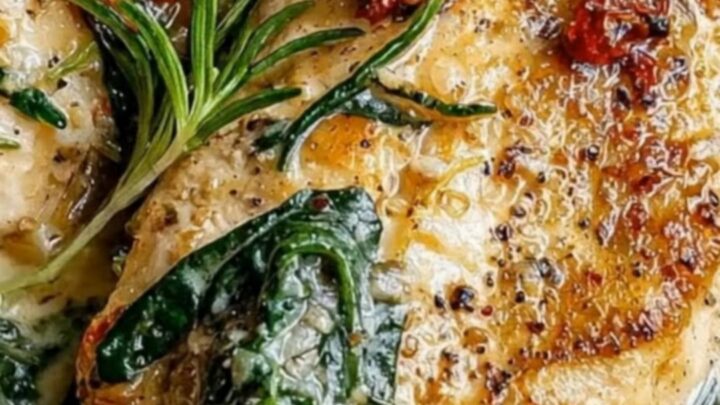
At the end of this phase, the chicken breasts should exhibit a deep, golden-brown crust on both sides, and the skillet should have caramelized browned bits stuck to the bottom.
The chicken will not be fully cooked through yet, but the exterior should look beautifully seared and smell highly savory.
Building the Garlic Cream Sauce
- Sauté the AromaticsLower the skillet heat to medium. Add the minced garlic, sliced sun-dried tomatoes, and chopped fresh rosemary to the skillet, sautéing for about 1 minute until fragrant.Look for The garlic should be soft and highly fragrant without turning dark brown.Tip Stir constantly during this step to prevent the garlic from burning.
- Simmer the Cream SaucePour the heavy cream into the skillet with the sautéed aromatics, scraping up any browned bits from the bottom of the pan to build deep flavor, and bring to a gentle simmer.Look for The cream should be bubbling gently and turning a light orange color.Tip Scraping the bottom of the pan incorporates the flavorful fond into the sauce.
The heavy cream should be gently bubbling and turning a light pinkish-orange hue from the sun-dried tomatoes. The garlic and rosemary will smell intensely fragrant, and the sauce should start to thicken slightly as it reduces, coating the back of a spoon smoothly.
Combining and Wilting the Spinach
- Wilt the SpinachStir the fresh baby spinach into the simmering cream sauce, cooking for 1 to 2 minutes until the leaves wilt completely and integrate into the sauce.Look for The spinach should be soft, bright green, and fully submerged.Tip Add the spinach in handfuls if it does not all fit in the pan at once.
- Finish and BasteReturn the seared chicken breasts to the skillet, spooning the hot garlic cream sauce over them. Simmer until the chicken reaches a safe internal temperature of 165°F (74°C) measured with a meat thermometer.Look for The chicken should be cooked through and the sauce should cling to the meat.Safe temperature 165°F (74°C) internal temperature (poultry)Tip Basting the chicken with the hot sauce keeps it incredibly moist.
The spinach should be completely wilted and bright green, distributed evenly throughout the bubbling sauce. The chicken breasts, when returned to the pan and basted, should be hot and fully coated in the glistening, rich cream sauce, ready to be served immediately.
Common mistakes
One common error is overcrowding the skillet during the searing process, which traps steam and prevents the chicken from developing a proper golden crust.
Another mistake is using too high a heat when simmering the heavy cream, which can cause the dairy to boil rapidly and separate. Keep the heat at a gentle simmer to maintain a smooth, emulsified sauce.
How to tell it’s done
The chicken is perfectly done when the thickest part of the breast registers an internal temperature of 165°F (74°C) on a digital meat thermometer.
The meat should feel firm to the touch, and any juices that escape should run completely clear, indicating that the poultry is safe to eat and remains tender.
- Poultry: 165°F (74°C) in the thickest part
Up next · Part 3 of 3
2 variations · storage & make-ahead · 4 answers · printable card
Tips, FAQ & printable recipe (Part 3)← Back to the ingredients (Part 1)