Dinner · Part 2 of 3: Instructions
Creamy Truffle Wild Mushroom & Taleggio Risotto Step-by-step instructions
- Prep
- Cook
- Total
- Serves
- 4
Before you start
Before starting, prepare all the ingredients: slice the mushrooms, mince the shallot, grate the Parmesan, cube the cold butter and Taleggio (remove the rind), and measure the wine and broth. Heat the broth in a saucepan and keep it at a gentle simmer.
Have a ladle and a wooden spoon ready. The entire cooking process takes about 35 minutes, with most of it spent stirring the risotto. Clear your counter and put on some music—this is a dish that rewards focus and calm.
Ingredients at a glance (14)
- 300 g mixed wild mushrooms (such as chanterelles, cremini, shiitake), sliced
- 1 tbsp unsalted butter
- Kosher salt, to taste
- 2 sprigs fresh thyme
- 2 tbsp extra-virgin olive oil
- 1 shallot, minced
- 300 g Carnaroli rice
- 1/2 cup dry white wine
- 5-6 cups hot vegetable or chicken broth
- 2 tbsp cold unsalted butter, cubed
- 1/2 cup freshly grated Parmesan cheese
- 150 g Taleggio cheese, rind removed, cubed
- 1-2 tsp truffle oil, for drizzling
- Cracked black pepper, for serving
Instructions
Sear, Sauté, and Toast
- Sear the MushroomsHeat a large heavy-bottomed skillet over high heat. Add 1 tablespoon of butter and let it melt until foaming. Add the sliced wild mushrooms in a single layer, season with a pinch of kosher salt, and add the thyme sprigs. Cook without stirring too often, allowing the mushrooms to develop a deep golden-brown crust. After about 5–7 minutes, when the mushrooms are caramelized and fragrant, transfer half of them to a plate to use as garnish later. Keep the remaining mushrooms in the skillet for the risotto base.Look for Mushrooms are deeply browned, shrunken, and smell nutty and earthy.Tip Do not crowd the pan; cook in batches if needed to ensure proper searing.
- Sauté the AromaticsReduce the heat to medium. Add the olive oil to the skillet with the remaining mushrooms. Add the minced shallot and cook, stirring frequently, until the shallot is softened and translucent, about 2–3 minutes. Scrape any browned bits from the bottom of the pan.Look for Shallot is fragrant and softened, not browned.Tip If the pan seems dry, add a splash of olive oil.
- Toast the RiceAdd the Carnaroli rice to the skillet and stir to coat every grain with the oil and butter. Toast the rice, stirring constantly, for about 2 minutes until the grains become translucent at the edges and make a faint clicking sound against the pan. Do not let the rice brown.Look for Rice grains are translucent and lightly toasted, with a nutty aroma.Tip Toasting the rice helps it absorb liquid slowly and stay al dente.
- Deglaze with WinePour in the white wine. It will sizzle immediately and release a dramatic burst of steam. Stir constantly, scraping the bottom of the pan, until the wine is mostly absorbed by the rice, about 1–2 minutes.Look for The wine is absorbed and the pan is nearly dry.Tip Use a dry wine you would drink; the alcohol cooks off.
At the end of this phase, the mushrooms are deeply browned and fragrant, the shallot is softened, and the rice grains are translucent and lightly toasted.
The pan smells nutty and savory. The wine has been added and absorbed, leaving a clean pan ready for the broth. This is the flavor base that will carry the entire dish.
Slow Simmer and Cream
- Add the Broth Ladle by LadleBegin adding the hot broth one ladle at a time, about 1/2 cup (120 ml) per addition. Stir gently and continuously, allowing each ladle of broth to be absorbed before adding the next. Maintain a steady simmer, not a boil. Continue this process for about 18 minutes, until the rice is creamy and al dente. You may not use all the broth; stop when the rice is tender but still has a slight bite.Look for The rice is creamy, with a gentle wave (all'onda) when the pan is tilted.Tip Keep the broth hot on a nearby burner; adding cold liquid slows cooking.
- MantecaturaRemove the skillet from the heat. Stir in the cold cubed butter, freshly grated Parmesan, and cubed Taleggio cheese. Stir vigorously with a wooden spoon until the cheeses melt and the risotto becomes glossy and extra creamy. The texture should be loose and flowing, not stiff.Look for The risotto is thick, creamy, and ribbons off the spoon.Tip Do not return to heat after adding cheese; the residual heat melts it perfectly.
After 18 minutes of adding broth and stirring, the risotto is creamy and the rice is nearly tender. The mixture is thick but still flows when the pan is tilted. The aroma is rich and starchy. The rice should have a slight resistance when bitten. This is the moment to stop adding broth and move to the mantecatura.
Mantecatura and Finish
- Rest and AdjustLet the risotto rest off the heat for 1–2 minutes. Taste and adjust seasoning with salt if needed. The texture should be soft and flowing, but not soupy. If it seems too thick, stir in a splash of hot broth to loosen it.Look for The risotto is creamy and holds a gentle wave when the pan is tilted.Tip Resting allows the flavors to meld and the starch to relax.
- Plate and GarnishSpoon the risotto onto warm plates or a large serving platter. Tap the bottom of the plate gently to help the risotto spread into a silky, even layer. Top with the reserved seared mushrooms, a generous crack of black pepper, and a drizzle of truffle oil. Serve immediately while hot and creamy.Look for The risotto is glossy, topped with golden mushrooms and fragrant truffle oil.Tip Warm the plates before serving to keep the risotto hot longer.
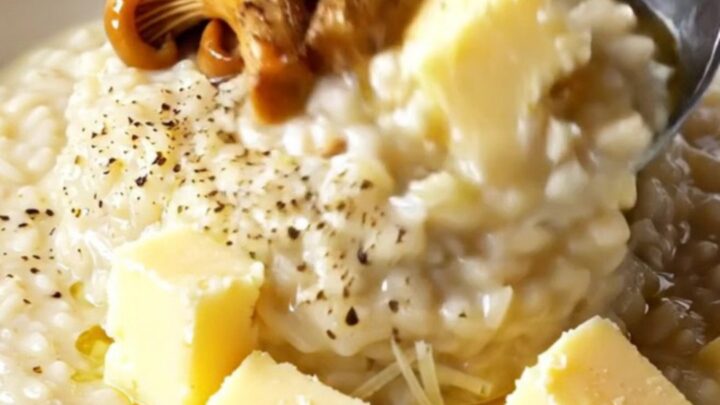
The butter, Parmesan, and Taleggio have been stirred in off the heat, creating a glossy, velvety texture. The risotto is loose and creamy, with a gentle wave when the plate is tapped. It is topped with seared mushrooms, cracked pepper, and a drizzle of truffle oil. The dish is ready to serve immediately.
Common mistakes
One common mistake is stirring too vigorously, which can break the rice grains and make the risotto gummy. Use a gentle, constant motion. Another is adding cold broth, which shocks the rice and slows cooking; keep the broth hot.
Pouring in all the liquid at once will also ruin the texture—always add it ladle by ladle. Do not walk away from the pan; risotto needs near-constant attention. Finally, do not overcook the rice: it should be al dente, with a slight bite, not mushy.
How to tell it’s done
The risotto is done when the rice is tender but still has a slight bite at the center, and the overall texture is creamy and flowing—not stiff or soupy. When you tilt the pan, the risotto should slowly spread like a thick wave.
The cheese and butter should be fully melted and emulsified, giving the dish a glossy sheen. The final taste should be rich, savory, and slightly sweet from the caramelized mushrooms. Since this recipe contains no raw proteins, no temperature check is needed; rely on the visual and textural cues.
Up next · Part 3 of 3
4 variations · storage & make-ahead · 5 answers · printable card
Tips, FAQ & printable recipe (Part 3)← Back to the ingredients (Part 1)