Dinner · Part 2 of 3: Instructions
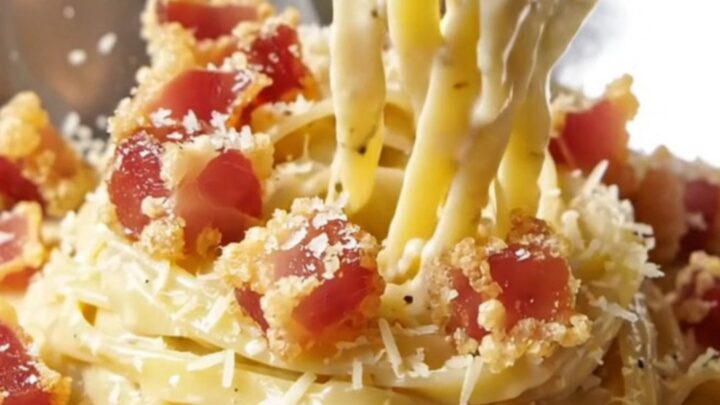
Creamy Truffle Fettuccine Carbonara with Crispy Guanciale Step-by-step instructions
- Prep
- Cook
- Total
- Serves
- 4
Before you start
Before cooking, bring a large pot of salted water to a boil. Cut the guanciale into batons about 1/2 inch thick and 1 inch long. Grate the Pecorino Romano and measure the truffle paste and black pepper.
Separate the egg yolks and place them in a bowl with the whole egg. Have a ladle or measuring cup ready to reserve pasta water. Warm the serving plates in a low oven or with hot water so the finished pasta stays creamy.
Ingredients at a glance (8)
- 12 oz fresh egg fettuccine
- 5 oz guanciale, cut into batons
- 4 large egg yolks
- 1 large egg
- 3/4 cup freshly grated Pecorino Romano
- 1 tbsp black truffle paste
- 1 tsp freshly cracked black pepper
- 1/2 cup starchy pasta water, reserved from cooking
Instructions
Crisp the Guanciale and Cook the Pasta
- Crisp the GuancialePlace the guanciale batons in a cold large skillet. Set over medium heat and cook, stirring occasionally, until the fat renders and the pieces turn golden brown and crisp, about 8 minutes. Use a slotted spoon to transfer the crispy guanciale to a plate, leaving the rendered fat in the skillet. Measure out 2 tablespoons of the fat and return it to the skillet; discard the rest or reserve for another use.Look for The guanciale should be deeply browned and crunchy, with the fat clear and liquid.Tip Starting in a cold skillet lets the fat render slowly, giving you crispier pieces without burning.
- Boil the FettuccineBring a large pot of generously salted water to a boil. Add the fresh fettuccine and cook until just al dente, about 2 to 3 minutes. Before draining, reserve at least 1 cup of the starchy pasta water. Drain the pasta (do not rinse) and set aside.Look for The pasta should be tender but still firm to the bite.Tip Fresh pasta cooks quickly; stay close and taste a strand to catch the perfect moment.
The guanciale should be golden brown and crisp, with rendered fat in the skillet. The pasta should be cooked al dente and drained, with a cup of starchy water reserved. The kitchen will smell of pork and toasted pepper.
Make the Sauce
- Whisk the Egg MixtureIn a medium bowl, combine the egg yolks, whole egg, grated Pecorino Romano, black truffle paste, and freshly cracked black pepper. Whisk vigorously until the mixture is smooth, well combined, and slightly thickened. Set aside.Look for The mixture should be glossy and uniform, with no streaks of egg white.Tip Whisk just until combined; over-whisking can make the sauce too airy.
- Combine Pasta and Guanciale FatPlace the skillet with the reserved guanciale fat over medium-low heat. Add the drained fettuccine and toss with tongs to coat every strand with the fat. Cook for 1 minute, stirring constantly, until the pasta is well coated and heated through.Look for The pasta should glisten and be lightly coated, not swimming in fat.Tip Keep the heat low so the pasta warms without sizzling, which would cook the eggs too quickly later.
- Create the Creamy SauceRemove the skillet from the heat. Pour the egg mixture over the pasta and toss quickly and continuously with tongs, adding splashes of reserved pasta water (start with 1/4 cup) to create a silky, emulsified sauce. The residual heat will gently cook the eggs and melt the cheese into a glossy cream.Look for The sauce should cling to the pasta, glossy and creamy, with no scrambled bits.Safe temperature 160°F (71°C) internal temperature (egg dishes)Tip If the sauce seems too thick, add more pasta water a tablespoon at a time until it flows like a loose cream.
The egg mixture should be smooth and glossy. When tossed with the hot pasta and fat, the sauce should turn creamy and cling to the strands, with no visible raw egg or curdled bits. The texture should be silky, not watery.
Finish and Serve
- Fold in Crispy GuancialeAdd the crispy guanciale batons to the skillet and gently fold them into the pasta, reserving a few for garnish. Toss just until the guanciale is distributed throughout, keeping some pieces intact for texture.Look for The guanciale should be evenly scattered, with some pieces visible on top.Tip Fold gently to avoid breaking the pasta or crushing the crispy pieces.
- Serve ImmediatelyTwirl portions of the fettuccine onto warm plates using tongs or a pasta fork. Top each serving with the reserved crispy guanciale, an extra grating of Pecorino Romano, and a sprinkle of freshly cracked black pepper. Serve at once.Look for The pasta should be glossy and creamy, with crispy guanciale crowning each mound.Tip Warm plates keep the sauce from setting too quickly; serve right away for the best texture.
The crispy guanciale should be folded in, with some reserved for topping. The pasta should be twirled onto warm plates, topped with extra Pecorino and black pepper. The dish should look glossy and inviting, with a rich aroma of truffle and pork.
Common mistakes
The most common mistake is scrambling the eggs by leaving the pan on the heat. Always pull the skillet off the burner before adding the egg mixture, and toss continuously to distribute the heat.
Another issue is a sauce that is too thick or too thin; fix it by adding more pasta water a spoonful at a time.
Avoid over-cooking the guanciale, which makes it tough and dry—stop when it is golden and crisp. Finally, do not rinse the pasta after draining; you want the starch to help the sauce emulsify.
How to tell it’s done
The carbonara is done when the sauce is glossy, smooth, and clings to the pasta without pooling in the pan. The eggs should be cooked to at least 160°F (71°C) to be safe; the residual heat of the pasta and fat will do this if tossed off the heat.
If you prefer a softer, more custardy sauce, you can stop tossing slightly earlier, but always ensure the eggs are fully set for food safety. The guanciale should be crisp and deeply browned, and the pasta tender but not mushy.
- Egg dishes: 160°F (71°C) in the thickest part
Up next · Part 3 of 3
4 variations · storage & make-ahead · 5 answers · printable card
Tips, FAQ & printable recipe (Part 3)← Back to the ingredients (Part 1)