Dinner · Part 2 of 3: Instructions
Creamy Truffle Fettuccine Alfredo Swirled in a Cheese Wheel Step-by-step instructions
- Prep
- Cook
- Total
- Serves
- 4
Before you start
Before starting, bring a large pot of water to a rolling boil and season it generously with salt — it should taste like the sea. Set out all ingredients on the counter: fresh fettuccine, butter, truffle butter, cream, truffle oil, grated Grana Padano, and a truffle shaver.
If using a cheese wheel, warm it by filling it with hot water for a minute, then drain and dry it thoroughly. Have a wide skillet ready for the sauce, and warm serving plates in a low oven. Reserve a cup of pasta water before draining.
Ingredients at a glance (9)
- 400 g fresh egg fettuccine
- 80 g European unsalted butter
- 150 ml heavy cream
- 100 g freshly grated Grana Padano
- 2 tbsp black truffle butter
- 1 tsp black truffle oil
- freshly shaved black summer truffle, for serving
- sea salt, to taste
- cracked black pepper, to taste
Instructions
Boil and Emulsify
- Boil the FettuccineBring a large pot of water to a rolling boil. Season generously with sea salt until the water tastes like the sea. Add the fresh egg fettuccine and cook for exactly 2 minutes, stirring occasionally, until just al dente. Reserve 1 cup of the starchy pasta water before draining, then drain the pasta in a colander. Do not rinse.Look for The pasta should be tender but still firm to the bite, with a slight white core when cut.Safe temperature 160°F (71°C) internal temperature (egg dishes)Tip Fresh pasta cooks much faster than dried — set a timer to avoid overcooking.
- Melt the Butter BaseIn a wide skillet over medium heat, melt the European unsalted butter and black truffle butter together, swirling the pan gently. Cook until the butter is fully melted and just begins to foam, about 1 minute. Do not let it brown. Add the heavy cream and black truffle oil, then whisk to combine. Bring the mixture to a gentle simmer, then reduce the heat to low.Look for The sauce should be smooth, glossy, and lightly bubbling at the edges.Tip Keep the heat low once the cream is added to prevent the sauce from separating.
The pasta is al dente and drained, with a cup of starchy water reserved. The butter and cream sauce is bubbling gently, glossy and smooth. The kitchen smells of butter and truffle. The sauce should coat a spoon lightly. If it seems too thin, let it simmer a minute longer; if too thick, add a splash of pasta water. The texture should be like heavy cream, not watery.
Swirl in the Cheese Wheel
- Emulsify with Pasta WaterLadle about 1/2 cup of the reserved starchy pasta water into the skillet with the cream mixture. Whisk continuously as the sauce comes back to a gentle simmer. The starch in the water helps bind the sauce and gives it a silky, clingy texture. Continue whisking for 1-2 minutes until the sauce thickens slightly and coats the back of a spoon.Look for The sauce should coat the spoon evenly without running off immediately.Tip Add more pasta water a splash at a time if the sauce seems too thick.
- Transfer Pasta to the Cheese WheelIf using a hollowed Grana Padano wheel, place it on a sturdy serving platter or tray. Carefully transfer the hot, drained fettuccine into the hollowed wheel. If not using a wheel, transfer the pasta to a large warm bowl. The residual heat from the pasta is essential for the next step.Look for The pasta should be steaming and still very hot.Tip Warm the wheel or bowl beforehand by filling with hot water for a minute, then drying.
- Swirl and Toss in the WheelUsing tongs, toss the hot pasta inside the cheese wheel, scraping the inner walls as you go. The heat will melt the cheese, creating a creamy, emulsified glaze. Continue tossing vigorously for 1-2 minutes, adding splashes of the warm cream sauce from the skillet as needed to keep the pasta glossy and well coated.Look for The cheese should melt into a velvety sauce that clings to every strand.Tip Work quickly so the cheese melts smoothly instead of clumping.
- Finish with Grated GranaSprinkle the freshly grated Grana Padano over the pasta in the wheel, then toss again to incorporate. The cheese will melt into the sauce, enriching it and adding a savory depth. If the sauce becomes too thick, stir in a little more reserved pasta water to loosen it to a silky consistency.Look for The sauce should be smooth, thick enough to coat, but still flowing.Tip Taste and adjust with salt only if needed, as the cheese is salty.
The hot pasta is in the wheel, and the cheese is melting into a creamy glaze. Tossing should be smooth and effortless, with no clumps. The sauce should cling to the noodles, and the wheel's interior should look molten and shiny.
The aroma is intensely cheesy and truffly. If the sauce seems dry, add more of the cream mixture or pasta water. The pasta should be evenly coated and glistening.
Plate and Garnish
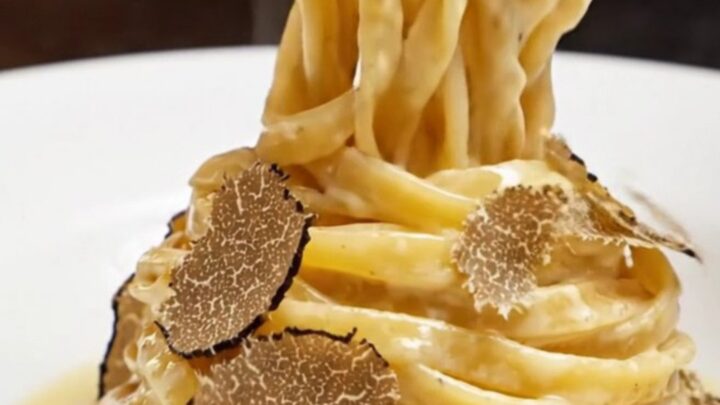
- Plate the PastaUsing tongs, twirl a portion of the fettuccine into a neat nest and lift it from the wheel. Place the twirled pasta onto a warmed serving plate. Repeat with the remaining pasta, dividing it evenly among plates. Drizzle any extra sauce from the wheel over each serving.Look for Each plate should have a tidy, tall twirl of pasta glistening with sauce.Tip Warm the plates in a low oven or with hot water to keep the pasta hot.
- Shave Truffles and ServeJust before serving, shave thin slices of fresh black summer truffle over each plate using a truffle shaver or a very sharp knife. Finish with a few cracks of black pepper and a pinch of sea salt if desired. Serve immediately while the pasta is hot and the truffle aroma is at its peak.Look for The truffle shavings should be paper-thin and evenly distributed.Tip Add truffle shavings at the last moment so the heat releases their aroma without cooking them.
Each plate holds a neat twirl of pasta, glistening with sauce. The truffle shavings are scattered on top, releasing their earthy fragrance. A crack of black pepper adds a final touch. The dish looks luxurious and inviting, with no excess sauce pooling on the plate. The pasta should be hot and ready to serve immediately.
Common mistakes
One common mistake is overcooking fresh pasta — it only needs two minutes, so set a timer. Another is allowing the sauce to boil after adding cream, which can cause it to separate; keep the heat low and whisk gently. Skipping the pasta water is a missed opportunity — the starch is essential for a silky emulsion.
Overcrowding the cheese wheel with too much pasta at once can lower the temperature and prevent the cheese from melting properly; work in batches if needed. Finally, adding too much truffle oil can overpower the dish — use it sparingly and taste as you go.
How to tell it’s done
The fettuccine is done when it is al dente — tender but still firm to the bite, with no raw flour taste. The sauce should be smooth, glossy, and thick enough to coat the pasta without pooling. When twirled, the pasta should hold its shape and release easily from the tongs.
The cheese wheel's interior should be visibly melted and creamy, with the sauce clinging to the noodles. The truffle shavings should be added just before serving to preserve their aroma. If using eggs as a protein, ensure the pasta is cooked to an internal temperature of 160°F (71°C) — though the pasta is not a protein dish, this ensures safety.
- Egg dishes: 160°F (71°C) in the thickest part
Up next · Part 3 of 3
4 variations · storage & make-ahead · 5 answers · printable card
Tips, FAQ & printable recipe (Part 3)← Back to the ingredients (Part 1)