Dinner · Part 2 of 3: Instructions
Creamy Stuffed Chicken with Spinach Rigatoni Step-by-step instructions
- Prep
- Cook
- Total
- Serves
- 4
Before you start
Before beginning, ensure all ingredients are at room temperature, especially the cream cheese, which will make the filling process much smoother. Have your knife sharpened and ready to cut pockets into the chicken breasts.
Prepare a large cutting board and ensure your skillet is clean and ready for the searing process. Boiling your water ahead of time will save significant effort when you are ready to prepare the pasta.
Ingredients at a glance (5)
- 4 pieces chicken breast, boneless and skinless
- 8 oz cream cheese, softened
- 2 cups fresh spinach, chopped
- 1 lb rigatoni pasta
- 1/2 cup parmesan cheese, freshly grated
Instructions
Stuffing and Searing
- Prepare the filling and chickenCombine the softened cream cheese with the chopped fresh spinach in a medium bowl until well incorporated. Use a sharp knife to cut a deep pocket into the side of each chicken breast, being careful not to cut all the way through. Stuff each pocket generously with the spinach and cream cheese mixture. Keep the chicken refrigerated until ready to cook, removing it only 30 minutes before searing.Look for The mixture should be thick and evenly combined.Tip Make sure the cream cheese is at room temperature for easier mixing.
- Sear the chickenHeat a large skillet over medium-high heat with a drizzle of oil. Carefully place the stuffed chicken breasts into the pan and sear until golden brown on both sides. Continue cooking until the chicken reaches an internal temperature of 165°F (74°C). Remove from the pan and let the chicken rest for 5 minutes before slicing.Look for The exterior should be deep golden brown and crispy.Safe temperature 165°F (74°C) internal temperature (poultry)Tip Use a meat thermometer to ensure the chicken is cooked through.
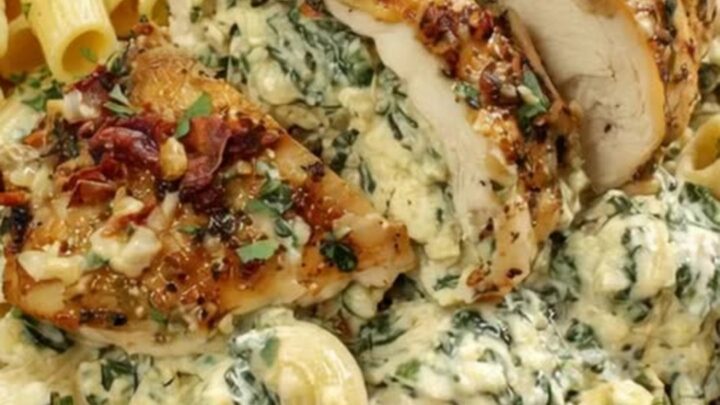
The chicken should be securely stuffed and seared until the exterior is a deep, appetizing golden brown.
Ensure the toothpicks are visible if used, so they can be removed before serving. The kitchen should smell like toasted herbs and savory seared poultry.
Pasta Preparation
- Cook the pastaWhile the chicken is cooking, bring a large pot of salted water to a boil. Add the rigatoni and cook according to the package instructions until al dente. Reserve a small amount of the pasta water, then drain the rigatoni in a colander.Look for The pasta should have a slight bite in the center.Tip Salt the water generously to season the pasta from within.
The rigatoni should be cooked to al dente, meaning it has a slight resistance when bitten. The water should be well-salted, which is the secret to flavorful pasta. Ensure the pasta is drained but still slightly moist before it hits the skillet.
Final Assembly
- Create the sauce and serveIn the same skillet used for the chicken, combine the reserved pasta water and parmesan cheese over low heat, stirring until a smooth, creamy sauce forms. Add the cooked rigatoni to the skillet and toss to coat thoroughly. Plate the creamy pasta and top with the sliced herb-crusted stuffed chicken.Look for The sauce should be glossy and coat the pasta uniformly.Tip Add the cheese gradually to prevent clumping.
The sauce should appear glossy and thick, coating each piece of pasta without pooling excessively at the bottom of the pan. When plated, the steam should rise from the warm chicken and pasta, indicating the dish is perfectly heated and ready to enjoy.
Common mistakes
Avoid overcrowding the skillet when searing the chicken, as this will lead to steaming rather than browning. A crowded pan prevents the crust from developing properly and can result in uneven cooking.
Additionally, be careful not to overcook the pasta; it should be slightly firm when it goes into the sauce, as it will continue to absorb liquid and soften once tossed with the cheese and pasta water.
How to tell it’s done
The chicken is fully cooked when it reaches an internal temperature of 165°F (74°C). You can verify this by inserting a meat thermometer into the thickest part of the breast, avoiding the pocket area.
The meat should be opaque throughout and firm to the touch, while the juices should run clear, indicating the chicken is safe and ready to be sliced.
- Poultry: 165°F (74°C) in the thickest part
Up next · Part 3 of 3
2 variations · storage & make-ahead · 3 answers · printable card
Tips, FAQ & printable recipe (Part 3)← Back to the ingredients (Part 1)