Dinner · Part 2 of 3: Instructions
Creamy Spicy Vodka Rigatoni Pasta Step-by-step instructions
- Prep
- Cook
- Total
- Serves
- 4
Before you start
Before beginning, ensure all ingredients are measured and ready, as the cooking process moves quickly once the heat is on. Finely mince the shallot and garlic to ensure they dissolve into the sauce without leaving large, uneven chunks.
Grate the parmesan cheese finely so it melts instantly upon hitting the hot sauce. Bring a large pot of salted water to a boil, ready to cook the rigatoni until it is just al dente, ensuring it retains a firm bite before finishing in the skillet.
Ingredients at a glance (13)
- 3 tbsp olive oil
- 1 shallot, minced
- 2 cloves garlic, minced
- 2 tbsp double-concentrated tomato paste
- 2 tbsp vodka
- 1 cup heavy cream
- 1 tsp red chili flakes
- 300 g bronze-cut rigatoni, cooked al dente
- 1/4 cup starchy pasta water
- 1 tbsp cold butter
- 1/3 cup parmesan cheese, freshly grated
- Fresh basil leaves, torn, for serving
- Freshly cracked black pepper, for serving
Instructions
Aromatic Base
- Sauté the AromaticsPlace a deep stainless steel skillet over medium heat and add the olive oil. Once the oil is shimmering, add the minced shallot and garlic. Sauté them gently until fragrant and softened, then stir in the tomato paste. Cook the mixture, stirring constantly, until the paste turns a deep crimson color and begins to caramelize, releasing a sweet and savory aroma.Look for The tomato paste should darken to a deep, rich red color and smell toasted rather than raw.Tip Do not rush the tomato paste caramelization, as this step builds the essential flavor foundation for the sauce.
The shallot and garlic should be translucent and soft, and the tomato paste should have darkened to a deep, intense red color. The kitchen should smell savory and slightly sweet from the caramelized paste, indicating the base is ready for the liquids.
Sauce Development
- Deglaze and Create the SaucePour the vodka into the skillet to deglaze, scraping up any browned bits from the bottom. Let the liquid simmer for two minutes to cook off the raw alcohol. Pour in the heavy cream and add the red chili flakes. Stir continuously until the sauce combines into a smooth, vibrant pink color. Keep the heat at a gentle simmer.Look for The sauce should be smooth and have reduced slightly, showing a creamy, pink consistency.Tip If the sauce thickens too quickly, add a splash of water to maintain the desired consistency before the pasta is added.
The sauce should be a beautiful, vibrant pink color with a thick, creamy consistency. The alcohol smell should have dissipated, replaced by the spicy, warming aroma of the chili flakes. The mixture should be simmering gently, ready to receive the pasta.
Final Emulsion
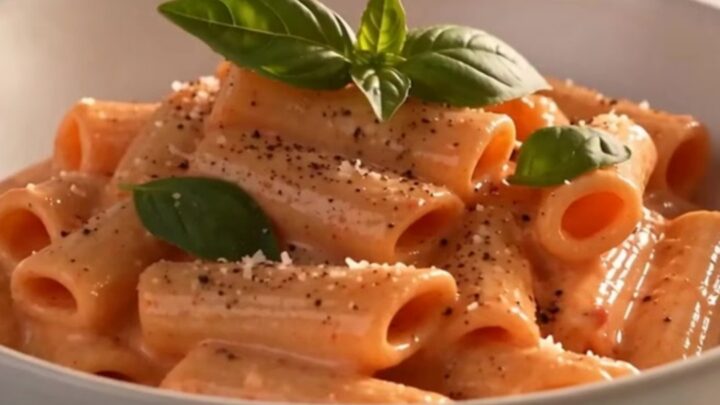
- Emulsify and ServeTransfer the cooked al dente rigatoni directly into the skillet. Pour in the starchy pasta water and toss everything together to coat the noodles. Add the cold butter and the freshly grated parmesan cheese, swirling the pan vigorously to melt the cheese and butter into a glossy, clinging sauce. Garnish with torn fresh basil and freshly cracked black pepper before serving immediately.Look for The sauce should appear glossy and thick, clinging perfectly to the ridges of the rigatoni.Tip Swirling the pan vigorously is key to creating that restaurant-quality emulsion that coats every piece of pasta evenly.
The rigatoni should be fully coated in a thick, glossy, and smooth sauce. When you swirl the pan, the pasta should move easily, and the sauce should cling to every ridge.
The final dish should look rich, silky, and be steaming with the scent of fresh basil and black pepper.
Common mistakes
Avoid overcooking the pasta in the boiling water; it should be firm, as it will continue to cook briefly in the sauce. Do not skip the deglazing step with the vodka, as the alcohol is necessary to lift the flavorful caramelized bits from the bottom of the pan.
Finally, do not add the cheese while the pan is over high heat, as this can cause the proteins in the cheese to seize and create a stringy texture instead of a smooth, emulsified sauce.
How to tell it’s done
The pasta is done when it is al dente, meaning it still has a slight chew in the center. The sauce is perfectly finished when it coats the back of a spoon with a glossy, thick, and uniform layer.
There should be no signs of fat separation; if the sauce looks oily, simply add another tablespoon of warm pasta water and continue to swirl the pan until the emulsion is restored to a smooth, creamy consistency.
Up next · Part 3 of 3
2 variations · storage & make-ahead · 3 answers · printable card
Tips, FAQ & printable recipe (Part 3)← Back to the ingredients (Part 1)