Dinner · Part 2 of 3: Instructions
Creamy Slow Cooker Salmon with Dill and Vegetables Step-by-step instructions
- Prep
- Cook
- Total
- Serves
- 4
Before you start
Ensure the salmon is completely thawed if frozen, and pat it dry with paper towels before placing it in the slow cooker. Prepare the vegetables by cutting them into thin, uniform julienne strips to ensure they cook at the same speed as the fish.
Have the measuring cup for the cream ready, and clear a space on the counter for the slow cooker so it is easily accessible. Check that the ceramic insert is clean and dry before you begin layering the ingredients.
Ingredients at a glance (4)
- 4 fillets salmon fillets, skin removed
- 2 cups julienne vegetables (carrots and zucchini)
- 1 tbsp dried dill
- 1 cup heavy cream
Instructions
Layering the ingredients
- Assemble the basePlace the salmon fillets in an even layer at the bottom of the slow cooker ceramic insert. Ensure the fillets are not overlapping too much to promote even cooking throughout the process.Look for Salmon fillets should lay flat on the bottom of the slow cooker.Tip Use a ceramic insert that fits the fish snugly to maintain moisture.
At this phase, the raw salmon and vegetables are neatly arranged. Ensure the salmon is flat and the vegetables are evenly distributed.
Check that your slow cooker is plugged in and ready to begin, as you want to start the cooking process immediately after adding the cream to maintain food safety and optimal texture.
Infusing the flavors
- Add aromatics and liquidScatter the julienned vegetables over the salmon. Sprinkle the dried dill evenly across the vegetables and fish. Finally, pour the heavy cream over the top to submerge the ingredients slightly.Look for Cream should coat the vegetables and fish evenly.Tip Ensure the cream reaches the bottom of the cooker for a consistent sauce.
The dill and cream are added, creating a flavorful poaching liquid. Check that the cream covers the bottom of the cooker well. The aroma of fresh dill should be faintly present, and the ingredients should look organized and ready to be sealed under the lid for the duration of the cooking time.
Final cook and rest
- Cook and serveCover the slow cooker and cook on low for 3 hours. Check that the salmon reaches an internal temperature of 145°F (63°C). Allow the fish to rest for 5 minutes before serving carefully onto plates.Look for Fish flakes easily with a fork and sauce is thickened.Safe temperature 145°F (63°C) internal temperature (fish)Tip Do not overcook, as salmon can dry out quickly even in cream.
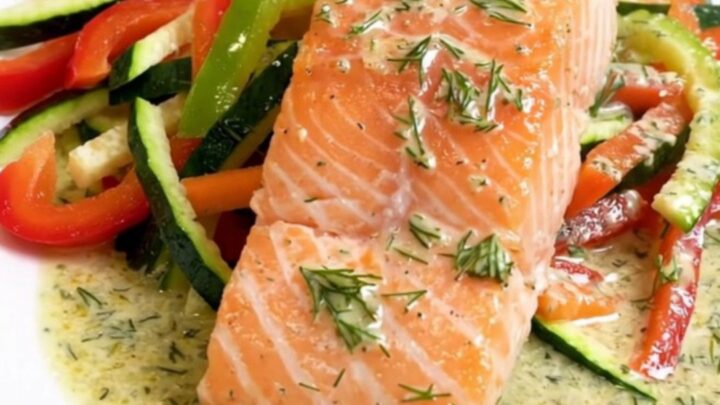
The salmon is fully cooked, opaque, and tender. The cream sauce has incorporated the vegetable juices and dill. Check the temperature with a meat thermometer to ensure safety, then remove the lid and let the dish rest for 5 minutes before serving to ensure the sauce thickens slightly and the flavor balances.
Common mistakes
A common mistake is overcooking the salmon, which can lead to a dry, chalky texture. Even in a slow cooker, timing is critical, so check the internal temperature once the timer goes off.
Another error is using too little liquid, which might cause the vegetables to burn or the cream to scorch on the bottom. Always ensure the fish and vegetables are properly nestled in the cream to maintain a consistent cooking environment throughout the entire cycle.
How to tell it’s done
The salmon is perfectly cooked when it reaches an internal temperature of 145°F (63°C) at its thickest point. You can also test for doneness by inserting a fork into the center of a fillet; the flesh should flake easily and appear opaque throughout.
The cream sauce should be slightly thickened and bubbling gently. Be careful when checking, as the steam will be very hot. Always allow the dish to rest for 5 minutes to let the sauce settle.
- Fish: 145°F (63°C) in the thickest part
Up next · Part 3 of 3
2 variations · storage & make-ahead · 3 answers · printable card
Tips, FAQ & printable recipe (Part 3)← Back to the ingredients (Part 1)