Dinner · Part 2 of 3: Instructions
Creamy Slow Cooker Pea and Leek Velouté Step-by-step instructions
- Prep
- Cook
- Total
- Serves
- 4
Before you start
Before beginning, ensure all vegetables are properly prepared. Peel and dice the potatoes into consistent half-inch cubes. Trim the dark green tops from the leeks, keeping only the white and light green parts, then slice them thinly and wash thoroughly to remove any hidden grit.
Measure out the frozen peas and broth in advance so that assembly is quick and efficient. Have your slow cooker placed on a clear, stable countertop near an electrical outlet, ensuring the cord is positioned safely away from any water sources or heat-sensitive materials.
Ingredients at a glance (5)
- 2 cups diced potatoes
- 2 cups sliced leeks, cleaned
- 3 cups frozen green peas
- 4 cups clear broth
- 2 tbsp heavy cream
Instructions
Layering the vegetables
- Prepare the slow cooker basePlace the diced potatoes into the bottom of the slow cooker insert. Scatter the sliced leeks evenly over the potatoes, then pour the frozen green peas on top of the leeks.Look for Vegetables are layered evenly in the cooker.Tip Ensure the potatoes are diced into uniform sizes to guarantee even cooking throughout the process.
The slow cooker insert should contain an even distribution of potatoes, leeks, and peas. Ensure the potatoes are at the base where they receive the most direct heat. The ingredients should look fresh, with the peas providing a pop of color against the white potatoes and leeks. Check that the insert is clean and that the slow cooker is properly plugged in before proceeding to add the liquid and beginning the cooking cycle.
Slow cooking the base
- Add liquid and cookPour the clear broth over the layered vegetables. Cover the slow cooker with its lid and cook on the low setting for approximately 4 hours until the potatoes are tender and the vegetables are soft.Look for Potatoes pierce easily with a fork.Tip Avoid lifting the lid during the cooking time to maintain a consistent temperature inside the slow cooker.
After the cooking time has elapsed, the kitchen should smell savory and fresh. The vegetables will have softened significantly, and the broth will have infused with the flavors of the leeks and peas. Test a piece of potato with a fork to ensure it is tender all the way through. The liquid level should have reduced slightly, concentrating the vegetable flavors, and the overall mixture should look soft and ready for the blending process.
Blending and finishing
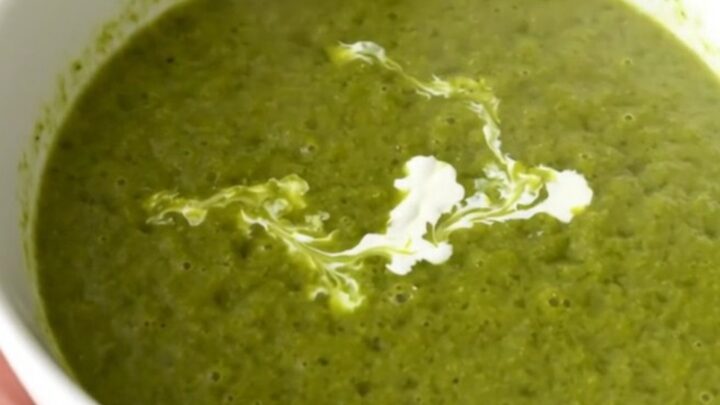
- Blend and finishUse an immersion blender to process the soup directly in the slow cooker until it reaches a perfectly smooth, velvety consistency. Ladle the soup into bowls and finish each serving with a decorative swirl of heavy cream.Look for Soup is vibrant green and silky smooth.Tip If the soup appears too thick, add a small splash of additional hot broth until the desired consistency is achieved.
The soup should be transformed into a vibrant, uniform green liquid with a smooth, velvety texture. There should be no visible lumps of vegetable matter. When served, the swirl of cream should sit nicely on the surface, creating an elegant visual contrast.
Check the seasoning and adjust with salt and pepper if necessary. Ensure the soup is served hot, as the delicate flavors of the leeks and peas are best enjoyed at a warm, comforting temperature.
Common mistakes
A common mistake is failing to clean the leeks properly, which can leave a gritty texture in the final soup. Always wash them thoroughly after slicing. Another error is cutting the potatoes into pieces that are too large, which prevents them from softening enough to thicken the soup effectively.
Be mindful of the liquid ratio; adding too much broth can result in a thin, watery soup. If you find the soup is too thin, you can simmer it on the stovetop for a few minutes to reduce it after blending.
How to tell it’s done
The soup is ready when the potatoes are completely soft and yield easily to the pressure of a fork. The peas should be tender and bright, and the leeks should be translucent and well-incorporated into the broth.
Because this recipe does not contain raw proteins, the internal temperature is not a safety concern, but the soup should be heated thoroughly throughout to ensure the vegetables are perfectly cooked. The final texture should be uniform, thick, and velvety, with no large chunks remaining after blending.
Up next · Part 3 of 3
2 variations · storage & make-ahead · 3 answers · printable card
Tips, FAQ & printable recipe (Part 3)← Back to the ingredients (Part 1)