Dinner · Part 2 of 3: Instructions
Creamy Slow Cooker Grandma’s Mac and Cheese Step-by-step instructions
- Prep
- Cook
- Total
- Serves
- 6
Before you start
Before starting, ensure the slow cooker insert is clean and properly seated in the base. Have all ingredients measured and ready, especially the cheese, which should be shredded to ensure it melts quickly and evenly when added. If using a block of cheddar, grate it while the slow cooker is preheating.
Have a serving spoon nearby to make the transition from the slow cooker to serving bowls quick and efficient. Proper preparation ensures a smooth cooking process and prevents any last-minute scrambling while the heat is already on.
Ingredients at a glance (6)
- 1 lb macaroni pasta, raw
- 1 tbsp Dijon mustard
- 1/8 tsp ground nutmeg
- 2 cups whole milk
- 1 cup heavy cream
- 4 cups shredded cheddar cheese
Instructions
Preparation and Layering
- Combine IngredientsPlace the raw macaroni pasta into the base of the slow cooker. Add the Dijon mustard and sprinkle the ground nutmeg evenly over the pasta. Pour the milk and heavy cream over the mixture.Look for Ensure all pasta is submerged in the liquid.Tip Do not stir the ingredients yet; layering helps keep the pasta from sticking during the initial heat-up.
The ingredients are layered in the slow cooker, ready for the slow heat. Ensure the milk and cream cover the pasta completely so that no dry spots remain, which would result in uneven cooking and crunchy, undercooked noodles. The mustard and nutmeg are distributed to provide a subtle, aromatic background that balances the richness of the dairy, setting the stage for a perfectly seasoned and flavorful final dish that feels balanced and complete.
Slow Cooking and Emulsification
- Slow CookCover the slow cooker with its lid. Set to cook on low for three hours. Halfway through the cooking process, stir in the shredded cheddar cheese until fully incorporated and the sauce is smooth and creamy.Look for The cheese should be completely melted and the sauce thickened.Tip Check the pasta texture after two and a half hours to avoid overcooking.
During the cooking phase, the pasta softens and the sauce begins to develop its characteristic creaminess. The cheese is added halfway through, ensuring the final result is smooth, well-combined, and free from any separated oils or grainy textures.
Monitor the consistency carefully, as the cheese should melt into the liquid, forming a thick, luxurious sauce that coats every noodle evenly, resulting in a cohesive and visually appealing dish that smells rich and savory.
Resting and Serving
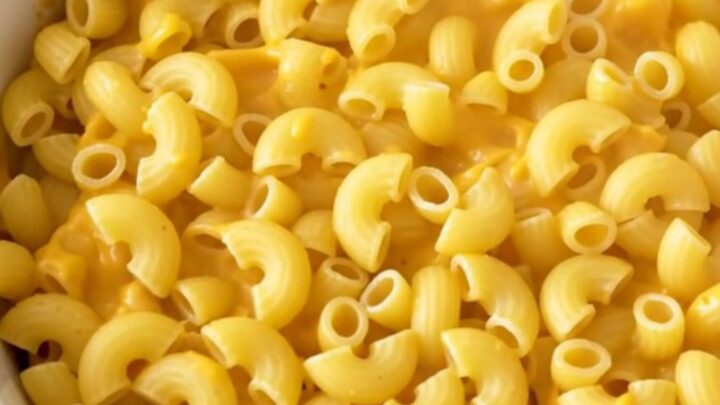
- Final Rest and ServeOnce the cooking time is complete, turn off the slow cooker and allow the macaroni and cheese to rest for five minutes before serving. This brief rest period helps the sauce cling to the pasta.Look for The sauce should be thick, glossy, and coating the pasta perfectly.Tip Stir gently one last time before dishing into bowls to ensure even distribution of the creamy cheese sauce.
After the cooking time, the dish is allowed to rest, which is crucial for the sauce to tighten up. The result is a cohesive, luxurious bowl of macaroni and cheese that is ready to be served immediately while still warm.
Check that the sauce has achieved a thick, velvety consistency that clings to the pasta, and ensure the temperature is uniform throughout the bowl before serving, providing the ultimate comfort food experience that is both satisfying and delicious.
Common mistakes
A common mistake is overcooking the pasta, which leads to a mushy texture. Start checking the consistency at the two-hour mark. Another error is failing to stir the cheese properly; if the cheese is added in a clump, it may not emulsify correctly.
Always stir thoroughly to integrate the dairy into the liquid base for a uniform, velvety consistency. Avoid lifting the lid too often, as this releases heat and moisture, which can lead to uneven cooking and potentially dry, crunchy pasta noodles.
How to tell it’s done
The dish is ready when the macaroni is tender but still offers a slight bite, known as al dente. The sauce should be thick enough to coat the back of a spoon without running off immediately. If the sauce appears too thin, let it sit for an additional five minutes with the lid off, as it will continue to thicken slightly upon standing. The cheese should be fully melted and integrated, creating a glossy, uniform coating that holds firmly to each piece of pasta.
Up next · Part 3 of 3
2 variations · storage & make-ahead · 3 answers · printable card
Tips, FAQ & printable recipe (Part 3)← Back to the ingredients (Part 1)