Dinner · Part 2 of 3: Instructions
Creamy Slow Cooker Chestnut and Parmesan Risotto Step-by-step instructions
- Prep
- Cook
- Total
- Serves
- 4
Before you start
Before beginning, ensure all ingredients are measured and ready. Chop the chestnuts and shallots into small, uniform pieces to ensure they soften properly during the slow cooking process.
Place the slow cooker on a level, heat-resistant surface and verify that it is clean and dry. Have the hot water prepared in a glass measuring cup to facilitate an easy pour. Ensure the parmesan cheese is finely grated so it melts instantly into the hot rice upon adding.
Ingredients at a glance (6)
- 1 1/2 cups arborio rice
- 1 cup chopped chestnuts
- 2 tbsp finely chopped shallots
- 1 cube vegetable bouillon cube
- 4 cups hot water
- 1/2 cup grated parmesan cheese
Instructions
Combining the base
- Combine ingredientsPlace the arborio rice into the base of the slow cooker. Add the chopped chestnuts and finely chopped shallots on top of the rice. Crumble the vegetable bouillon cube evenly over the ingredients.Look for Ensure the bouillon is crumbled finely to distribute the flavor evenly throughout the rice during the slow cooking process.Tip Using hot water instead of cold reduces the time the slow cooker takes to reach the necessary simmering temperature.
At this stage, the slow cooker contains the dry rice, chopped chestnuts, shallots, and crumbled bouillon. Everything is layered or distributed to allow for uniform cooking.
Check that the bouillon is evenly spread to avoid concentrated salty pockets. The ingredients should be ready to receive the hot water, which will initiate the cooking process immediately upon contact.
Slow cooking process
- Slow cookPour the hot water over the mixture in the slow cooker. Cover and cook on the low setting for approximately three hours, or until the rice is tender and has absorbed most of the liquid.Look for The rice should appear creamy and tender, with the liquid mostly absorbed, creating a rich and velvety consistency.Tip Avoid opening the lid frequently during the cooking process to maintain a consistent temperature and moisture level inside the slow cooker.
During this phase, the rice slowly absorbs the hot water and the flavors of the bouillon, chestnuts, and shallots. The mixture should simmer gently. By the end of this period, the liquid will be mostly absorbed, and the rice will have expanded significantly. The kitchen should smell aromatic and savory, indicating that the flavors have properly melded together.
Finishing and serving
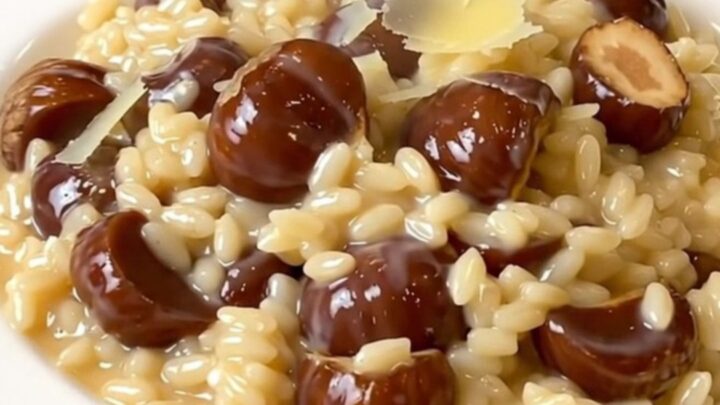
- Finish and serveOnce the cooking time is complete, stir in the grated parmesan cheese until fully incorporated and creamy. Allow the risotto to rest for five minutes before serving on warm plates.Look for The finished risotto should be glossy and hold its shape slightly on the plate without being overly runny or dry.Tip Stirring vigorously after adding the parmesan helps to emulsify the cheese with the starch from the rice for maximum creaminess.
In the final phase, the grated parmesan is stirred into the hot rice. The transformation happens quickly as the cheese melts, creating a glossy, creamy sauce that coats every grain of rice. The risotto should look vibrant and cohesive. Check that the consistency is to your liking before plating, ensuring the dish is served while still hot and steaming.
Common mistakes
A common mistake is using the wrong type of rice; long-grain or basmati rice will not release the necessary starch to create a creamy result, so always use arborio or carnaroli. Another error is failing to chop the chestnuts finely enough, which can lead to uneven texture.
Finally, do not overcook the risotto, as the rice can turn mushy; check the consistency after three hours to ensure it reaches the desired texture without breaking down completely into a paste.
How to tell it’s done
The risotto is done when the rice is tender but still retains a slight chewiness, known as al dente. The texture should be creamy, thick, and pourable, not stiff or watery. The chestnuts should be soft and integrated into the rice mixture.
There is no protein to monitor for temperature, but the dish should be served piping hot to ensure the parmesan is fully melted and the texture remains luscious and velvety for the best eating experience.
Up next · Part 3 of 3
2 variations · storage & make-ahead · 3 answers · printable card
Tips, FAQ & printable recipe (Part 3)← Back to the ingredients (Part 1)