Dinner · Part 2 of 3: Instructions
Creamy Shrimp Alfredo Pasta Step-by-step instructions
- Prep
- Cook
- Total
- Serves
- 4
Before you start
Before starting, ensure all ingredients are measured and ready, as the cooking process moves quickly. Peel and devein the shrimp, then pat them thoroughly dry with paper towels to ensure they sear properly.
Having everything prepped allows you to focus on the timing of the sauce and pasta to ensure the final dish is served hot and at the peak of its creamy, flavorful consistency.
Ingredients at a glance (4)
- 1 lb shrimp, peeled and deveined
- 1 lb fettuccine pasta
- 1 tsp seasoning
- 1 jar alfredo sauce, store-bought or made ahead
Instructions
Boiling the pasta
- Boil the pastaBring a large pot of salted water to a rolling boil. Add the fettuccine and cook until al dente. Drain the pasta, reserving a small amount of the starchy cooking water for later use if needed.Look for The pasta should be tender but still have a slight bite in the center.Tip Adding salt to the boiling water is the only chance to season the pasta itself.
The pasta is ready when it is tender but still offers a slight resistance when bitten. Drain it thoroughly, but keep a small amount of the starchy cooking water nearby just in case the final sauce needs adjusting for consistency. The pasta should be warm and ready to be combined with the sauce immediately after draining to prevent it from sticking.
Searing the shrimp
- Sear the shrimpSeason the shrimp with the seasoning. Heat a large skillet over medium-high heat. Add the shrimp in a single layer and sear until they are pink and opaque, ensuring they reach an internal temperature of 145°F (63°C). Remove the shrimp from the skillet and set aside.Look for The shrimp will turn opaque and pink when fully cooked.Safe temperature 145°F (63°C) internal temperature (shellfish)Tip Do not overcrowd the skillet, as this will cause the shrimp to steam rather than sear.
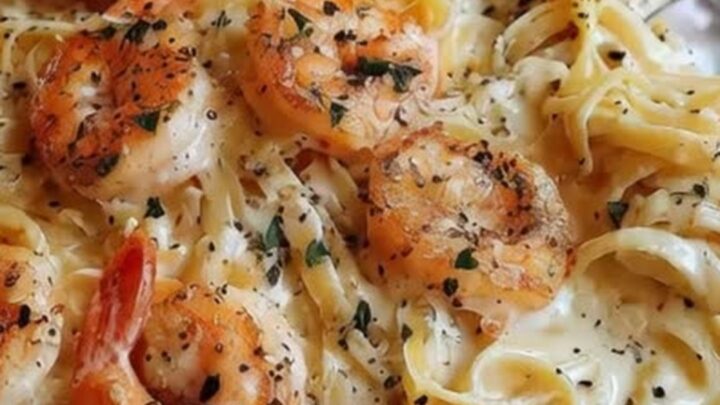
The shrimp should have a nice, golden-brown sear on the outside and be fully opaque and cooked through to 145°F (63°C) on the inside.
They should be removed from the skillet promptly to prevent further cooking while you prepare the sauce base. The skillet should still contain some of the flavorful juices, which will form the base of the creamy alfredo.
Finishing the sauce
- Combine with sauceIn the same skillet, pour in the alfredo sauce and bring to a gentle simmer. Return the cooked shrimp to the skillet and toss with the cooked pasta until everything is well coated in the glossy sauce.Look for The sauce should be thick enough to coat the back of a spoon.Tip If the sauce becomes too thick, stir in a tablespoon of the reserved pasta water to loosen it.
The final sauce should be thick, glossy, and perfectly fragrant. It should coat every strand of the fettuccine evenly. Once the shrimp are added back in and everything is hot and thoroughly combined, the dish is ready to serve. Taste for seasoning and adjust with a pinch of salt or pepper if needed before plating.
Common mistakes
Avoid overcooking the shrimp, which can turn them rubbery and tough.
Another common mistake is adding the pasta to the sauce while the sauce is cold; ensure the sauce is at a gentle simmer before adding the pasta and shrimp to ensure a smooth, emulsified finish that coats the pasta beautifully and keeps the entire dish at a consistent serving temperature.
How to tell it’s done
The shrimp are done when they are opaque, firm to the touch, and have reached an internal temperature of 145°F (63°C). The sauce is ready when it is thick, smooth, and coats the back of a spoon without breaking.
If the pasta is cooked al dente, it will finish softening slightly when tossed with the hot sauce, ensuring the perfect final texture for serving immediately.
- Shellfish: 145°F (63°C) in the thickest part
Up next · Part 3 of 3
2 variations · storage & make-ahead · 3 answers · printable card
Tips, FAQ & printable recipe (Part 3)← Back to the ingredients (Part 1)