Dinner · Part 2 of 3: Instructions
Creamy Sausage and Tomato Rigatoni Step-by-step instructions
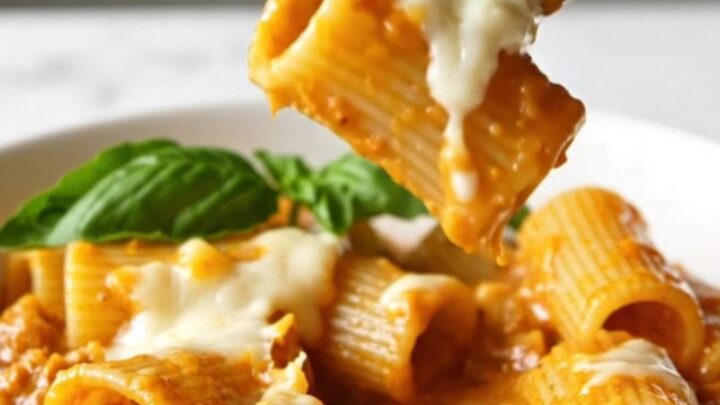
- Prep
- Cook
- Total
- Serves
- 4
Before you start
Before you begin cooking, ensure all your ingredients are measured and ready, as the process moves quickly once the heat is applied. Chop your fresh basil, grate the Parmesan, and tear the fresh mozzarella so everything is ready for the final assembly.
Prepare a large pot of water for the pasta and have a colander nearby. Having your ingredients prepped and within arm's reach allows you to focus entirely on the cooking process, ensuring the sauce is perfectly finished exactly when your pasta reaches the ideal al dente texture.
Ingredients at a glance (9)
- 1 lb ground Italian sausage
- 1 lb rigatoni pasta
- 3 tbsp tomato paste
- 1 cup chicken broth
- 1/2 cup pasta cooking liquid
- 1/2 cup heavy cream
- 1/2 cup grated Parmesan cheese
- fresh basil leaves, for serving
- torn fresh mozzarella, for serving
Instructions
Browning and Boiling
- Prepare the sausageHeat a large skillet over medium-high heat. Add the ground Italian sausage and cook, breaking it up with a wooden spoon, until browned and no longer pink. Ensure the internal temperature reaches at least 160°F (71°C) to guarantee safety. Once cooked through, remove the sausage from the pan and set it aside while you prepare the sauce base.Look for The sausage should be deeply browned and crumbled into small, bite-sized pieces.Safe temperature 160°F (71°C) internal temperature (ground meat)Tip Do not drain all the fat, as a little rendered fat adds significant flavor to the tomato sauce.
- Cook the pastaBring a large pot of salted water to a rolling boil. Add the rigatoni and cook according to the package instructions until al dente. Before draining the pasta, carefully scoop out and reserve about half a cup of the starchy cooking liquid to help emulsify the sauce later. Drain the remaining pasta in a colander and set aside.Look for The pasta should be firm to the bite but cooked through without being mushy.Tip Cooking the pasta al dente ensures it holds its shape perfectly when tossed in the sauce.
The sausage should be deeply browned with no pink remaining, and the pasta should be cooked to an al dente texture. The kitchen should smell savory and fragrant. Check that you have reserved the required amount of starchy pasta water before draining the rigatoni, as this liquid is vital for the success of the sauce in the subsequent phases of the recipe.
Developing the Sauce
- Create the sauce baseIn the same skillet used for the sausage, add the tomato paste. Cook the paste over medium heat for one to two minutes until it darkens slightly and becomes fragrant. Pour in the chicken broth and the reserved pasta cooking liquid, whisking or stirring constantly to deglaze the pan and incorporate any browned bits from the sausage. Allow the mixture to simmer until it slightly thickens.Look for The sauce should look smooth, glossy, and have a rich, deep orange-red color.Tip Deglazing is essential for building a deep, complex flavor profile for the entire dish.
The tomato paste should be darkened and fragrant, having been cooked to remove any raw metallic taste. The mixture of broth and pasta water should be bubbling gently and starting to thicken. The pan should be deglazed, with all the flavorful browned bits from the sausage successfully incorporated into the liquid. The base should look smooth and uniform, ready for the addition of the cream.
Finishing the Pasta
- Combine and finishLower the heat and pour in the heavy cream, stirring continuously to combine it with the tomato base. Return the browned sausage to the skillet and add the cooked rigatoni. Toss everything together until the pasta is thoroughly coated in the velvety sauce. Finally, stir in the grated Parmesan cheese until melted and smooth. Serve immediately in warm bowls, topped with torn fresh mozzarella and fresh basil leaves.Look for The sauce should be thick enough to coat the back of a spoon and cling to the pasta ridges.Tip Add the cheese at the very end to prevent it from clumping or separating in the hot sauce.
The sauce should be thick, creamy, and glossy, clinging beautifully to the rigatoni. The Parmesan should be completely melted, and the sausage should be evenly distributed throughout the dish.
The final result should look velvety and rich. Ensure the temperature is maintained at a gentle simmer during this final phase to keep everything hot and perfectly emulsified before serving immediately.
Common mistakes
Avoid overcooking the pasta, as it will continue to absorb sauce and soften slightly after being combined. Another common mistake is adding the cream while the sauce is at a rolling boil, which can cause it to separate; always lower the heat before stirring in the cream.
Finally, do not skip the pasta water, as it is the critical element that transforms the sauce from a thin liquid into a rich, clinging, and professional-grade emulsion that defines this dish.
How to tell it’s done
The dish is considered done when the sauce is thick, creamy, and evenly coats the rigatoni without pooling. The sausage should be thoroughly cooked, reaching an internal temperature of at least 160°F (71°C) during the initial browning phase.
The pasta should be al dente, meaning it retains a slight, pleasant chew. When you lift a forkful, the sauce should hold onto the pasta, and the cheese should be fully melted into the sauce, creating a smooth, cohesive, and visually appealing finish.
- Ground meat: 160°F (71°C) in the thickest part
Up next · Part 3 of 3
2 variations · storage & make-ahead · 3 answers · printable card
Tips, FAQ & printable recipe (Part 3)← Back to the ingredients (Part 1)