Dinner · Part 2 of 3: Instructions
Creamy Roasted Eggplant Spaghetti in 30 Minutes Step-by-step instructions
- Prep
- Cook
- Total
- Serves
- 4
Before you start
Before starting, make sure you have a large skillet with a lid, a pot for the pasta, and a colander. Peel the garlic cloves and measure out the olive oil, cream, cheese, and spices.
Bring a large pot of salted water to a boil for the spaghetti, but don't add the pasta until the sauce is nearly ready. Have the basil washed and chopped. The whole recipe moves quickly once the vegetables are braised, so having everything prepped and within reach makes the process smoother.
Ingredients at a glance (13)
- 1 whole eggplant (about 1 lb)
- 1 large ripe tomato
- 3 cloves garlic, peeled
- 1/4 cup olive oil
- 1 tbsp tomato paste
- 1/2 cup heavy cream
- 1 cup shredded kaşar cheese
- Salt to taste
- Black pepper to taste
- 1 tsp paprika
- 1/4 cup fresh basil leaves, chopped
- 8 oz spaghetti
- 1/2 cup pasta cooking water
Instructions
Braise and Mash
- Braise the VegetablesPlace the whole eggplant, whole tomato, and peeled garlic cloves in a large skillet. Add the olive oil and 1/4 cup water. Cover and cook over low heat for 15 minutes, turning once, until the eggplant is very tender and collapsed.Look for The eggplant should feel soft and deflated when pressed.Tip Keep the heat low so the garlic sweetens without burning.
- Peel and MashRemove the vegetables from the skillet. When cool enough to handle, peel the skins from the eggplant and tomato. Return the flesh to the skillet. Mash everything with a fork until mostly smooth but with a few chunky bits.Look for The mixture should be a rustic paste with no large pieces.Tip Peel while warm; the skins slip off easily.
- Add Tomato Paste and FryStir the tomato paste into the mashed vegetables. Cook over medium heat for 2 minutes, stirring constantly, until the paste darkens and the mixture smells rich.Look for The paste turns a deeper red and starts to stick slightly.Tip Frying the paste removes its raw tang.
After braising, the eggplant should be collapsed and very soft, with the skins wrinkled and easy to peel. The garlic will be golden and sweet.
The mashed mixture should be thick and slightly chunky, with a rich aroma of roasted vegetables and olive oil. The tomato paste should be well incorporated and the mixture should have darkened slightly after frying.
Make the Creamy Sauce
- Make the Creamy SaucePour in the heavy cream and add the shredded kaşar cheese. Season with salt, black pepper, and paprika. Stir until the cheese melts and the sauce is smooth and orange.Look for The sauce should be thick enough to coat the back of a spoon.Tip Add the cheese gradually for a smoother melt.
- Cook the SpaghettiBring a large pot of salted water to a boil. Cook the spaghetti according to package directions until al dente. Reserve 1/2 cup of the pasta cooking water, then drain the spaghetti.Look for The pasta should be tender but still firm to the bite.Tip Reserve more water than needed in case the sauce needs thinning.
- Toss Pasta with SauceAdd the drained spaghetti to the skillet with the sauce. Pour in the reserved pasta water and toss with pasta tongs until every strand is coated and the sauce is glossy.Look for The sauce clings to the pasta without being watery.Tip Toss over low heat to help the sauce emulsify.
The sauce should be smooth, orange, and fragrant with paprika and basil. The cheese should be completely melted, and the cream should have thickened slightly. When you drag a spoon through the sauce, it should leave a trail. The spaghetti should be cooked and drained, with the reserved pasta water ready to add.
Toss and Serve
- Finish with BasilStir in the chopped fresh basil leaves. Remove the skillet from the heat.Look for The basil wilts slightly and releases its aroma.Tip Add basil at the end to keep its bright color.
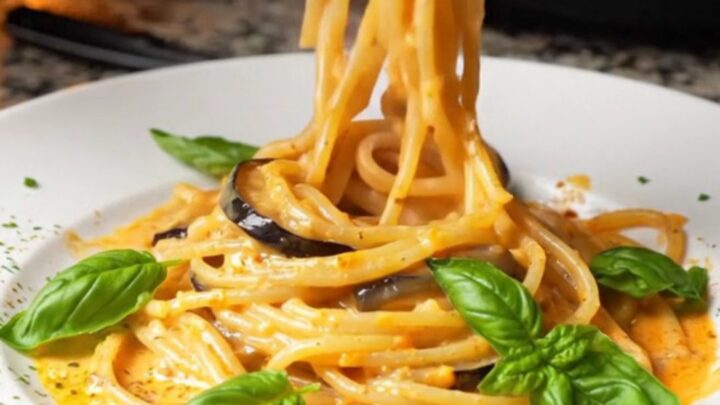
- Twirl and ServeUse pasta tongs to twirl a portion of the spaghetti onto each plate. Garnish with a few extra basil leaves if desired. Serve immediately while hot and creamy.Look for The twirls should hold their shape and steam gently.Tip Warm the plates for a more luxurious presentation.
The spaghetti should be glossy and evenly coated with the creamy sauce. There should be no dry strands, and the sauce should not be watery. The basil should be wilted but still green. When twirled, the pasta should hold its shape on the plate, with steam rising and the cheese pulling slightly as you lift the tongs.
Common mistakes
One common mistake is cooking the eggplant over too high heat, which can cause it to brown before it softens. Keep the heat low and let it steam gently. Another is skipping the pasta water — it's essential for creating a silky sauce that coats the pasta evenly.
Also, don't overcook the spaghetti; it will continue to cook slightly when tossed with the hot sauce. Finally, add the cheese gradually and stir constantly to avoid clumping.
How to tell it’s done
The eggplant is ready when it is very tender and the skin can be easily pierced with a fork. The sauce is done when it is thick enough to coat the back of a spoon and the cheese is fully melted.
The pasta should be al dente — tender but still slightly firm to the bite. When tossed, the sauce should cling to the spaghetti without pooling at the bottom of the skillet. The dish is ready to serve as soon as the basil is stirred in.
Up next · Part 3 of 3
4 variations · storage & make-ahead · 5 answers · printable card
Tips, FAQ & printable recipe (Part 3)← Back to the ingredients (Part 1)